À propos de ce livre

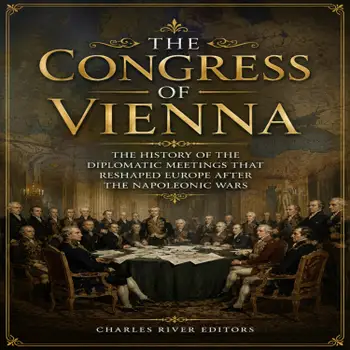
To the extent the Congress of Vienna is remembered today, it’s often portrayed as an international meeting that assembled after the fall of Napoleon to cement the balance of power within Europe in the wake of the French Empire, but it actually started in 1814 after Napoleon was exiled to Elba. Convened and led by Austria’s Prince Klemens von Metternich between September 1814 and June 1815, representatives from virtually every European state met in the Austrian capital to redraw the continent’s borders, restore various governments, resolve territorial disputes, and establish an agreement that would prevent another major conflict. Although the negotiations frequently became contentious and were interrupted by Napoleon's dramatic return from exile, the settlement ultimately produced a status quo that directly influenced everything in Europe that has happened since.

The challenges confronting the Congress of Vienna went far beyond what to do about the defeated French. Poland and Saxony became the subjects of intense disputes, the future organization of the fractured German states remained unclear, the Italian peninsula was still subjected to multiple claims, and several smaller nations sought to benefit in various ways despite the dominance of the major powers. Of course, each government approached the negotiations with its own objectives, with Austria hoping to preserve its influence in Central Europe, Russia seeking to expand its authority further west, Prussia seeking compensation for its sacrifices during the Napoleonic Wars, and the British aiming to prevent another European nation from challenging them. Even the French, represented by the experienced diplomat Charles-Maurice de Talleyrand, had an influential voice in the negotiations by exploiting disagreements among the victorious allies.

Commencez ce livre dès aujourd'hui pour 0 €

  • Accédez à tous les livres de l'app pendant la période d'essai
  • Sans engagement, annulez à tout moment
Essayer gratuitement
Plus de 52 000 personnes ont noté Nextory 5 étoiles sur l'App Store et Google Play.

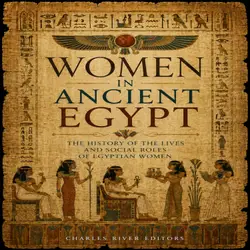
  1. Women in Ancient Egypt: The History of the Lives and Social Roles of Egyptian Women

    Charles River Editors

  2. The Monterey International Pop Festival: The History and Legacy of the First Major Rock Festival in the 1960s

    Charles River Editors

  3. 4.3

    The Life and Trial of Lizzie Borden : The History of 19th Century America's Most Famous Murder Case

    Charles River Editors

  4. The Praetorian Guard: The History of the Roman Emperors’ Imperial Bodyguards

    Charles River Editors

  5. Shirley Temple, Judy Garland, and Mickey Rooney: Hollywood’s Child Stars of the 1930s

    Charles River Editors

  6. 2.0

    The Portuguese Inquisition: The History of the Portuguese Empire’s Religious Persecution of Non-Christians in Portugal and Asia

    Charles River Editors

  7. 3.5

    The Portuguese Empire and Africa: The History and Legacy of Portugal’s Exploration and Colonization of the West African Coast

    Charles River Editors

  8. The Pacific Theater in 1944: The History of the Decisive Campaigns that Contributed to the Allies’ Victory over Japan

    Charles River Editors

  9. Antoni Gaudi and Frank Lloyd Wright: The Lives and Works of the Most Influential Modern Architects

    Charles River Editors

  10. The End of World War II in the Pacific: The History of the Final Campaigns that Led to Imperial Japan’s Surrender

    Charles River Editors

  11. 1.0

    Das mittelalterliche Russland: Die Geschichte und das Erbe der Gruppen, die den russischen Staat im Mittelalter entwickelten

    Charles River Editors

  12. The Cheka: The History of the Soviet Agency that Eventually Became the KGB

    Charles River Editors