ou

Trouvez une histoire immédiatement

Passer la liste
  1. The Cambridge Modern History

    J. B. Bury, Mandell Creighton, R. Nisbet Bain, George Walter Prothero, Adolphus William Ward, Lord Acton

  2. The Dark Ages Collection

    J. B. Bury, Edward Creasy, Henry Bradley, Edward Gibbon, David Hume, Charles Oman, The griffin classics, Washington Irving

  3. Nouveau

    The Cambridge Modern History

    J. B. Bury, Mandell Creighton, R. Nisbet Bain, George Walter Prothero, Adolphus William Ward, Lord Acton

  4. Nouveau

    The Dark Ages Collection

    J. B. Bury, Edward Creasy, Henry Bradley, Edward Gibbon, David Hume

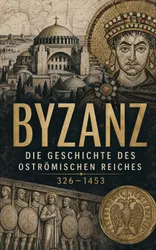
  5. Byzanz : Die bedeutendsten historischen Werke der Antike und des Mittelalters

    Anna Komnena, Prokop von Cäsarea, Eusebius, Agathias, Michael Psellos, J. B. Bury, William Gordon Holmes, Charles Oman, Joseph François Michaud

  6. Die größten Geschichtsbücher des Byzantinischen Reiches : Geschichte des Oströmischen Reiches, Kirchengeschichte, Die Zeit Constantins des Großen, Das Zeitalter von Justinian und Theodora

    Jacob Burckhardt, Prokop von Cäsarea, J. B. Bury, Joseph François Michaud, Anna Komnena, Michael Psellos, Eusebius, Charles Oman, William Gordon Holmes

  7. The Dark Ages Collection

    J. B. Bury, Edward Creasy, Henry Bradley, Edward Gibbon, David Hume, Charles Oman

  8. Byzanz : Die Zeit Konstantins des Großen, Das Zeitalter von Justinian und Theodora, Geschichte des Byzantinischen Reiches,

    J. B. Bury, Jacob Burckhardt, Charles Oman, Joseph François Michaud, Michael Psellos, William Gordon Holmes, Eusebius, Prokop von Cäsarea, Agathias, Anna Komnena

  9. 100 Klassiker der Geschichtsschreibung : Die Geschichte des Alten Ägypten, Der Alexanderzug, Römische Geschichte, Herbst des Mittelalters, Die russische Revolution, Der Kampf um Europa

    Edward Gibbon, Leopold von Ranke, J. B. Bury, Theodor Mommsen, Herodot, Thukydides, Xenophon, Arrian, Titus Livius, Tacitus, Gaius Iulius Caesar, Sueton, Polybios, Ammianus Marcellinus, Plutarch, Diogenes Laërtios, Eusebius, Prokop von Cäsarea, Anna Komnena, Agathias, Marc Bloch, L. W. King, George Rawlinson, Edward Bulwer-Lytton, Jacob Burckhardt, Joseph François Michaud, Johan Huizinga, Arthur Middleton Reeves, Niccolò Machiavelli, G.K. Chesterton, Voltaire, Friedrich Schiller, Ricarda Huch, Thomas Carlyle, Charles Downer Hazen, Egon Friedell, Walter Benjamin

  10. The Cambridge Modern History

    J. B. Bury, Mandell Creighton, R. Nisbet Bain, George Walter Prothero, Adolphus William Ward, Lord Acton

  11. The Dark Ages Collection

    J. B. Bury, Edward Creasy, Henry Bradley, Edward Gibbon, David Hume, Charles Oman

  12. The Cambridge Modern History

    J. B. Bury, R. Nisbet, Mandell Creighton, Adolphus William Ward, Lord Acton

À propos de ce livre

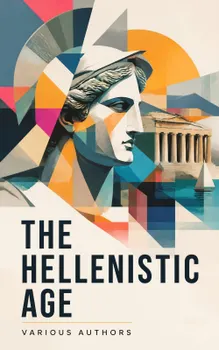
The Hellenistic Age surveys the centuries in which Alexander's conquests transformed the eastern Mediterranean and Near East into a connected, contested world of kingdoms, cities, migrations, and cultural exchange. Combining political narrative with social, religious, and intellectual history, the volume moves from dynastic conflict and imperial administration to the circulation of Greek language, art, learning, and civic institutions. Its range reveals the Hellenistic world not as a mere interval between classical Greece and Rome, but as a creative and consequential historical formation. Its contributors—J. B. Bury, E. A. Barber, Edwyn Bevan, and W. W. Tarn—bring together major traditions of early twentieth-century classical and ancient-historical scholarship. Their differing emphases on institutions, cultural contacts, monarchies, and the wider eastern Mediterranean illuminate the era's complexity. Read collectively, these studies participate in the scholarly revaluation of Hellenism as a cosmopolitan field in which Greek and non-Greek communities reshaped one another. This volume is recommended for students and general readers seeking a substantive introduction to the Hellenistic world, as well as for readers interested in the history of its interpretation. It offers the rare opportunity to compare complementary perspectives within one book, tracing how politics, culture, and scholarship intersect. Its essays invite sustained reflection on empire, hybridity, and the enduring legacy of antiquity.