À propos de ce livre

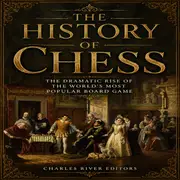
On the afternoon of May 11, 1997, in a television studio on the 34th floor of a building in midtown Manhattan, one of the strongest chess players in history sat down to play the sixth and final game of a match he had expected to win. Garry Kasparov was 34 and had held the world championship for 12 years, making his name a synonym for the human mind operating at the absolute edge of its power. Across the board from him sat an opponent with no mind at all.

The opponent was a black tower of processors built by IBM and named Deep Blue. It did not sit, because it could not sit - it was represented at the board by a quiet engineer who moved the pieces on its behalf. It calculated roughly 200 million positions per second and could not grow tired across a long session.

It is tempting to treat that afternoon as the climax of chess history, the moment the game arrived at its final destination. But perhaps it is better understood as a single frame in a far longer film, one that began roughly 15 centuries earlier and half a world away, on the plains of northern India, where the game did not yet carry a name recognizable to modern societies and the pieces stood not for bishops, queens, and rooks, but for elephants, chariots, and foot soldiers.

The history of chess is, in a true sense, a history of globalization. No other game has crossed so many borders, come in so many variations, or worn so many costumes. It was carried out of India by merchants and diplomats, adopted by the Persian nobility, reshaped by the scholars of Islam, smuggled into Christian Europe along three separate roads, denounced from the pulpit and then preached from it, transformed in a single Spanish generation into something fast and dangerous, refined into a science by a stubborn theorist in the 19th century, made into a political and propagandist instrument of state by the Soviet Union, and at last carried into the circuitry of a machine that beat the best.

Commencez ce livre dès aujourd'hui pour 0 €

  • Accédez à tous les livres de l'app pendant la période d'essai
  • Sans engagement, annulez à tout moment
Essayer gratuitement
Plus de 52 000 personnes ont noté Nextory 5 étoiles sur l'App Store et Google Play.

  1. Women in Ancient Egypt: The History of the Lives and Social Roles of Egyptian Women

    Charles River Editors

  2. The Monterey International Pop Festival: The History and Legacy of the First Major Rock Festival in the 1960s

    Charles River Editors

  3. 4.3

    The Life and Trial of Lizzie Borden : The History of 19th Century America's Most Famous Murder Case

    Charles River Editors

  4. The 332nd Fighter Group: The History of the Tuskegee Airmen’s Fighter Unit during World War II

    Charles River Editors

  5. 3.5

    Patrice Lumumba: The Life and Legacy of the Pan-African Politician Who Became Congo's First Prime Minister

    Charles River Editors

  6. 1.0

    Das mittelalterliche Russland: Die Geschichte und das Erbe der Gruppen, die den russischen Staat im Mittelalter entwickelten

    Charles River Editors

  7. European Imperialism in China: The History and Legacy of the European Powers’ Attempts to Establish Chinese Trade Routes

    Charles River Editors

  8. 4.0

    Medieval England: The History of England from the Fall of Rome to the Rise of the Tudor Dynasty

    Charles River Editors

  9. 4.3

    Project MK-Ultra: The History of the CIA’s Controversial Human Experimentation Program

    Charles River Editors

  10. 4.4

    South Africa: The History and Legacy of the Nation from European Colonization to the End of the Apartheid Era

    Charles River Editors

  11. The Making of Modern China: The History of the World’s Most Populous Country from the Qing Dynasty to Today

    Charles River Editors

  12. The Osage Indian Murders: The History of the Notorious Killing Spree and the Federal Investigations in the Early 20th Century

    Charles River Editors