À propos de ce livre

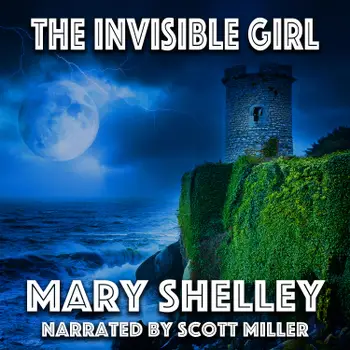
A lonely beacon burns each night in a ruined tower above a wild stretch of sea, guiding sailors through danger while hiding its keeper from every human eye. When Henry Vernon encounters that strange light after a near-fatal voyage, he is drawn into a mystery that feels uncannily personal, as if the tower itself knows the grief he carries.

What begins as curiosity quickly becomes something far more urgent. Vernon’s search through the silent ruin and the surrounding woods turns up small, unsettling traces of a presence that refuses to be seen. The deeper he presses, the more the boundary between memory and reality begins to blur, until the truth waiting in that tower forces him to confront a choice he has avoided since the worst day of his life.

Mary Shelley’s “The Invisible Girl” is a haunting tale shaped by loss, secrecy, and endurance. It moves with quiet intensity, building tension through atmosphere and emotional pressure rather than spectacle. The result is a story that lingers, asking how far someone will go when hope feels impossible and the past refuses to stay buried.

Mary Shelley (1797–1851) is best known for her novel Frankenstein, first published in 1818, which remains one of the most influential works of speculative fiction ever written. She also produced several novels and short pieces, including The Last Man (1826), a bleak vision of a future ravaged by plague, and contributions to literary annuals such as The Keepsake, where “The Invisible Girl” first appeared in 1833. This story reflects her continued interest in isolation, emotional strain, and the consequences of human cruelty, themes that run throughout her work.

Commencez ce livre dès aujourd'hui pour 0 €

  • Accédez à tous les livres de l'app pendant la période d'essai
  • Sans engagement, annulez à tout moment
Essayer gratuitement
Plus de 52 000 personnes ont noté Nextory 5 étoiles sur l'App Store et Google Play.

  1. 50 Chefs-D'œuvre Que Vous Devez Lire Avant De Mourir : Vol 1 (Golden Deer Classics)

    Mark Twain, Stendhal, Edgar Allan Poe, Victor Hugo, Gustave Flaubert, Alexandre Dumas, Arthur Conan Doyle, René Descartes, Lewis Carroll, Charles Baudelaire, Guillaume Apollinaire, Golden Deer, Alain-Fournier, Jules Amédée d'Aurevilly, Paul Bourget, Charlotte Brontë, Emily Brontë, Pierre Corneille, Nikolai Gogol, Gustave Leroux, Marquis De Sade, Jack London, Sinclair Lewis, Daniel Lesueur, Marcel Proust, Edmond Rostand, Jean-Jacques Rousseau, Mary Shelley, Bram Stoker, Sun Tzu, Rodolphe Töpffer, Vatsyayana, Jules Verne, Voltaire, H.G. Wells, Oscar Wilde, Emile Zola

  2. 3.9

    Frankenstein

    Mary Shelley

  3. 4.0

    Frankenstein ou le Prométhée moderne

    Mary Shelley

  4. 4.5

    Frankenstein :

    Mary Shelley

  5. 3.9
    #1

    Frankenstein

    Mary Shelley

  6. 4.5

    Frankenstein ou le Prométhée moderne

    Mary Shelley

  7. 4.3
    #1

    Frankenstein ou Le Prométhée moderne (Tome 1)

    Mary Shelley

  8. On Ghosts : The Woman Who Wrote Frankenstein Explains Why She Still Wants to Believe in Ghosts

    Mary Shelley

  9. 100 obras maestras que debes leer antes de morir

    Francis Scott Fitzgerald, Mary Shelley, Lyman Frank Baum, Edith Nesbit, Dante Alighieri, Jane Austen, Ambrose Bierce, Emily Brontë, Edgar Rice Burroughs, Lewis Carroll, Wilkie Collins, René Descartes, Charles Dickens, Emily Dickinson, Alexandre Dumas, Gustave Flaubert, Benito Pérez Galdós, Johann Wolfgang Goethe, Thomas Hardy, E. T. Hoffmann, Washington Irving, Henry James, James Joyce, Franz Kafka, Gaston Leroux, Federico García Lorca, H.P. Lovecraft, Publio Virgilio Marón, Lucy Maud Montgomery, John William Polidori, Marco Polo, Antoine de Saint-Exupéry, Emilio Salgari, Walter Scott, Mark Twain, Jules Verne

  10. 3.0

    50 Masterpieces you have to read before you die vol: 2

    Lewis Carroll, Mark Twain, Jules Verne, Oscar Wilde, Arthur Conan Doyle, Louisa May Alcott, Jane Austen, G.K. Chesterton, Wilkie Collins, Charles Dickens, Fyodor Dostoyevsky, Alexandre Dumas, F. Scott Fitzgerald, E. M. Forster, Thomas Hardy, Hermann Hesse, James Joyce, Jack London, H.P. Lovecraft, Lucy Maud Montgomery, Edgar Allan Poe, Marcel Proust, William Shakespeare, Robert Louis Stevenson, H.G. Wells, Virginia Woolf, Rudyard Kipling, D. H. Lawrence, Thomas Mann, William Somerset Maugham, Herman Melville, George Sand, Mary Shelley, Walter Scott, Leo Tolstoy, Bram Stoker

  11. 3.9
    #8

    Frankenstein

    Mary Shelley

  12. Frankenstein ; ou, le Prométhée moderne (Version originale de 1818) : Edition Bilingue

    Mary Shelley