À propos de ce livre

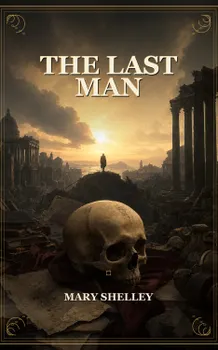
The Last Man chronicles the last days of humanity in the 21st century as it is slowly obliterated by a global pandemic. Radical changes and events across Europe—the king abdicates, turning England into a Republic; war erupts between Greece and Turkey—weaken the fabric of society, allowing an unknown and deadly disease to quickly spread across the world. Political leaders are disorganized; spiritual figures offer little comfort; science yields no answers. Previously distinguished individuals abandon their people in their time of need out of cowardice, while others admirably rise up to the occasion. Yet, none of this matters at all when humanity comes to its end. Mary Shelley wrote this book during the darkest time of her life. Over the years, she had lost her husband, Percy Bysshe Shelley; her close friend, Lord Byron; and her children. Writing the novel became an instrument to process her own hopelessness and isolation—various characters are impressions of her departed loved ones. Contemporary critics were not kind to The Last Man . While Frankenstein was lauded for its depiction of scientific presumption, humanity's impotence and subsequent extinction were deemed offensive. The book faded into near-obscurity and merely survived until its rediscovery in the 1960s. After two World Wars, several epidemics, and the threat of nuclear annihilation, humanity's end may not have seemed as absurd any more. Mary Shelley (died 1851) was one of the most distinguished authors of the Victorian age. Their work has endured across generations and continues to be read and studied worldwide. The early science fiction genre, pioneered by visionaries like H.G. Wells and Jules Verne, laid the groundwork for one of literature's most enduring and imaginative forms. The Last Man stands as an early example of speculative fiction grappling with the promises and perils of science and technology.
Commencez ce livre dès aujourd'hui pour 0 €

  • Accédez à tous les livres de l'app pendant la période d'essai
  • Sans engagement, annulez à tout moment
Essayer gratuitement
Plus de 52 000 personnes ont noté Nextory 5 étoiles sur l'App Store et Google Play.

Livres similaires

Plus de Mary Shelley

  1. 50 Chefs-D'œuvre Que Vous Devez Lire Avant De Mourir : Vol 1 (Golden Deer Classics)

    Mark Twain, Stendhal, Edgar Allan Poe, Victor Hugo, Gustave Flaubert, Alexandre Dumas, Arthur Conan Doyle, René Descartes, Lewis Carroll, Charles Baudelaire, Guillaume Apollinaire, Golden Deer, Alain-Fournier, Jules Amédée d'Aurevilly, Paul Bourget, Charlotte Brontë, Emily Brontë, Pierre Corneille, Nikolai Gogol, Gustave Leroux, Marquis De Sade, Jack London, Sinclair Lewis, Daniel Lesueur, Marcel Proust, Edmond Rostand, Jean-Jacques Rousseau, Mary Shelley, Bram Stoker, Sun Tzu, Rodolphe Töpffer, Vatsyayana, Jules Verne, Voltaire, H.G. Wells, Oscar Wilde, Emile Zola

  2. 4.1

    Frankenstein ou le Prométhée moderne

    Mary Shelley

  3. 4.1

    Frankenstein

    Mary Shelley

  4. 4.0

    Frankenstein ou le Prométhée moderne

    Mary Shelley

  5. 4.6
    #1

    Frankenstein ou Le Prométhée moderne (Tome 1)

    Mary Shelley

  6. 3.9

    Frankenstein

    Mary Shelley

  7. Frankenstein

    Mary Shelley

  8. 4.0

    Frankenstein : Ou le Prométhée moderne

    Mary Shelley

  9. 4.0

    Frankenstein

    Mary Shelley

  10. Nouveau
    3.9

    Frankenstein

    Mary Shelley

  11. 50 Masterpieces you have to read before you die vol: 2

    Joseph Sheridan Fanu, Madame de Fayette, Jerome K Jerome, James Joyce, Charles Kingsley, Rudyard Kipling, Pierre Choderlos Laclos, D. H. Lawrence, Matthew Gregory Lewis, Sinclair Lewis, Jack London, H.P. Lovecraft, Thomas Mann, W. Somerset Maugham, Guy De Maupassant, Herman Melville, Edgar Allan Poe, Marcel Proust, Ann Radcliffe, Samuel Richardson, George Sand, Walter Scott, Mary Shelley, Henryk Sienkiewicz, May Sinclair, Upton Sinclair, Stendhal, Laurence Sterne, Robert Louis Stevenson, Bram Stoker, Harriet Beecher Stowe, Jonathan Swift, Rabindranath Tagore, William Makepeace Thackeray, Leo Tolstoy, Anthony Troloppe, Ivan Turgenev, Mark Twain, Jules Verne, Lew Wallace, H.G. Wells, Rebecca West, Edith Wharton, Oscar Wilde, Cao Xueqin, Émile Zola

  12. 3.9

    Frankenstein

    Mary Shelley