À propos de ce livre

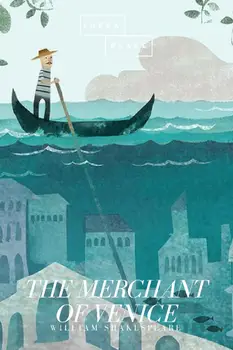
The Merchant of Venice is a 16th-century play by William Shakespeare in which a merchant in Venice must default on a large loan provided by an abused Jewish moneylender. It is believed to have been written between 1596 and 1599. Though classified as a comedy in the First Folio and sharing certain aspects with Shakespeare's other romantic comedies, the play is perhaps most remembered for its dramatic scenes, and is best known for Shylock and the famous "Hath not a Jew eyes?" speech. Also notable is Portia's speech about "the quality of mercy". Critic Harold Bloom listed it among Shakespeare's great comedies. Bassanio, a young Venetian of noble rank, wishes to woo the beautiful and wealthy heiress Portia of Belmont. Having squandered his estate, he needs 3,000 ducats to subsidise his expenditures as a suitor. Bassanio approaches his friend Antonio, a wealthy merchant of Venice who has previously and repeatedly bailed him out. Antonio agrees, but since he is cash-poor – his ships and merchandise are busy at sea – he promises to cover a bond if Bassanio can find a lender, so Bassanio turns to the Jewish moneylender Shylock and names Antonio as the loan's guarantor. Antonio has already antagonized Shylock through his outspoken antisemitism, and because Antonio's habit of lending money without interest forces Shylock to charge lower rates. Shylock is at first reluctant to grant the loan, citing abuse he has suffered at Antonio's hand. He finally agrees to lend the sum to Bassanio without interest upon one condition: if Bassanio is unable to repay it at the specified date, Shylock may take a pound of Antonio's flesh. Bassanio does not want Antonio to accept such a risky condition; Antonio is surprised by what he sees as the moneylender's generosity (no "usance" – interest – is asked for), and he signs the contract. With money at hand, Bassanio leaves for Belmont with his friend Gratiano, who has asked to accompany him.
Commencez ce livre dès aujourd'hui pour 0 €

  • Accédez à tous les livres de l'app pendant la période d'essai
  • Sans engagement, annulez à tout moment
Essayer gratuitement
Plus de 52 000 personnes ont noté Nextory 5 étoiles sur l'App Store et Google Play.

  1. 3.0

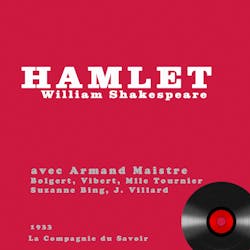
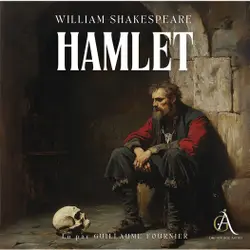
    Hamlet - Livre Audio

    William Shakespeare, Livres audio en français

  2. 3500 citations ultimes

    Marc Aurèle, Jane Austen, Beaumarchais, Napoléon Bonaparte, Bouddha, Winston Churchill, Cicéron, Confucius, Nicolas de Chamfort, Charles de Gaulle, Antoine de Saint-Exupéry, Léonard de Vinci, Denis Diderot, Fiodor Dostoïevski, Albert Einstein, Ralph Waldo Emerson, Anne Frank, Mahatma Gandhi, Emmanuel Kant, Søren Kierkegaard, Martin Luther King, Georg Christoph Lichtenberg, Abraham Lincoln, Montesquieu, Friedrich Nietzsche, Platon, Marcel Proust, Arthur Schopenhauer, William Shakespeare, – Socrate, Baruch Spinoza, Henry David Thoreau, Lao Tseu, Voltaire, Oscar Wilde

  3. 4.0

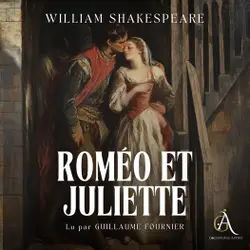
    Roméo et Juliette - Livre Audio

    William Shakespeare, Livres audio en français

  4. Le Songe D'Une Nuit D'Été

    William Shakespeare

  5. 4.0

    Hamlet

    William Shakespeare

  6. 3.0

    50 Masterpieces you have to read before you die vol: 2

    Lewis Carroll, Mark Twain, Jules Verne, Oscar Wilde, Arthur Conan Doyle, Louisa May Alcott, Jane Austen, G.K. Chesterton, Wilkie Collins, Charles Dickens, Fyodor Dostoyevsky, Alexandre Dumas, F. Scott Fitzgerald, E. M. Forster, Thomas Hardy, Hermann Hesse, James Joyce, Jack London, H.P. Lovecraft, Lucy Maud Montgomery, Edgar Allan Poe, Marcel Proust, William Shakespeare, Robert Louis Stevenson, H.G. Wells, Virginia Woolf, Rudyard Kipling, D. H. Lawrence, Thomas Mann, William Somerset Maugham, Herman Melville, George Sand, Mary Shelley, Walter Scott, Leo Tolstoy, Bram Stoker

  7. A Midsummer Night's Dream

    William Shakespeare

  8. 5.0

    Hamlet

    William Shakespeare

  9. 5.0

    Hamlet

    William Shakespeare

  10. 4.3
    #8

    A Midsummer Night's Dream

    William Shakespeare

  11. 4.0

    The Tempest

    William Shakespeare

  12. Masterpieces of Tragedies and Comedies

    Euripides, Sophocles, Aeschylus, William Shakespeare, Henrik Ibsen, Anton Chekhov, Bernard Shaw