


ou

Trouvez une histoire immédiatement

Passer la liste
  1. Certaines couvertures ne sont visibles qu'après connexion
    3.6
    #1

    Fripons T1 : Dessous fripons

    Anonymous

  2. Certaines couvertures ne sont visibles qu'après connexion
    3.5
    #2

    Fripons T2 : Rendez-vous fripons

    Anonymous

  3. Certaines couvertures ne sont visibles qu'après connexion
    3.1
    #4

    Fripons T4 : Eté fripon

    Anonymous

  4. Certaines couvertures ne sont visibles qu'après connexion
    3.2
    #3

    Fripons T3 : Noëls fripons

    Anonymous

  5. The Four Books of Confucianism (Bilingual Edition: English/Chinese)

    Anonymous, Mencius

  6. Bulletin de Lille, 1916-03. Publié sous le contrôle de l'autorité allemande : Témoignage historique de la vie sous l'occupation allemande à Lille en 1916

    Anonymous

  7. Les mille et une nuits: contes choisis

    Anonymous

  8. Les poilus canadiens : Le roman du vingt-deuxième bataillon canadien-français

    Anonymous

  9. Blanche et Bleue ou les deux couleuvres-fées, : Roman chinois (Traduit par Stanislas Julien)

    Anonymous

  10. 5.0

    Gilgamesh (Zongo Classics)

    Anonymous

  11. 5.0
    #40

    Harvard Classics Volume 40 : English Poetry 1: Chaucer To Gray

    Geoffrey Chaucer, Golden Deer Classics, Anonymous, Thomas Wyatt, Henry Howard, George Gascoigne, Edward Dyer, John Lyly, Thomas Lodge, George Peele, Robert Southwell, Samuel Daniel, Michael Drayton, Henry Constable, Edmund Spenser, William Habington, Christopher Marlowe, Richard Rowlands, Thomas Nashe, William Shakespeare, Robert Greene, Richard Barnfield, Thomas Campion, Robert Devereux, Henry Wotton, Edward de Vere, Ben Jonson, John Donne, Joshua Sylvester, William Alexander, Richard Corbet, Thomas Heywood, Thomas Dekker, Francis Beaumont, John Fletcher, John Webster, William Drummond, George Wither, William Browne, Robert Herrick, Francis Quarles, George Herbert, Henry Vaughan, Francis Bacon, James Shirley, Thomas Carew, John Suckling, William D'Avenant, Richard Lovelace, Edmund Waller, William Cartwright, James Graham, Richard Crashaw, Thomas Jordan, Abraham Cowley, Alexander Brome, Andrew Marvell, Earl of Rochester, Charles Sedley, John Dryden, Matthew Prior, Isaac Watts, Lady Grisel Baillie, Joseph Addison, Allan Ramsay, John Gay, Henry Carey, Alexander Pope, Ambrose Philips, Colley Cibber, James Thomson, Thomas Gray, George Bubb Dodington

  12. The Mabinogion (Welsh Arthurian Legends)

    Anonymous

À propos de ce livre

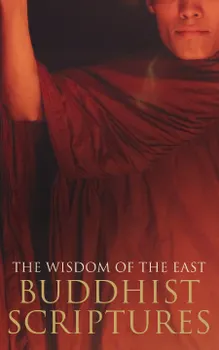
The Wisdom of the East: Buddhist Scriptures presents a concise anthology of foundational Buddhist teachings, gathering passages that illuminate the Buddha's diagnosis of suffering, the discipline of ethical conduct, the cultivation of meditative awareness, and the liberating insight of the Dharma. Its scriptural selections move between aphoristic instruction, narrative exemplum, and reflective discourse, preserving the compressed clarity and contemplative rhythm characteristic of Buddhist literature. As part of the early twentieth-century Wisdom of the East tradition, the volume also participates in the period's effort to make Asian religious and philosophical texts accessible to Western readers without reducing them entirely to abstract doctrine. The author is given as Anonymous, a designation that appropriately directs attention away from individual literary personality and toward the cumulative, communal character of Buddhist scripture. These texts emerged through centuries of oral transmission, interpretation, and redaction within diverse Buddhist communities; their authority rests less on personal authorship than on their preservation of a remembered path to awakening. The anonymous compiler or translator thus serves as a mediator between traditions, selecting materials capable of conveying Buddhism's ethical seriousness and philosophical subtlety to a modern audience. This volume is recommended to readers seeking an accessible yet intellectually substantial introduction to Buddhist thought, particularly those interested in the relationship between scripture, practice, and religious experience. It will reward newcomers with a coherent map of central teachings while offering students of comparative religion a revealing example of how Buddhist texts were presented across cultural boundaries. Readers should approach it not merely as a doctrinal summary, but as an invitation to sustained reflection on suffering, impermanence, compassion, and liberation.