4.5(4)

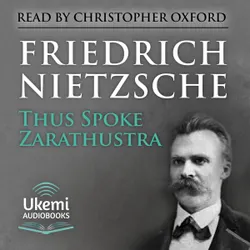
Thus Spoke Zarathustra : Enriched edition.

In "Thus Spoke Zarathustra," Friedrich Nietzsche presents a philosophically rich and poetically profound exploration of morality, individualism, and the nature of existence. Written in a unique blend of prose and verse, the book is structured as a series of discourses delivered by the titular prophet Zarathustra, who descends from the mountains to share his insights with humanity. Nietzsche employs a lyrical style that intertwines existential themes with a critical reexamination of traditional values, challenges pervasive nihilism, and advocates for the creation of one's own values, encapsulated in his concept of the Übermensch. This seminal work is often regarded as a cornerstone of existential philosophy and modern thought, reflecting the anxieties and aspirations of the late 19th century. Friedrich Nietzsche, a pivotal figure in Western philosophy, wrote "Thus Spoke Zarathustra" during a period of personal introspection and health struggles, which informed his radical ideas on morality, religion, and individuality. Influenced by his reading of Arthur Schopenhauer and the burgeoning intellectual currents of his time, Nietzsche sought to articulate a vision that transcends conventional beliefs, prompting a reevaluation of truth and personal agency. His unique cultural context, marked by the decline of religious authority and the rise of secular humanism, played a significant role in shaping the development of his philosophical ideas. This book is essential reading for anyone intrigued by the complexities of human existence and the quest for authenticity. Nietzsche's incisive prose challenges readers to confront their assumptions about morality and societal norms, making it a transformative experience for both philosophical novices and seasoned thinkers. "Thus Spoke Zarathustra" invites you to embrace the journey of self-overcoming and to explore the radical potential of your own will, leading you toward a deeper understanding of life.

In this enriched edition, we have carefully created added value for your reading experience:

- A succinct Introduction situates the work's timeless appeal and themes.

- The Synopsis outlines the central plot, highlighting key developments without spoiling critical twists.

- A detailed Historical Context immerses you in the era's events and influences that shaped the writing.

- An Author Biography reveals milestones in the author's life, illuminating the personal insights behind the text.

- A thorough Analysis dissects symbols, motifs, and character arcs to unearth underlying meanings.

- Reflection questions prompt you to engage personally with the work's messages, connecting them to modern life.

- Hand‐picked Memorable Quotes shine a spotlight on moments of literary brilliance.

- Interactive footnotes clarify unusual references, historical allusions, and archaic phrases for an effortless, more informed read.

À propos de ce livre

In "Thus Spoke Zarathustra," Friedrich Nietzsche presents a philosophically rich and poetically profound exploration of morality, individualism, and the nature of existence. Written in a unique blend of prose and verse, the book is structured as a series of discourses delivered by the titular prophet Zarathustra, who descends from the mountains to share his insights with humanity. Nietzsche employs a lyrical style that intertwines existential themes with a critical reexamination of traditional values, challenges pervasive nihilism, and advocates for the creation of one's own values, encapsulated in his concept of the Übermensch. This seminal work is often regarded as a cornerstone of existential philosophy and modern thought, reflecting the anxieties and aspirations of the late 19th century. Friedrich Nietzsche, a pivotal figure in Western philosophy, wrote "Thus Spoke Zarathustra" during a period of personal introspection and health struggles, which informed his radical ideas on morality, religion, and individuality. Influenced by his reading of Arthur Schopenhauer and the burgeoning intellectual currents of his time, Nietzsche sought to articulate a vision that transcends conventional beliefs, prompting a reevaluation of truth and personal agency. His unique cultural context, marked by the decline of religious authority and the rise of secular humanism, played a significant role in shaping the development of his philosophical ideas. This book is essential reading for anyone intrigued by the complexities of human existence and the quest for authenticity. Nietzsche's incisive prose challenges readers to confront their assumptions about morality and societal norms, making it a transformative experience for both philosophical novices and seasoned thinkers. "Thus Spoke Zarathustra" invites you to embrace the journey of self-overcoming and to explore the radical potential of your own will, leading you toward a deeper understanding of life.

In this enriched edition, we have carefully created added value for your reading experience:

- A succinct Introduction situates the work's timeless appeal and themes.

- The Synopsis outlines the central plot, highlighting key developments without spoiling critical twists.

- A detailed Historical Context immerses you in the era's events and influences that shaped the writing.

- An Author Biography reveals milestones in the author's life, illuminating the personal insights behind the text.

- A thorough Analysis dissects symbols, motifs, and character arcs to unearth underlying meanings.

- Reflection questions prompt you to engage personally with the work's messages, connecting them to modern life.

- Hand‐picked Memorable Quotes shine a spotlight on moments of literary brilliance.

- Interactive footnotes clarify unusual references, historical allusions, and archaic phrases for an effortless, more informed read.

Commencez ce livre dès aujourd'hui pour 0 €

  • Accédez à tous les livres de l'app pendant la période d'essai
  • Sans engagement, annulez à tout moment
Essayer gratuitement
Plus de 52 000 personnes ont noté Nextory 5 étoiles sur l'App Store et Google Play.

  1. 4.0

    Ainsi Parlait Zarathoustra - Livre Audio

    Friedrich Nietzsche, Livres audio en français

  2. 3500 citations ultimes

    Marc Aurèle, Jane Austen, Beaumarchais, Napoléon Bonaparte, Bouddha, Winston Churchill, Cicéron, Confucius, Nicolas de Chamfort, Charles de Gaulle, Antoine de Saint-Exupéry, Léonard de Vinci, Denis Diderot, Fiodor Dostoïevski, Albert Einstein, Ralph Waldo Emerson, Anne Frank, Mahatma Gandhi, Emmanuel Kant, Søren Kierkegaard, Martin Luther King, Georg Christoph Lichtenberg, Abraham Lincoln, Montesquieu, Friedrich Nietzsche, Platon, Marcel Proust, Arthur Schopenhauer, William Shakespeare, – Socrate, Baruch Spinoza, Henry David Thoreau, Lao Tseu, Voltaire, Oscar Wilde

  3. 50 Chefs-D'œuvre Que Vous Devez Lire Avant De Mourir: Vol 2

    Honoré de Balzac, Alphonse Daudet, Arthur Conan Doyle, Alexandre Dumas, Gustave Flaubert, Francis Scott Fitzgerald, Nikolai Gogol, Victor Hugo, Maurice Leblanc, Jack London, Madame de La Fayette, Guy De Maupassant, Friedrich Nietzsche, Jean-Jacques Rousseau, Robert Louis Stevenson, Jules Verne, H.G. Wells, Michel de Montaigne, Golden Deer Classics

  4. 1800 Citations de philosophes

    Aristote, Épicure, Platon, Thalès de Milet, – Socrate, Protagoras, Anaximandre, Épictète, Héraclite, Marc Aurèle, René Descartes, Michel de Montaigne, Alexis de Tocqueville, Voltaire, Charles De Montesquieu, Jean-Jacques Rousseau, Emmanuel Kant, Hannah Arendt, Gottfried Wilhelm Leibniz, Georg Wilhelm Friedrich Hegel, Friedrich Nietzsche, Arthur Schopenhauer, David Hume, John Locke, Francis Bacon, Thomas Hobbes, Thomas More, Confucius, Érasme, Lao Tseu, Baruch Spinoza, Søren Kierkegaard, Nicolas Machiavel, Thomas d'Aquin, Henry David Thoreau

  5. Ainsi parlait Zarathoustra

    Friedrich Nietzsche

  6. Par delà le bien et le mal -- La généalogie de la morale

    Friedrich Nietzsche

  7. Ainsi Parlait Zarathoustra

    Friedrich Nietzsche

  8. Le Gai Savoir - Livre Audio

    Friedrich Nietzsche, Livres audio en français

  9. 1.0

    Thus spake Zarathustra

    Friedrich Nietzsche

  10. 300 citations de philosophes allemands

    Emmanuel Kant, Hannah Arendt, Gottfried Wilhelm Leibniz, Georg Wilhelm Friedrich Hegel, Friedrich Nietzsche, Arthur Schopenhauer

  11. 50 citations de Nietzsche

    Friedrich Nietzsche

  12. The Philosophy Collection

    Marcus Aurelius, Miyamoto Musashi, Ralph Waldo Emerson, Friedrich Nietzsche, Søren Kierkegaard, Sun Tzu, Epictetus, Confucius, Plato, Lucretius, Seneca