À propos de ce livre

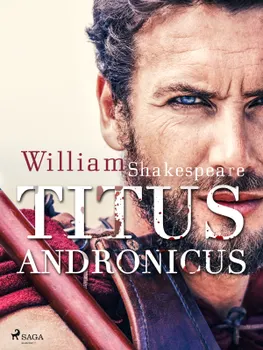
The great Roman general, Titus Andronicus, returns home after fighting Rome’s enemies for the last 10 years. He brings along his captives, Tamora, Queen of the Goths, her three sons and Aaron the Moor.Having lost 21 of his 25 sons in the conflict, Titus decides to sacrifice one of Tamora’s sons, following Roman customs. He then offers Tamora as a slave to the new Roman emperor, Saturninus. Meanwhile, Saturninus promises Titus to make his daughter Lavinia his empress. After his brother Bassianus takes off with her, Saturninus marries Tamora instead. Tamora, angry at Titus, makes it her mission to get back at Titus. After becoming the emperor’s wife, she uses her position to exact revenge on Titus and his family. Driven by his own sense of honor and duty, Titus and his family retaliate with dire consequences for all involved. "Titus Andronicus" is a drama about honor, loyalty, death and revenge. In this play, Shakespeare takes on cannibalism, rape, murder, mutilation and punishment. These themes might be familiar to the fans of dramas like "Pulp Fiction", "Spartacus" or 'Gladiator".William Shakespeare (1564-1616) is widely considered the world's greatest dramatist and is often referred to as England's national poet or the Bard. Most famous for his timeless plays, he also wrote a multitude of poems and sonnets. Shakespeare was the blockbuster writer of his day, his many works concerning universal themes of life, love, death, revenge, grief, jealousy, murder, magic, and mystery. Among some of his most famous are 'Macbeth', 'Romeo and Juliet', and 'Hamlet', but the list is long, and many continue to be studied and performed, both their original form and modern adaptations.
Commencez ce livre dès aujourd'hui pour 0 €

  • Accédez à tous les livres de l'app pendant la période d'essai
  • Sans engagement, annulez à tout moment
Essayer gratuitement
Plus de 52 000 personnes ont noté Nextory 5 étoiles sur l'App Store et Google Play.

  1. Développez votre culture générale en 1000 citations

    Napoléon Bonaparte, Winston Churchill, Confucius, Albert Einstein, Friedrich Nietzsche, Platon, William Shakespeare, Lao Tseu, Sun Tzu

  2. 4.5

    Roméo et Juliette

    William Shakespeare

  3. 3.0

    Hamlet - Livre Audio

    William Shakespeare, Livres audio en français

  4. 5.0

    Hamlet

    William Shakespeare

  5. Roméo et Juliette : Édition enrichie. Tragédie

    William Shakespeare

  6. 3500 citations ultimes

    Marc Aurèle, Jane Austen, Beaumarchais, Napoléon Bonaparte, Bouddha, Winston Churchill, Cicéron, Confucius, Nicolas de Chamfort, Charles de Gaulle, Antoine de Saint-Exupéry, Léonard de Vinci, Denis Diderot, Fiodor Dostoïevski, Albert Einstein, Ralph Waldo Emerson, Anne Frank, Mahatma Gandhi, Emmanuel Kant, Søren Kierkegaard, Martin Luther King, Georg Christoph Lichtenberg, Abraham Lincoln, Montesquieu, Friedrich Nietzsche, Platon, Marcel Proust, Arthur Schopenhauer, William Shakespeare, – Socrate, Baruch Spinoza, Henry David Thoreau, Lao Tseu, Voltaire, Oscar Wilde

  7. 4.0

    Roméo et Juliette - Livre Audio

    William Shakespeare, Livres audio en français

  8. 4.0

    Hamlet

    William Shakespeare

  9. 3.0

    50 Masterpieces you have to read before you die vol: 2

    Lewis Carroll, Mark Twain, Jules Verne, Oscar Wilde, Arthur Conan Doyle, Louisa May Alcott, Jane Austen, G.K. Chesterton, Wilkie Collins, Charles Dickens, Fyodor Dostoyevsky, Alexandre Dumas, F. Scott Fitzgerald, E. M. Forster, Thomas Hardy, Hermann Hesse, James Joyce, Jack London, H.P. Lovecraft, Lucy Maud Montgomery, Edgar Allan Poe, Marcel Proust, William Shakespeare, Robert Louis Stevenson, H.G. Wells, Virginia Woolf, Rudyard Kipling, D. H. Lawrence, Thomas Mann, William Somerset Maugham, Herman Melville, George Sand, Mary Shelley, Walter Scott, Leo Tolstoy, Bram Stoker

  10. A Midsummer Night's Dream

    William Shakespeare

  11. 5.0

    Hamlet

    William Shakespeare

  12. 4.3
    #8

    A Midsummer Night's Dream

    William Shakespeare