3.0(1)

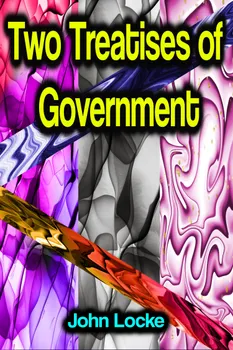
Two Treatises of Government

Before modern democracy had a name, it had an argument.

In Two Treatises of Government, John Locke lays the intellectual foundation of constitutional rule, individual liberty, and the social contract. Written in the turbulence of seventeenth-century England, this bold political work challenges absolute monarchy and asserts that legitimate authority arises not from divine right—but from the consent of the governed.

Locke’s philosophy marked a decisive turning point in Western political thought. Rejecting inherited power structures, he argued that individuals possess natural rights—life, liberty, and property—that precede the state itself. Government, he maintained, exists to protect these rights, and when it fails, citizens retain the moral authority to resist.

Within these treatises, listeners encounter Locke’s systematic dismantling of patriarchal absolutism, his theory of civil society, and his enduring articulation of limited government. He examines the origin of political power, the role of law, and the conditions under which authority becomes tyranny—without diluting the radical implications of his reasoning.

For more than three centuries, Two Treatises of Government has shaped revolutions, constitutions, and democratic institutions worldwide. Its influence echoes in the American Declaration of Independence and modern liberal political theory.

Presented with clear, deliberate AI narration, this edition allows Locke’s precise arguments to unfold with clarity and measured cadence, creating an immersive listening experience suited for scholars, students, and serious thinkers.

Return to the origins of modern liberty.

Begin listening today.

À propos de ce livre

Before modern democracy had a name, it had an argument.

In Two Treatises of Government, John Locke lays the intellectual foundation of constitutional rule, individual liberty, and the social contract. Written in the turbulence of seventeenth-century England, this bold political work challenges absolute monarchy and asserts that legitimate authority arises not from divine right—but from the consent of the governed.

Locke’s philosophy marked a decisive turning point in Western political thought. Rejecting inherited power structures, he argued that individuals possess natural rights—life, liberty, and property—that precede the state itself. Government, he maintained, exists to protect these rights, and when it fails, citizens retain the moral authority to resist.

Within these treatises, listeners encounter Locke’s systematic dismantling of patriarchal absolutism, his theory of civil society, and his enduring articulation of limited government. He examines the origin of political power, the role of law, and the conditions under which authority becomes tyranny—without diluting the radical implications of his reasoning.

For more than three centuries, Two Treatises of Government has shaped revolutions, constitutions, and democratic institutions worldwide. Its influence echoes in the American Declaration of Independence and modern liberal political theory.

Presented with clear, deliberate AI narration, this edition allows Locke’s precise arguments to unfold with clarity and measured cadence, creating an immersive listening experience suited for scholars, students, and serious thinkers.

Return to the origins of modern liberty.

Begin listening today.

Commencez ce livre dès aujourd'hui pour 0 €

  • Accédez à tous les livres de l'app pendant la période d'essai
  • Sans engagement, annulez à tout moment
Essayer gratuitement
Plus de 52 000 personnes ont noté Nextory 5 étoiles sur l'App Store et Google Play.

  1. 1800 Citations de philosophes

    Aristote, Épicure, Platon, Thalès de Milet, – Socrate, Protagoras, Anaximandre, Épictète, Héraclite, Marc Aurèle, René Descartes, Michel de Montaigne, Alexis de Tocqueville, Voltaire, Charles De Montesquieu, Jean-Jacques Rousseau, Emmanuel Kant, Hannah Arendt, Gottfried Wilhelm Leibniz, Georg Wilhelm Friedrich Hegel, Friedrich Nietzsche, Arthur Schopenhauer, David Hume, John Locke, Francis Bacon, Thomas Hobbes, Thomas More, Confucius, Érasme, Lao Tseu, Baruch Spinoza, Søren Kierkegaard, Nicolas Machiavel, Thomas d'Aquin, Henry David Thoreau

  2. 250 citations de philosophes anglais

    David Hume, John Locke, Francis Bacon, Thomas Hobbes, Thomas More

  3. #1

    An Essay Concerning Human Understanding. Volume One

    John Locke

  4. #2

    An Essay Concerning Human Understanding. Volume Two

    John Locke

  5. Lettre sur la Tolérance

    John Locke

  6. Lettre sur la tolérance

    John Locke

  7. Second Treatise of Government :

    John Locke

  8. 50 citations de John Locke

    John Locke

  9. An Essay Concerning Human Understanding (Vol. 1) : Exploring Empiricism and the Philosophy of Mind by John Locke

    John Locke

  10. Muutamia mietteitä kasvatuksesta

    John Locke

  11. 50 Meisterwerke der Philosophie : Metaphysik, Das Gastmahl, Bhagavadgita, Tractatus logico-philosophicus, Kritik der reinen Vernunft, Also sprach Zarathustra, Selbstbetrachtungen von Marcus Aurelius

    Ludwig Wittgenstein, Edmund Husserl, Karl Marx, Søren Kierkegaard, Friedrich Nietzsche, Ralph Waldo Emerson, John Stuart Mill, Georg Wilhelm Friedrich Hegel, Friedrich Schelling, Johann Gottlieb Fichte, Immanuel Kant, John Locke, Montesquieu, Jean-Jacques Rousseau, David Hume, Gottfried Wilhelm Leibniz, Baruch Spinoza, - Konfuzius, Lao Tse, Platon, Xenophon, - Aristoteles, Marcus Tullius Cicero, Seneca, Epiktet, Marc Aurel, Plotin, Thomas von Aquin, Nicolaus von Cues, - Erasmus von Rotterdam, Niccolò Machiavelli, Tommaso Campanella, Martin Luther, Giordano Bruno, Samuel von Pufendorf, Abbé Castel de Saint-Pierre, Michel de Montaigne, René Descartes, Francis Bacon, Blaise Pascal