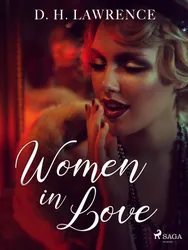
Women in Love

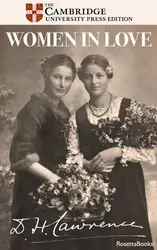
Women in Love is a novel by British author D. H. Lawrence published in 1920. It is a sequel to his earlier novel The Rainbow (1915), and follows the continuing loves and lives of the Brangwen sisters, Gudrun and Ursula.

Gudrun Brangwen, an artist, pursues a destructive relationship with Gerald Crich, an industrialist. Lawrence contrasts this pair with the love that develops between Ursula and Rupert Birkin, an alienated intellectual who articulates many opinions associated with the author. The emotional relationships thus established are given further depth and tension by an intense psychological and physical attraction between Gerald and Rupert.

The novel ranges over the whole of British society before the time of the First World War and eventually ends high up in the snows of the Tyrolean Alps.

As with most of Lawrence's works, Women in Love caused controversy over its sexual subject matter. One early reviewer said of it, "I do not claim to be a literary critic, but I know dirt when I smell it, and here is dirt in heaps—festering, putrid heaps which smell to high Heaven." It also later stirred criticism for its portrayal of love, denounced as chauvinistic and centred upon the phallus by Simone de Beauvoir in The Second Sex.

David Herbert Lawrence (1885-1930) was an English novelist, poet, playwright, essayist, literary critic and painter who published as D. H. Lawrence. Lawrence is perhaps best known for his novels Sons and Lovers, The Rainbow, Women in Love and Lady Chatterley's Lover.
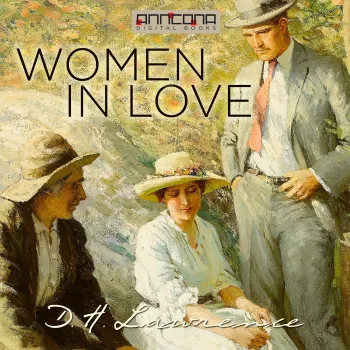
À propos de ce livre

Women in Love is a novel by British author D. H. Lawrence published in 1920. It is a sequel to his earlier novel The Rainbow (1915), and follows the continuing loves and lives of the Brangwen sisters, Gudrun and Ursula.

Gudrun Brangwen, an artist, pursues a destructive relationship with Gerald Crich, an industrialist. Lawrence contrasts this pair with the love that develops between Ursula and Rupert Birkin, an alienated intellectual who articulates many opinions associated with the author. The emotional relationships thus established are given further depth and tension by an intense psychological and physical attraction between Gerald and Rupert.

The novel ranges over the whole of British society before the time of the First World War and eventually ends high up in the snows of the Tyrolean Alps.

As with most of Lawrence's works, Women in Love caused controversy over its sexual subject matter. One early reviewer said of it, "I do not claim to be a literary critic, but I know dirt when I smell it, and here is dirt in heaps—festering, putrid heaps which smell to high Heaven." It also later stirred criticism for its portrayal of love, denounced as chauvinistic and centred upon the phallus by Simone de Beauvoir in The Second Sex.

David Herbert Lawrence (1885-1930) was an English novelist, poet, playwright, essayist, literary critic and painter who published as D. H. Lawrence. Lawrence is perhaps best known for his novels Sons and Lovers, The Rainbow, Women in Love and Lady Chatterley's Lover.
Commencez ce livre dès aujourd'hui pour 0 €

  • Accédez à tous les livres de l'app pendant la période d'essai
  • Sans engagement, annulez à tout moment
Essayer gratuitement
Plus de 52 000 personnes ont noté Nextory 5 étoiles sur l'App Store et Google Play.

  1. Nouveau
    3.0

    50 Masterpieces you have to read before you die vol: 2

    Lewis Carroll, Mark Twain, Jules Verne, Oscar Wilde, Arthur Conan Doyle, Louisa May Alcott, Jane Austen, G.K. Chesterton, Wilkie Collins, Charles Dickens, Fyodor Dostoyevsky, Alexandre Dumas, F. Scott Fitzgerald, E. M. Forster, Thomas Hardy, Hermann Hesse, James Joyce, Jack London, H.P. Lovecraft, Lucy Maud Montgomery, Edgar Allan Poe, Marcel Proust, William Shakespeare, Robert Louis Stevenson, H.G. Wells, Virginia Woolf, Rudyard Kipling, D. H. Lawrence, Thomas Mann, William Somerset Maugham, Herman Melville, George Sand, Mary Shelley, Walter Scott, Leo Tolstoy, Bram Stoker

  2. 4.2

    Lady Chatterley's Lover

    D. H. Lawrence

  3. Certaines couvertures ne sont visibles qu'après connexion
    2.5

    Lady Chatterley's Lover

    D. H. Lawrence

  4. 50 Masterpieces You Must Read Before You Die: Volume 2 : Timeless Classics That Will Enrich Your Mind and Soul

    Louisa May Alcott, Jane Austen, Joseph Conrad, D. H. Lawrence, George Eliot, Leo Tolstoy, James Joyce, Charles Dickens, Bram Stoker, Oscar Wilde, Honoré de Balzac, Edgar Rice Burroughs, Anne Brontë, Charlotte Brontë, Emily Brontë, Lewis Carroll, Willa Cather, Miguel de Cervantes, E. E. Cummings, Fyodor Dostoyevsky, Daniel Defoe, Arthur Conan Doyle, Alexandre Dumas, Gustave Flaubert, Henry James, Victor Hugo, The griffin classics

  5. 5.0

    12 Masterpieces of Erotic literature. Illustrated : Fanny Hill, The 120 Days of Sodom, Venus in Furs, Autobiography of a Flea, The Romance of Lust, The Nunnery Tales and others

    Miche Millot, John Cleland, Daniel Defoe, Marquis De Sade, D. H. Lawrence, Leopold von Sacher-Masoch, Anonymous, Jack Saul

  6. The Rainbow : D. H. Lawrence

    D. H. Lawrence

  7. The Greatest Feminist Classics in One Volume : Including 100+ Biographies & Memoirs of the Most Influential Women in History

    Jane Austen, Charlotte Brontë, Fanny Burney, Mary Wollstonecraft, Nathaniel Hawthorne, Rebecca Harding Davis, Louisa May Alcott, Henry James, Leo Tolstoy, Thomas Hardy, Elizabeth Gaskell, Charlotte Perkins Gilman, Henrik Ibsen, Kate Chopin, Grant Allen, Elizabeth Burgoyne Corbett, H.G. Wells, Gene Stratton-Porter, Willa Cather, Edith Wharton, Theodore Dreiser, Ada Cambridge, Mary Johnston, Marietta Holley, Elia Wilkinson Peattie, Virginia Woolf, Zona Gale, Elizabeth von Arnim, D. H. Lawrence, Margaret Oliphant, Lucy Maud Montgomery, Margaret Mitchell, Harriet Martineau, Nikolai Leskov, Margaret Deland, Sojourner Truth, Mary Ware Dennett, John Stuart Mill, Sarah H. Bradford, Julia Ward Howe, Elizabeth Cady Stanton, Margaret Fuller

  8. D. H. Lawrence: The Complete Novels

    D. H. Lawrence

  9. 4.5

    L'amant de Lady Chatterley

    D. H. Lawrence

  10. 50 Masterpieces you have to read before you die vol: 1

    Louisa May Alcott, Jane Austen, Joseph Conrad, D. H. Lawrence, George Eliot, Leo Tolstoy, James Joyce, Charles Dickens, Bram Stoker, Oscar Wilde, Honoré de Balzac, Edgar Rice Burroughs, Anne Brontë, Charlotte Brontë, Emily Brontë, Lewis Carroll, Willa Cather, Miguel de Cervantes, E. Cummings, Fyodor Dostoyevsky, Daniel Defoe, Arthur Conan Doyle, Alexandre Dumas, Gustave Flaubert, Henry James, Victor Hugo

  11. Vampire Tales: The Big Collection (80+ stories in one volume: The Viy, The Fate of Madame Cabanel, The Parasite, Good Lady Ducayne, Count Magnus, For the Blood Is the Life, Dracula’s Guest, The Broken Fang, Blood Lust, Four Wooden Stakes...)

    Fred M. White, Mary E. Braddon, E. G. Swain, Ulric Daubeny, Cynthia Asquith, Hesketh V. Pritchard, Nikolai Gogol, Bram Stoker, Clark Ashton Smith, Edgar Allan Poe, Jan Neruda, Gilbert William, Sabine Baring-Gould, Alexei Tolstoy, John William Polidori, Johann Ludwig Tieck, Pu Songling, Victor Roman, Edith Wharton, Robert Louis Stevenson, Everil Worrell, Dion Fortune, Uel Key, Horacio Quiroga, Hanns Heinz Ewers, Claude Askew, Théophile Gaultier, Luigi Capuana, Louise J. Strong, Norris Frank, Mary E. Wilkins Freeman, Augustus Hare, F.G. Loring, Hume Nisbet, H. B. Marriott Watson, Eric Stenbock, Marsh Richard, Anne Crawford, Cholmondeley Mary, Hawthorne Julian, Karl Heinrich Ulrichs, Phil Robinson, Eliza Lynn Linton, A. B. Mitford, Vincent O'Sullivan, Edith Nesbit, Guy De Maupassant, Lee Vernon, D. H. Lawrence, Robert E. Howard, F. Marion Crawford, Walter de la Mare, Blackwood Algernon, Ambrose Bierce, E F Benson, M. R. James, Andreyev Leonid, Howard Phillips Lovecraft, Arthur Conan Doyle, Herbert George Wells

  12. 50 Masterpieces you have to read

    Louisa May Alcott, Jane Austen, Joseph Conrad, D. H. Lawrence, George Eliot, Leo Tolstoy, James Joyce, Charles Dickens, Bram Stoker, Oscar Wilde, Honoré de Balzac, Edgar Rice Burroughs, Anne Brontë, Charlotte Brontë, Emily Brontë, Lewis Carroll, Willa Cather, Miguel de Cervantes, E. Cummings, Fyodor Dostoyevsky, Daniel Defoe, Arthur Conan Doyle, Alexandre Dumas, Gustave Flaubert, Henry James, Victor Hugo