4.1(7)

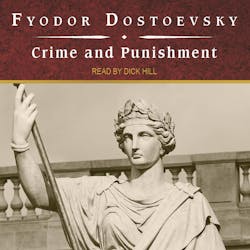
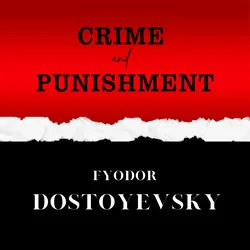
Crime and Punishment

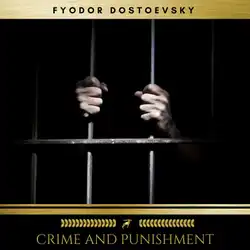
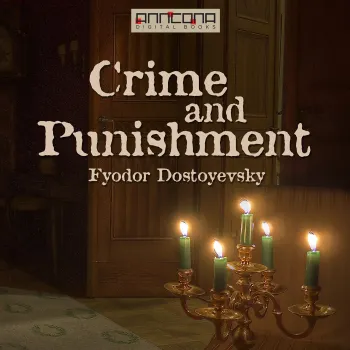
Crime and Punishment is a novel by the Russian author Fyodor Dostoyevsky. It was first published in the literary journal "The Russian Messenger" in twelve monthly instalments during 1866. It was later published in a single volume.

It is the second of Dostoyevsky's full-length novels following his return from ten years of exile in Siberia. Crime and Punishment is considered the first great novel of his "mature" period of writing

Crime and Punishment focuses on the mental anguish and moral dilemmas of Rodion Raskolnikov, an impoverished ex-student in St. Petersburg who formulates and executes a plan to kill an unscrupulous pawnbroker for her cash.

Raskolnikov argues that with the pawnbroker's money he can perform good deeds to counterbalance the crime, while ridding the world of a worthless vermin. He also commits this murder to test his own hypothesis that some people are naturally capable of such things, and even have the right to do them.

Several times throughout the novel, Raskolnikov justifies his actions by comparing himself with Napoleon Bonaparte, believing that murder is permissible in pursuit of a higher purpose. Much of the suspense of the novel is psychological, as the reader agonizes over Raskolnikov's efforts to evade justice for his crime.

Much of it is also moral, as the question of whether or not Raskolnikov himself can find redemption as a human being leads to a surprising culmination.

Fyodor Mikhailovich Dostoyevsky was a Russian novelist, short story writer and essayist. Dostoyevsky's literary works explore human psychology in the context of the troubled political, social and spiritual atmosphere of 19th-century Russia.

Although he began writing in the mid-1840s, his most memorable works—including Crime and Punishment, The Idiot and The Brothers Karamazov—are from his later years. His output consists of eleven novels, three novellas, seventeen short novels and three essays. Many literary critics rate him as one of the greatest and most prominent psychologists in world literature.
Om denne boken

Crime and Punishment is a novel by the Russian author Fyodor Dostoyevsky. It was first published in the literary journal "The Russian Messenger" in twelve monthly instalments during 1866. It was later published in a single volume.

It is the second of Dostoyevsky's full-length novels following his return from ten years of exile in Siberia. Crime and Punishment is considered the first great novel of his "mature" period of writing

Crime and Punishment focuses on the mental anguish and moral dilemmas of Rodion Raskolnikov, an impoverished ex-student in St. Petersburg who formulates and executes a plan to kill an unscrupulous pawnbroker for her cash.

Raskolnikov argues that with the pawnbroker's money he can perform good deeds to counterbalance the crime, while ridding the world of a worthless vermin. He also commits this murder to test his own hypothesis that some people are naturally capable of such things, and even have the right to do them.

Several times throughout the novel, Raskolnikov justifies his actions by comparing himself with Napoleon Bonaparte, believing that murder is permissible in pursuit of a higher purpose. Much of the suspense of the novel is psychological, as the reader agonizes over Raskolnikov's efforts to evade justice for his crime.

Much of it is also moral, as the question of whether or not Raskolnikov himself can find redemption as a human being leads to a surprising culmination.

Fyodor Mikhailovich Dostoyevsky was a Russian novelist, short story writer and essayist. Dostoyevsky's literary works explore human psychology in the context of the troubled political, social and spiritual atmosphere of 19th-century Russia.

Although he began writing in the mid-1840s, his most memorable works—including Crime and Punishment, The Idiot and The Brothers Karamazov—are from his later years. His output consists of eleven novels, three novellas, seventeen short novels and three essays. Many literary critics rate him as one of the greatest and most prominent psychologists in world literature.

Kom i gang med denne boken i dag for 0 kr

  • Få full tilgang til alle bøkene i appen i prøveperioden
  • Ingen forpliktelser, si opp når du vil
Prøv gratis nå
Mer enn 52 000 personer har gitt Nextory 5 stjerner på App Store og Google Play.

  1. World's Greatest Short Stories

    Daniel Defoe, Benjamin Franklin, Washington Irving, Mateo Falcone, Charlotte Bronte, Mary Shelley, Nathaniel Hawthorne, Nikolai Gogol, Edgar Allan Poe, Fyodor Dostoyevsky, Charles Dickens, Herman Melville, Mark Twain, Guy De Maupassant, Oscar Wilde, Leo Tolstoy, H.G. Wells, Ambrose Bierce, Stephen Crane, Kate Chopin, Jack London, E. M. Forster

  2. The Essential Classics Collection : 1984; Great Expectations; The Brothers Karamazov; Pride and Prejudice; & The War of the Worlds

    George Orwell, Fyodor Dostoyevsky, Charles Dickens, Jane Austen, H.G. Wells

  3. 3.0

    50 Masterpieces you have to read before you die vol: 1 (2020 Edition) : Included: Little Women, The Richest Man in Babylon Emma, The Call Of The Wild ....

    Louisa May Alcott, Dante Alighieri, Marcus Aurelius, Jane Austen, L. Frank Baum, Charlotte Brontë, Emily Brontë, Anne Brontë, Miguel de Cervantes, Agatha Christie, George S. Clason, Arthur Conan Doyle, Joseph Conrad, Charles Dickens, Fyodor Dostoyevsky, Alexandre Dumas, George Eliot, G.K. Chesterton, G.K. Chesterton, Zane Grey, Nathaniel Hawthorne, Napoleon Hill, Homer, Victor Hugo, Frances Hodgson Burnett, Washington Irving, Henry James, Franz Kafka, Rudyard Kipling, Jack London, Leo Tolstoy, H.P. Lovecraft, Lucy Maud Montgomery, Joseph Murphy, Robert Louis Stevenson, Edgar Allan Poe, Marcel Proust, Publius, Mary Shelley, Bram Stoker, Mark Twain, Sun Tzu, Lew Wallace, Wallace D. Wattles, H.G. Wells

  4. The Greatest Christmas Stories: 120+ Authors, 250+ Magical Christmas Stories

    A.A. Milne, Santa Claus, Adelaide Anne Procter, Algernon Blackwood, Alice Duer Miller, Alice Hale Burnett, Amy Ella Blanchard, Andy Adams, Anne Hollingsworth Wharton, Annie Eliot Trumbull, Annie Roe Carr, Anonymous, Anton Chekhov, Arthur Conan Doyle, Banjo Paterson, Beatrix Potter, Berthold Auerbach, Bret Harte, Brothers Grimm, Grimm Brothers, C.H. Mead, Cecil Frances Alexander, Charles Dickens, Charles Edward Carryl, Christopher North, Clement Clarke Moore, Cornelia Redmond, Don Marquis, Dylan Thomas, Edward Payson Roe, Eleanor Hallowell Abbott, Elia W. Peattie, Elizabeth Anderson, Elizabeth Margaret Chandler, Ella Wheeler Wilcox, Ellis Parker Butler, Ernest Vincent Wright, Eugene Field, Evaleen Stein, Florence L. Barclay, Francis Pharcellus Church, Frank Stockton, Fyodor Dostoevsky, Fyodor Dostoyevsky, G.K. Chesterton, George A. Baker, George Augustus Sala, George Robert Sims, H.W. Collingwood, H.P. Lovecraft, Hans Christian Andersen, Harriet Beecher Stowe, Henry van Dyke, Henry Wadsworth Longfellow, Hesba Stretton, Hezekiah Butterworth, Jacob August Riis, James Whitcomb Riley, John Bowring, John Greenleaf Whittier, John Kendrick Bangs, John Masefield, John Milton, John Strange Winter, José María de Pereda, Julia Schayer, Juliana Horatia Ewing, Kate Douglas Wiggin, Katharine Lee Bates, Kenneth Grahame, L. Frank Baum, Lyman Frank Baum, Laura Lee Hope, Leo Tolstoy, Letitia Elizabeth Landon, Lewis Carroll, Lope de Vega, Louisa May Alcott, Lucy Maud Montgomery, L.M. Montgomery, M.E.S, Margaret E. Sangster, Margery Williams, Mark Twain, Martha Finley, Mary E. Wilkins Freeman, Mary Louisa Molesworth, Meredith Nicholson, Montague Rhodes James, Mother Goose, W. H. Corning, Nahum Tate, Nathaniel Hawthorne, Newton Booth Tarkington, O.Henry, Olive Thorne Miller, Paul Laurence Dunbar, Peter Christen Asbjornsen, Ralph Henry Barbour, Richmal Crompton, Robert Browning, Robert Burns, Robert Ervin Howard, Robert Frost, Robert Ingersoll, Robert Louis Stevenson, R.L. Stevenson, Rose Terry Cooke, Rudyard Kipling, S. Weir Mitchell, Saki, Sara Teasdale, Stephen Leacock, Theodore Parker, Thomas Chatterton, Thomas Hardy, Thomas Hill, Thomas Nelson Page, Viktor Rydberg, Washington Irving, Willa Cather, William Dean Howells, William Henry Davies, William J. Locke, William Makepeace Thackeray, William Shakespeare, Zona Gale

  5. 4.3

    The Brothers Karamazov

    Fyodor Dostoyevsky

  6. Short Stories

    Fyodor Dostoyevsky, Constance Garnett

  7. Crime and Punishment

    Fyodor Dostoyevsky

  8. 5.0

    50 Masterpieces you have to read before you die vol: 2 : Timeless Classics to Enrich Your Mind and Soul

    Louisa, Jane Austen, Joseph Conrad, D. H. Lawrence, George Eliot, Leo Tolstoy, James Joyce, Charles Dickens, Bram Stoker, Oscar Wilde, Honoré de Balzac, Edgar Rice Burroughs, Anne Brontë, Charlotte Brontë, Emily Brontë, Lewis Carroll, Willa Cather, Miguel de Cervantes, E. E. Cummings, Fyodor Dostoyevsky, Daniel Defoe, Arthur Conan Doyle, Alexandre Dumas, Gustave Flaubert, Henry James, Victor Hugo, HB Classics

  9. 5.0

    50 Masterpieces You Must Read Before You Die: Volume 2 : Unleash Your Inner Bookworm

    Louisa May Alcott, Jane Austen, Joseph Conrad, D. H. Lawrence, George Eliot, Leo Tolstoy, James Joyce, Charles Dickens, Bram Stoker, Oscar Wilde, Honoré de Balzac, Edgar Rice Burroughs, Anne Brontë, Charlotte Brontë, Emily Brontë, Lewis Carroll, Willa Cather, Miguel de Cervantes, E. E. Cummings, Fyodor Dostoyevsky, Daniel Defoe, Arthur Conan Doyle, Alexandre Dumas, Gustave Flaubert, Henry James, Victor Hugo, Pocket Classic

  10. 3.0

    White Nights

    Fyodor Dostoyevsky

  11. 50 Masterpieces you have to read before you die vol 1

    Louisa May Alcott, Jane Austen, Joseph Conrad, Edwin Abbott, George Eliot, Leo Tolstoy, James Joyce, Charles Dickens, Bram Stoker, Oscar Wilde, Honoré de Balzac, Edgar Rice Burroughs, Anne Brontë, Charlotte Brontë, Emily Brontë, Lewis Carroll, Willa Cather, Miguel de Cervantes, E. Cummings, Fyodor Dostoyevsky, Daniel Defoe, Arthur Conan Doyle, Alexandre Dumas, Gustave Flaubert, Henry James, Victor Hugo

  12. 50 Masterpieces you have to read

    Louisa May Alcott, Jane Austen, Joseph Conrad, D. H. Lawrence, George Eliot, Leo Tolstoy, James Joyce, Charles Dickens, Bram Stoker, Oscar Wilde, Honoré de Balzac, Edgar Rice Burroughs, Anne Brontë, Charlotte Brontë, Emily Brontë, Lewis Carroll, Willa Cather, Miguel de Cervantes, E. Cummings, Fyodor Dostoyevsky, Daniel Defoe, Arthur Conan Doyle, Alexandre Dumas, Gustave Flaubert, Henry James, Victor Hugo