1.0(1)

Dracula

A POWERFUL FULL CAST DRAMATIC MARATHON

“There is a reason why all things are as they are.”

Dracula author Bram Stoker was born on November 8, 1847 in Dublin. Stoker was bedridden with an unknown illness until he started school at the age of seven when he made a complete recovery. Of this time, Stoker wrote, "I was naturally thoughtful, and the leisure of long illness gave opportunity for many thoughts which were fruitful according to their kind in later years." He was educated in a private school run by the Reverend William Woods.

Stoker visited the English coastal town of Whitby in 1890, and that visit was said to be part of the inspiration for Dracula. He began writing novels while working as the manager for London's Lyceum Theatre, beginning with The Snake's Pass in 1890 and Dracula in 1897. Stoker was part of the literary staff of The Daily Telegraph in London, and he wrote other fiction, including the horror novels The Lady of the Shroud (1909) and The Lair of the White Worm (1911).

Dracula is an epistolary novel, written as a collection of realistic but completely fictional diary entries, telegrams, letters, ship's logs, and newspaper clippings, all of which added a level of detailed realism to the story, a skill which Stoker had developed as a newspaper writer. At the time of its publication, Dracula was considered a "straightforward horror novel" based on imaginary creations of supernatural life. "It gave form to a universal fantasy and became a part of popular culture.

The original 541-page typescript of Dracula was believed to have been lost until it was found in a barn in northwestern Pennsylvania in the early 1980s. It consisted of typed sheets with many emendations and handwritten on the title page was "THE UN-DEAD." The author's name was shown at the bottom as Bram Stoker. Author Robert Latham remarked: "the most famous horror novel ever published, its title changed at the last minute."
Om denne boken

A POWERFUL FULL CAST DRAMATIC MARATHON

“There is a reason why all things are as they are.”

Dracula author Bram Stoker was born on November 8, 1847 in Dublin. Stoker was bedridden with an unknown illness until he started school at the age of seven when he made a complete recovery. Of this time, Stoker wrote, "I was naturally thoughtful, and the leisure of long illness gave opportunity for many thoughts which were fruitful according to their kind in later years." He was educated in a private school run by the Reverend William Woods.

Stoker visited the English coastal town of Whitby in 1890, and that visit was said to be part of the inspiration for Dracula. He began writing novels while working as the manager for London's Lyceum Theatre, beginning with The Snake's Pass in 1890 and Dracula in 1897. Stoker was part of the literary staff of The Daily Telegraph in London, and he wrote other fiction, including the horror novels The Lady of the Shroud (1909) and The Lair of the White Worm (1911).

Dracula is an epistolary novel, written as a collection of realistic but completely fictional diary entries, telegrams, letters, ship's logs, and newspaper clippings, all of which added a level of detailed realism to the story, a skill which Stoker had developed as a newspaper writer. At the time of its publication, Dracula was considered a "straightforward horror novel" based on imaginary creations of supernatural life. "It gave form to a universal fantasy and became a part of popular culture.

The original 541-page typescript of Dracula was believed to have been lost until it was found in a barn in northwestern Pennsylvania in the early 1980s. It consisted of typed sheets with many emendations and handwritten on the title page was "THE UN-DEAD." The author's name was shown at the bottom as Bram Stoker. Author Robert Latham remarked: "the most famous horror novel ever published, its title changed at the last minute."
Kom i gang med denne boken i dag for 0 kr

  • Få full tilgang til alle bøkene i appen i prøveperioden
  • Ingen forpliktelser, si opp når du vil
Prøv gratis nå
Mer enn 52 000 personer har gitt Nextory 5 stjerner på App Store og Google Play.

  1. 3.9

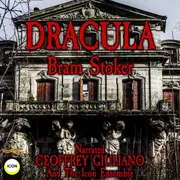
    Dracula Audiobook

    Bram Stoker

  2. The Essential Irish Classics Collection: 5 Timeless Novels : Ulysses; The Picture of Dorian Gray; Dracula; Dubliners; & Gulliver's Travels

    James Joyce, Oscar Wilde, Bram Stoker, Jonathan Swift

  3. 3.0

    50 Masterpieces you have to read before you die vol: 1 (2020 Edition) : Included: Little Women, The Richest Man in Babylon Emma, The Call Of The Wild ....

    Louisa May Alcott, Dante Alighieri, Marcus Aurelius, Jane Austen, L. Frank Baum, Charlotte Brontë, Emily Brontë, Anne Brontë, Miguel de Cervantes, Agatha Christie, George S. Clason, Arthur Conan Doyle, Joseph Conrad, Charles Dickens, Fyodor Dostoyevsky, Alexandre Dumas, George Eliot, G.K. Chesterton, G.K. Chesterton, Zane Grey, Nathaniel Hawthorne, Napoleon Hill, Homer, Victor Hugo, Frances Hodgson Burnett, Washington Irving, Henry James, Franz Kafka, Rudyard Kipling, Jack London, Leo Tolstoy, H.P. Lovecraft, Lucy Maud Montgomery, Joseph Murphy, Robert Louis Stevenson, Edgar Allan Poe, Marcel Proust, Publius, Mary Shelley, Bram Stoker, Mark Twain, Sun Tzu, Lew Wallace, Wallace D. Wattles, H.G. Wells

  4. 50 Masterpieces you have to read before you die

    Frances Hodgson Burnett, Homer, Charles Dickens, Lyman Frank Baum, Nathaniel Hawthorne, Thomas Hardy, Robert Louis Stevenson, Henry Haggard, Wilkie Collins, H.G. Wells, Sir Walter Scott, Lucy Maud Montgomery, Louisa May Alcott, Henry Fielding, Mary Shelley, Arthur Conan Doyle, Leo Tolstoy, Euripides, Fyodor Dostoevsky, Alexander Pushkin, James Fenimore Cooper, Daniel Defoe, Joseph Conrad, Jonathan Swift, William Shakespeare, Oscar Wilde, John Bunyan, Charles Darwin, Alfred Tennyson, Bram Stoker, James Joyce, Dante Alighieri, Howard Pyle, Jane Austen, Emily Bronte, Giovanni Boccaccio, Rudyard Kipling

  5. 4.2

    Dracula

    Bram Stoker

  6. 3.6

    Dracula

    Bram Stoker

  7. 4.0

    Dracula

    Bram Stoker

  8. #5

    Dracula – Chapter 5: Letter from Miss Mina Murray to Miss Lucy Westenra : A Chapter-by-Chapter Reading of Bram Stoker’s Classic

    Bram Stoker

  9. 2.0

    Dracula

    Bram Stoker

  10. 15+ Masterpieces of Gothic Horror. Classics Collection : Frankenstein, Dracula, The Picture of Dorian Gray, The Strange Case of Dr. Jekyll and Mr. Hyde, Carmilla, The Turn of the Screw and others

    Mary Shelley, Bram Stoker, Oscar Wilde, Robert Louis Stevenson, Edgar Allan Poe, Washington Irving, Sheridan Le Fanu, Henry James, Arthur Machen, Nikolai Gogol

  11. 5.0

    Dracula : Bram Stoker's Immortal Classic of Fear and Mystery – Exclusive Kindle Edition

    Bram Stoker

  12. Dracula's Guest and Other Weird Stories

    Bram Stoker