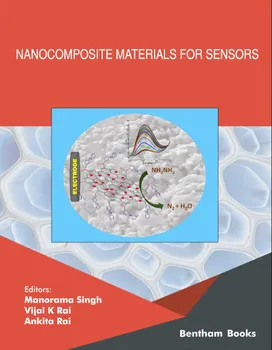
Nanocomposite Materials for Sensor

This reference reviews the reported literature on new approaches of nanocomposite material preparation and their applications in the development of physical, chemical, electrochemical, biological, fluorescence and colorimetric sensors. Sensor nanomaterials have been extensively used to amplify signals in the detection of a range of chemicals including toxic gases, biochemical nutrients, ions, explosives, pesticides and drugs to name a few. 14 chapter contributions highlight state-of-the-art sensors in recent years by outlining the synthesis, role and progress of nanocomposite materials in fabricating flexible and multifunctional sensing platforms in sensor technologies.

Chapters first introduce the reader to nanocomposite materials and their role in making a wide array of sensors including metal-organic, graphene-based and polymeric sensors. The chapters then progress into applications of sensors for the detection of chemicals such as blood glucose, heavy metal and other toxic ions, hydrazine, humidity and explosive. Each chapter explains the required materials for electrodes and material components for a specific sensor platform with additional information about sample collection, threshold values and perspectives where appropriate.

The book is intended as a compilation of knowledge for designing novel nanocomposite materials to be used as sensing platforms in sensor technologies. It serves as an informative resource for a broad range of readers including graduates and post-graduates, Ph. D. scholars, faculty members and professionals working in the area of material science, the healthcare industry, biological sciences, medical sciences, and environmental sciences.

Om denne boken

This reference reviews the reported literature on new approaches of nanocomposite material preparation and their applications in the development of physical, chemical, electrochemical, biological, fluorescence and colorimetric sensors. Sensor nanomaterials have been extensively used to amplify signals in the detection of a range of chemicals including toxic gases, biochemical nutrients, ions, explosives, pesticides and drugs to name a few. 14 chapter contributions highlight state-of-the-art sensors in recent years by outlining the synthesis, role and progress of nanocomposite materials in fabricating flexible and multifunctional sensing platforms in sensor technologies.

Chapters first introduce the reader to nanocomposite materials and their role in making a wide array of sensors including metal-organic, graphene-based and polymeric sensors. The chapters then progress into applications of sensors for the detection of chemicals such as blood glucose, heavy metal and other toxic ions, hydrazine, humidity and explosive. Each chapter explains the required materials for electrodes and material components for a specific sensor platform with additional information about sample collection, threshold values and perspectives where appropriate.

The book is intended as a compilation of knowledge for designing novel nanocomposite materials to be used as sensing platforms in sensor technologies. It serves as an informative resource for a broad range of readers including graduates and post-graduates, Ph. D. scholars, faculty members and professionals working in the area of material science, the healthcare industry, biological sciences, medical sciences, and environmental sciences.

Kom i gang med denne boken i dag for 0 kr

  • Få full tilgang til alle bøkene i appen i prøveperioden
  • Ingen forpliktelser, si opp når du vil
Prøv gratis nå
Mer enn 52 000 personer har gitt Nextory 5 stjerner på App Store og Google Play.

Språk:

engelsk

Format: