Om denne boken

"The Curious Case of Benjamin Button" is a short story written by F. Scott Fitzgerald and first published in Colliers Magazine on May 27, 1922. It was subsequently anthologized in his book Tales of the Jazz Age, which is occasionally published as The Curious Case of Benjamin Button and Other Jazz Age Stories. In 1860 Baltimore, Benjamin is born with the physical appearance of a 70-year-old man, already capable of speech. His father Roger invites neighborhood boys to play with him and orders him to play with children's toys, but Benjamin obeys only to please his father. At five, Benjamin is sent to kindergarten but is quickly withdrawn after he repeatedly falls asleep during child activities. When Benjamin turns 12, the Button family realizes that he is aging backwards. At the age of 18, Benjamin enrolls in Yale College, but is sent home by officials, who think he is a 50-year-old lunatic. In 1880, when Benjamin is 20, his father gives him a control of Roger Button & Co. Wholesale Hardware. He meets the young Hildegarde Moncrief, a daughter of General Moncrief, and falls in love with her. Hildegarde mistakes Benjamin for a 50-year-old brother of Roger Button; she prefers older men and marries him six months later, but remains ignorant of his condition. Years later, Benjamin's business has been successful, but he is tired of Hildegarde because her beauty has faded and she nags him. Bored at home, he enlists in the SpanishAmerican War in 1898 and achieves great triumph in the military, rising to the rank of lieutenant colonel. He retires from the army to focus on his company, and receives a medal.


Kom i gang med denne boken i dag for 0 kr

  • Få full tilgang til alle bøkene i appen i prøveperioden
  • Ingen forpliktelser, si opp når du vil
Prøv gratis nå
Mer enn 52 000 personer har gitt Nextory 5 stjerner på App Store og Google Play.

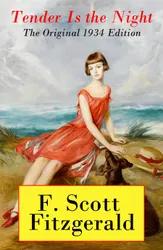
  1. Tender is the Night

    Francis Scott Fitzgerald

  2. Tender Is the Night - The Original 1934 Edition (Annotated) : Enriched Edition. A Jazz Age Psychological Tragedy of Expatriate Glamour, Marriage, and Decline on the Riviera

    Francis Scott Fitzgerald

  3. 1. nov.
    4.3
    #13

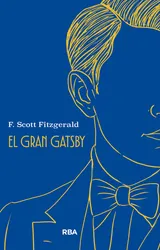
    El gran Gatsby

    Francis Scott Fitzgerald

  4. 3.6

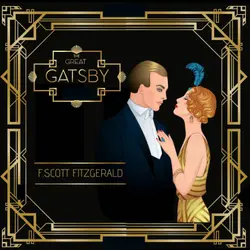
    The Great Gatsby

    Francis Scott Fitzgerald

  5. Ny

    The Curious Case of Benjamin Button

    Francis Scott Fitzgerald

  6. Ny

    100 Clásicos de la Literatura Universal

    Francis Scott Fitzgerald, Mary Shelley, Lyman Frank Baum, Louisa May Alcott, Dante Alighieri, Jane Austen, Ambrose Bierce, Emily Brontë, Edgar Rice Burroughs, Lewis Carroll, Wilkie Collins, René Descartes, Charles Dickens, Emily Dickinson, Alexandre Dumas, Gustave Flaubert, Benito Pérez Galdós, Johann Wolfgang Goethe, Thomas Hardy, E. T. Hoffmann, Washington Irving, Henry James, James Joyce, Franz Kafka

  7. Ny

    100 Obras Maestras Que Debes Leer Antes De Morir

    Francis Scott Fitzgerald, Mary Shelley, L. Frank Baum, Edith Nesbit, Dante Alighieri, Jane Austen, Ambrose Bierce, Emily Brontë, Edgar Rice Burroughs, Lewis Carroll, Wilkie Collins, René Descartes, Charles Dickens, Emily Dickinson, Alexandre Dumas

  8. The Curious Case of Benjamin Button

    Francis Scott Fitzgerald

  9. 3.6

    The Great Gatsby

    Francis Scott Fitzgerald

  10. #14

    Drei Stunden zwischen den Flügen : Eine Erzählung von Francis Scott Fitzgerald

    Francis Scott Fitzgerald

  11. #13

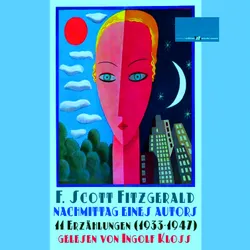
    Nachmittag eines Autors : 11 Erzählungen (1933-1947)

    Francis Scott Fitzgerald

  12. 100 obras maestras que debes leer antes de morir

    Francis Scott Fitzgerald, Mary Shelley, Lyman Frank Baum, Edith Nesbit, Dante Alighieri, Jane Austen, Ambrose Bierce, Emily Brontë, Edgar Rice Burroughs, Lewis Carroll, Wilkie Collins, René Descartes, Charles Dickens, Emily Dickinson, Alexandre Dumas, Gustave Flaubert, Benito Pérez Galdós, Johann Wolfgang Goethe, Thomas Hardy, E. T. Hoffmann, Washington Irving, Henry James, James Joyce, Franz Kafka, Gaston Leroux, Federico García Lorca, H.P. Lovecraft, Publio Virgilio Marón, Lucy Maud Montgomery, John William Polidori, Marco Polo, Antoine de Saint-Exupéry, Emilio Salgari, Walter Scott, Mark Twain, Jules Verne