5.0(1)

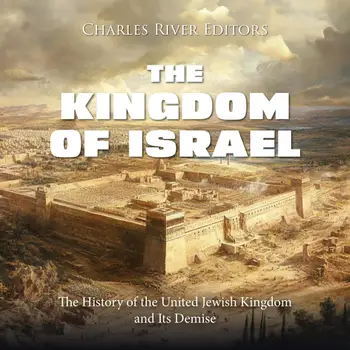
The Kingdom of Israel: The History of the United Jewish Kingdom and Its Demise

Before any type of unified political entity named Israel existed, the Jewish groups whose descendants would later form Israel identified themselves by their particular tribe. If asked their nationality or country of origin, they would likely identify themselves as Danites (from the tribe of Dan; Ex. 31:6) or Ephraimites (from the tribe of Ephraim; Judg. 12:5), etc. The main way to differentiate these tribes from other tribes in Canaan was their common worship of the deity YHWH, but in terms of language or other cultural characteristics, it would have been difficult to tell a Canaanite from an Israelite.

Eventually, these separate tribes united together as a type of confederation, allies who made a treaty (covenant) to provide military aid for one another when threatened by an enemy state. But it was only under the charismatic leadership of David that the 12 tribes united into a single political entity. Scholars refer to the period encompassing the reign of David and his son Solomon as the United Monarchy. This period, spanning only two generations, was the only time when all of the tribes were politically united, and after a contentious schism that resulted because the northern tribes felt exploited by the Judean kings, the northern tribes seceded from the “United Kingdom” and reverted back to the ancient northern versus southern division of the tribes. The main difference this time was that the southern kingdom now incorporated the tribe of Benjamin, located at the border between these two new nations, within its political borders. The tribe of Simeon (south of Judah) had already ceased to maintain a separate existence (see below). The new northern kingdom adopted the name Israel, while the southern kingdom took their regional name of Judah.

Om denne boken

Before any type of unified political entity named Israel existed, the Jewish groups whose descendants would later form Israel identified themselves by their particular tribe. If asked their nationality or country of origin, they would likely identify themselves as Danites (from the tribe of Dan; Ex. 31:6) or Ephraimites (from the tribe of Ephraim; Judg. 12:5), etc. The main way to differentiate these tribes from other tribes in Canaan was their common worship of the deity YHWH, but in terms of language or other cultural characteristics, it would have been difficult to tell a Canaanite from an Israelite.

Eventually, these separate tribes united together as a type of confederation, allies who made a treaty (covenant) to provide military aid for one another when threatened by an enemy state. But it was only under the charismatic leadership of David that the 12 tribes united into a single political entity. Scholars refer to the period encompassing the reign of David and his son Solomon as the United Monarchy. This period, spanning only two generations, was the only time when all of the tribes were politically united, and after a contentious schism that resulted because the northern tribes felt exploited by the Judean kings, the northern tribes seceded from the “United Kingdom” and reverted back to the ancient northern versus southern division of the tribes. The main difference this time was that the southern kingdom now incorporated the tribe of Benjamin, located at the border between these two new nations, within its political borders. The tribe of Simeon (south of Judah) had already ceased to maintain a separate existence (see below). The new northern kingdom adopted the name Israel, while the southern kingdom took their regional name of Judah.
Kom i gang med denne boken i dag for 0 kr

  • Få full tilgang til alle bøkene i appen i prøveperioden
  • Ingen forpliktelser, si opp når du vil
Prøv gratis nå
Mer enn 52 000 personer har gitt Nextory 5 stjerner på App Store og Google Play.

  1. Archaic Humans: The History of the Different Prehistoric Species in the Genus Homo

    Charles River Editors

  2. Recent UFO Sightings: The History and Mysteries of UFO Encounters in the Last 70 Years

    Charles River Editors

  3. Persepolis and Susa: The History of the Achaemenid Persian Empire’s Capitals

    Charles River Editors

  4. The Dawn of the Age of Exploration: The History of the Initial Expeditions that Led to European Imperialism across the Globe

    Charles River Editors

  5. Across the Silk Road and the Atlantic: The History of Marco Polo and Christopher Columbus’ Groundbreaking Voyages

    Charles River Editors

  6. The World’s Most Notorious Serial Killers: The Lives and Crimes of History’s Most Infamous Murderers

    Charles River Editors

  7. 5.0

    The History and Legacy of Asia Minor’s Most Important Ancient Civilizations

    Charles River Editors

  8. The Ottoman Empire’s Most Important Battles: The History and Legacy of the Ottomans’ Biggest Victories and Defeats

    Charles River Editors

  9. Richard Sorge and the Cambridge Five: The History of the Soviet Union’s Most Important Foreign Spies during World War II

    Charles River Editors

  10. Richard Sorge: The Life and Legacy of the German Journalist Who Became the Soviet Union’s Most Effective Spy during World War II

    Charles River Editors

  11. The Battle of the Boyne: The History of the Battle that Ended James II’s Attempt to Reclaim the Throne of England

    Charles River Editors

  12. Sulla and Gaius Marius: The Lives and Legacies of the Leaders Who Fought Rome’s First Civil War

    Charles River Editors