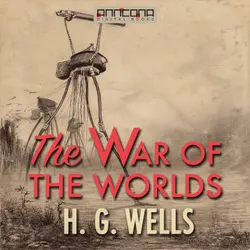
THE WAR OF THE WORLDS

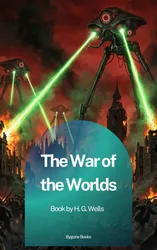
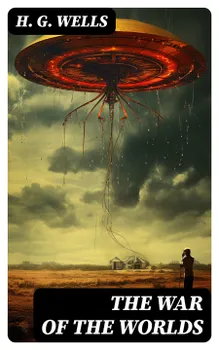
H. G. Wells' seminal work, "The War of the Worlds," intertwines elements of science fiction with profound social criticism, reflecting the anxieties of late Victorian society. Through its vivid depiction of a Martian invasion, Wells employs a first-person narrative that draws readers into a harrowing exploration of survival and societal collapse. The novel's innovative use of unreliable narrators and intense imagery illustrates not only the terror of extraterrestrial encounters but also serves as an allegory for imperialism, colonialism, and the fragility of human civilization in the face of seemingly insurmountable forces. H. G. Wells, often hailed as the father of science fiction, was deeply influenced by the scientific advancements of his era, alongside his interest in social evolution. His background in biology and his progressive political beliefs informed his literary pursuits, leading him to challenge the status quo of his time. "The War of the Worlds" emerged in 1898 amidst a burgeoning fascination with science and technology, capturing the zeitgeist of an age teetering on the brink of modernity while grappling with its darker implications. This timeless novel is essential reading for those intrigued by the intersections of science, society, and human resilience. Whether you are a devoted science fiction enthusiast or a reader seeking profound philosophical reflections, Wells' harrowing tale will compel you to confront the very essence of humanity amid the unknown.
Om denne boken

H. G. Wells' seminal work, "The War of the Worlds," intertwines elements of science fiction with profound social criticism, reflecting the anxieties of late Victorian society. Through its vivid depiction of a Martian invasion, Wells employs a first-person narrative that draws readers into a harrowing exploration of survival and societal collapse. The novel's innovative use of unreliable narrators and intense imagery illustrates not only the terror of extraterrestrial encounters but also serves as an allegory for imperialism, colonialism, and the fragility of human civilization in the face of seemingly insurmountable forces. H. G. Wells, often hailed as the father of science fiction, was deeply influenced by the scientific advancements of his era, alongside his interest in social evolution. His background in biology and his progressive political beliefs informed his literary pursuits, leading him to challenge the status quo of his time. "The War of the Worlds" emerged in 1898 amidst a burgeoning fascination with science and technology, capturing the zeitgeist of an age teetering on the brink of modernity while grappling with its darker implications. This timeless novel is essential reading for those intrigued by the intersections of science, society, and human resilience. Whether you are a devoted science fiction enthusiast or a reader seeking profound philosophical reflections, Wells' harrowing tale will compel you to confront the very essence of humanity amid the unknown.
Kom i gang med denne boken i dag for 0 kr

  • Få full tilgang til alle bøkene i appen i prøveperioden
  • Ingen forpliktelser, si opp når du vil
Prøv gratis nå
Mer enn 52 000 personer har gitt Nextory 5 stjerner på App Store og Google Play.

  1. 3.9

    Klodenes kamp

    H.G. Wells

  2. 3.0

    50 Masterpieces you have to read before you die vol: 1 (2020 Edition) : Included: Little Women, The Richest Man in Babylon Emma, The Call Of The Wild ....

    Louisa May Alcott, Dante Alighieri, Marcus Aurelius, Jane Austen, L. Frank Baum, Charlotte Brontë, Emily Brontë, Anne Brontë, Miguel de Cervantes, Agatha Christie, George S. Clason, Arthur Conan Doyle, Joseph Conrad, Charles Dickens, Fyodor Dostoyevsky, Alexandre Dumas, George Eliot, G.K. Chesterton, G.K. Chesterton, Zane Grey, Nathaniel Hawthorne, Napoleon Hill, Homer, Victor Hugo, Frances Hodgson Burnett, Washington Irving, Henry James, Franz Kafka, Rudyard Kipling, Jack London, Leo Tolstoy, H.P. Lovecraft, Lucy Maud Montgomery, Joseph Murphy, Robert Louis Stevenson, Edgar Allan Poe, Marcel Proust, Publius, Mary Shelley, Bram Stoker, Mark Twain, Sun Tzu, Lew Wallace, Wallace D. Wattles, H.G. Wells

  3. World's Greatest Short Stories

    Daniel Defoe, Benjamin Franklin, Washington Irving, Mateo Falcone, Charlotte Bronte, Mary Shelley, Nathaniel Hawthorne, Nikolai Gogol, Edgar Allan Poe, Fyodor Dostoyevsky, Charles Dickens, Herman Melville, Mark Twain, Guy De Maupassant, Oscar Wilde, Leo Tolstoy, H.G. Wells, Ambrose Bierce, Stephen Crane, Kate Chopin, Jack London, E. M. Forster

  4. 3.5

    Den usynlige mann

    H.G. Wells

  5. 3.8

    Tidsmaskinen

    H.G. Wells

  6. Ny

    The World Set Free : The 1914 Novel That Named the Atomic Bomb

    H.G. Wells

  7. Ny

    The Time Machine : One Machine, Eight Hundred Thousand Years, and the End of Humanity

    H.G. Wells

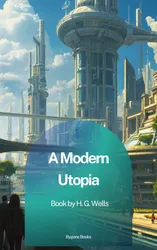
  8. A Modern Utopia

    H.G. Wells

  9. Fallen Worlds : Timeless Stories of Survival, Collapse, and Hope

    Ben Bova, Frederik Pohl, Robert Abernathy, Alan E. Nourse, Jack Sharkey, Philip K Dick, Herbert D. Kastle, Alfred Bester, G. Peyton Wertenbaker, Harlan Ellison, William F. Nolan, Lynn Venable, Edward W. Ludwig, Miguel Hidalgo, Robert Sheckley, H.G. Wells, Dean Evans, Donald E. Westlake, William Oberfield, Fritz Leiber, E. M. Forster, William Brittain, Robert Silverberg, Paul Macnamara, Morrison Colladay, Frank Lillie Pollock, John W. Campbell, Lester del Rey

  10. 11 Tales of the Unknown Before Lovecraft : Early Science Fiction, Weird Tales & Speculative Fiction

    Algernon Blackwood, William Hope Hodgson, E. M. Forster, Ambrose Bierce, Jack London, H.G. Wells, Arthur Machen, Nathaniel Hawthorne

  11. The Shape of Things to Come (Unabridged)

    H.G. Wells, Guy Adams

  12. Classic Golden Age Science Fiction Short Stories

    Kurt Vonnegut, Ray Bradbury, Philip K Dick, Robert Sheckley, Murray Leinster, H.G. Wells