2.0(1)

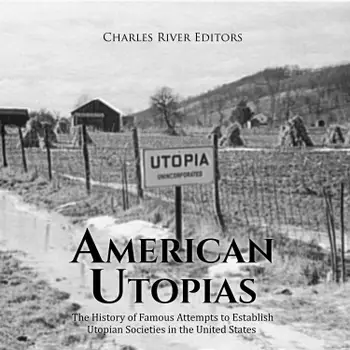
American Utopias: The History of Famous Attempts to Establish Utopian Societies in the United States

In the 19th century, the young United States was exposed to the profound changes that historians call the Market Revolution. Cities experienced drastic changes as manufacturing and trade created jobs that hungry job seekers from the countryside migrated towards, but the hype triumphed over the realities, and more unemployed recent migrants lived in the cities than the number of gainfully employed workers. Urban stresses dominated American cities and also attracted the attention of reformers.

The rural areas also experienced profound changes from the intrusion of commercial trade, which penetrated the agricultural regions and affected the prices of supplies and transport. This also affected the profits from foodstuff and produce, all of which average rural Americans could not control. Left to the mercy of the markets, while the rapid era of canal building and the first railroads brought the countryside further into the grips of the cities, religious revivals of the Second Great Awakening took over, and so too did new experiments arise to provide alternative models of the capitalistic system that left people at the mercy of boom and bust cycles.

For most utopian societies, the common element was a charismatic figure who had a vision of how to lead the people out of an untenable present into a better future by committing themselves to a new set of rules and practices. They envisioned better futures at a physical location intended to be the root of a movement that would spread and redeem the community.


À propos de ce livre

In the 19th century, the young United States was exposed to the profound changes that historians call the Market Revolution. Cities experienced drastic changes as manufacturing and trade created jobs that hungry job seekers from the countryside migrated towards, but the hype triumphed over the realities, and more unemployed recent migrants lived in the cities than the number of gainfully employed workers. Urban stresses dominated American cities and also attracted the attention of reformers.

The rural areas also experienced profound changes from the intrusion of commercial trade, which penetrated the agricultural regions and affected the prices of supplies and transport. This also affected the profits from foodstuff and produce, all of which average rural Americans could not control. Left to the mercy of the markets, while the rapid era of canal building and the first railroads brought the countryside further into the grips of the cities, religious revivals of the Second Great Awakening took over, and so too did new experiments arise to provide alternative models of the capitalistic system that left people at the mercy of boom and bust cycles.

For most utopian societies, the common element was a charismatic figure who had a vision of how to lead the people out of an untenable present into a better future by committing themselves to a new set of rules and practices. They envisioned better futures at a physical location intended to be the root of a movement that would spread and redeem the community.

Commencez ce livre dès aujourd'hui pour 0 €

  • Accédez à tous les livres de l'app pendant la période d'essai
  • Sans engagement, annulez à tout moment
Essayer gratuitement
Plus de 52 000 personnes ont noté Nextory 5 étoiles sur l'App Store et Google Play.

  1. Colonial Argentina: The History of Argentina’s Colonization and Struggle for Independence

    Charles River Editors

  2. The Counter-Reformation: The History of the Catholic Church’s Response to the Protestant Reformation

    Charles River Editors

  3. The Iranian Revolution and Iran Hostage Crisis: The History of the Events that Broke American Relations with Iran

    Charles River Editors

  4. The Age of Sail’s Most Famous Battles: The History of the Naval Engagements that Shaped Europe in the Early Modern Period

    Charles River Editors

  5. Indian Removal: The History of the Battles and Policies that Displaced Native Americans East of the Mississippi River

    Charles River Editors

  6. The Christianization of Rome: The History of the Roman Empire’s Religious Conversion

    Charles River Editors

  7. Persepolis and Susa: The History of the Achaemenid Persian Empire’s Capitals

    Charles River Editors

  8. Kublai Khan and Marco Polo: The History of a Unique Partnership at the Court of the Mongol Empire

    Charles River Editors

  9. The Height of the Cold War: The History of the Events that Brought the Soviet Union and United States to the Brink

    Charles River Editors

  10. The Dawn of the Age of Exploration: The History of the Initial Expeditions that Led to European Imperialism across the Globe

    Charles River Editors

  11. Across the Silk Road and the Atlantic: The History of Marco Polo and Christopher Columbus’ Groundbreaking Voyages

    Charles River Editors

  12. The Start of the Cold War: The History of the Burgeoning Rivalry Between the United States and Soviet Union

    Charles River Editors