2.0(1)

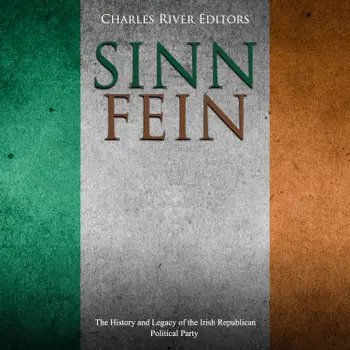
Sinn Féin: The History and Legacy of the Irish Republican Political Party

From Gaelic, the words Sinn Féin translate loosely into English as “We Ourselves,” or “Ourselves Alone.” The implications of this are that Ireland, historically subject to the political domination of England, could look to none but itself for liberation.

By the 18th century, the Irish Parliament and all of the institutions of the state were dominated by Protestants, with Catholics almost entirely excluded. In 1798, a rebellion was launched by the “United Irishmen,” one of the first underground nationalist Republican organizations with the stated objective of overthrowing English rule and replacing it with an Irish republic based on the precepts of the recent French Revolution. The rebellion failed, but the English response was to dissolve the Irish Parliament and integrate Ireland directly into the United Kingdom. Ireland then became integral to the United Kingdom of Great Britain and Ireland which was ruled directly from Whitehall under the terms of the 1800 Act of Union. A certain number of Irish members were granted seats in the Parliament of Westminster, and, for all intents and purposes, Ireland existed as a province of the United Kingdom.

Thereafter, the tone of Irish political dialogue shifted somewhat, with the objective of moderate Irish nationalists no longer absolute independence from England, but the restoration of an Irish Parliament and a degree of self-government while remaining on some level a dependency of the British Empire. The two signature names in this process were Daniel O’Connell, Member of the Westminster Parliament who campaigned on a platform of repealing the Act of Union, and Charles Stewart Parnell, also a member of the British Parliament, who, between 1880 and 1891, called for “Home Rule.”
À propos de ce livre

From Gaelic, the words Sinn Féin translate loosely into English as “We Ourselves,” or “Ourselves Alone.” The implications of this are that Ireland, historically subject to the political domination of England, could look to none but itself for liberation.

By the 18th century, the Irish Parliament and all of the institutions of the state were dominated by Protestants, with Catholics almost entirely excluded. In 1798, a rebellion was launched by the “United Irishmen,” one of the first underground nationalist Republican organizations with the stated objective of overthrowing English rule and replacing it with an Irish republic based on the precepts of the recent French Revolution. The rebellion failed, but the English response was to dissolve the Irish Parliament and integrate Ireland directly into the United Kingdom. Ireland then became integral to the United Kingdom of Great Britain and Ireland which was ruled directly from Whitehall under the terms of the 1800 Act of Union. A certain number of Irish members were granted seats in the Parliament of Westminster, and, for all intents and purposes, Ireland existed as a province of the United Kingdom.

Thereafter, the tone of Irish political dialogue shifted somewhat, with the objective of moderate Irish nationalists no longer absolute independence from England, but the restoration of an Irish Parliament and a degree of self-government while remaining on some level a dependency of the British Empire. The two signature names in this process were Daniel O’Connell, Member of the Westminster Parliament who campaigned on a platform of repealing the Act of Union, and Charles Stewart Parnell, also a member of the British Parliament, who, between 1880 and 1891, called for “Home Rule.”

Commencez ce livre dès aujourd'hui pour 0 €

  • Accédez à tous les livres de l'app pendant la période d'essai
  • Sans engagement, annulez à tout moment
Essayer gratuitement
Plus de 52 000 personnes ont noté Nextory 5 étoiles sur l'App Store et Google Play.

  1. Colonial Argentina: The History of Argentina’s Colonization and Struggle for Independence

    Charles River Editors

  2. The Iranian Revolution and Iran Hostage Crisis: The History of the Events that Broke American Relations with Iran

    Charles River Editors

  3. The Counter-Reformation: The History of the Catholic Church’s Response to the Protestant Reformation

    Charles River Editors

  4. The Age of Sail’s Most Famous Battles: The History of the Naval Engagements that Shaped Europe in the Early Modern Period

    Charles River Editors

  5. The Christianization of Rome: The History of the Roman Empire’s Religious Conversion

    Charles River Editors

  6. Persepolis and Susa: The History of the Achaemenid Persian Empire’s Capitals

    Charles River Editors

  7. Indian Removal: The History of the Battles and Policies that Displaced Native Americans East of the Mississippi River

    Charles River Editors

  8. Across the Silk Road and the Atlantic: The History of Marco Polo and Christopher Columbus’ Groundbreaking Voyages

    Charles River Editors

  9. The Dawn of the Age of Exploration: The History of the Initial Expeditions that Led to European Imperialism across the Globe

    Charles River Editors

  10. Kublai Khan and Marco Polo: The History of a Unique Partnership at the Court of the Mongol Empire

    Charles River Editors

  11. The Height of the Cold War: The History of the Events that Brought the Soviet Union and United States to the Brink

    Charles River Editors

  12. The Start of the Cold War: The History of the Burgeoning Rivalry Between the United States and Soviet Union

    Charles River Editors