5.0(1)

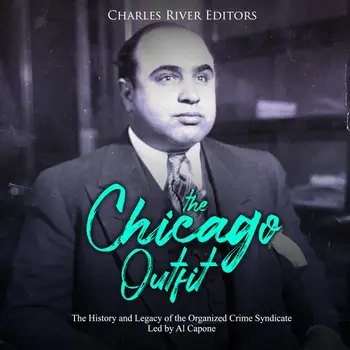
The Chicago Outfit: The History and Legacy of the Organized Crime Syndicate Led by Al Capone

“This American system of ours ... call it Americanism, call it capitalism, call it what you like, gives to each and every one of us a great opportunity if we only seize it with both hands and make the most of it.” – Al Capone

Sprightly swing music spills across the dimly lit club. The grayish curtains of cigarette smoke part every once in a while to reveal a sparkling stage and tables upon tables of patrons, some incurably inebriated and others high on the fast-paced nightlife. Fabulous flappers in shimmery cocktail dresses and stylish feather headbands throw their hands up and stomp their feet to the addictive beat on the dance floor. Smartly dressed men, their hair neatly parted and slicked back, toss fistfuls of dice onto the plush green baize of the craps tables. Some hover over roulette wheels, staring intently at the spinning flashes of silver, while others finger their playing cards as they sip on tumblers of whiskey, eyeing both the river and the tower of tokens next to them.

Frisky tunes, chic fashion, and American gambling are nostalgic, rose-tinted images most choose to project when visualizing the Roaring Twenties, but the other side of the coin brought an uninviting, much harsher reality that most would prefer to sweep under the rug. The first real estate bubble was on the brink of bursting, and progress was evident, but painfully slow, which gave way to yet another era of violent riots, lynchings, and other forms of oppression imposed on minorities.

Then, of course, there were mobsters. Remove the silk three-piece suits, burnished Tommy guns, and obscene stacks of cash from the equation, and one would be left with limp, bullet-ridden bodies either slumped over their steering wheels or sprawled out like broken rag dolls on the floors of public establishments, the walls painted with blood spatters and shattered glass littered about. These, they say, are the lucky ones, for their corpses, though laid out as a public message, provide the deceased's loved ones with some form of closure. Over the decades, dozens involved in this deadly game disappeared altogether, never again to see the light of day.

In the midst of it all, the Chicago Outfit, one of the longest-running criminal organizations in the land of the free, was perhaps the most notorious of them all. The baleful brotherhood bore a terrifying brand defined by cutthroat competitiveness, sadistic torture tactics, and excessive bloodshed, among scores of other despicable acts. Worse yet, they seemed to be untouchable. Aside from Scarface himself, there was the vindictive and eerily competent Louis “Little New York” Campagna, a vicious assassin suspected of unloading 59 bullets into a traitorous associate. Then there was Anthony “the Ant” Spilotro, the inspiration for Nicky Santoro, Joe Pesci's character in Martin Scorsese's Casino, who, despite his petite stature, was a barbaric, cruel man with an explosive temper and no capacity for remorse. On top of the infamous M&M Murders, a 25-year-old Spilotro was implicated in the murder of real-estate broker and loan shark Leo Foreman. As if the excruciating blows to the head, ribs, knees, and groin via hammer weren't enough, Foreman was stabbed another 20 times with an ice pick before he was finally relieved of his misery with a bullet to the head. When Foreman's body was eventually recovered in the trunk of a deserted car, it was discovered that “chunks of his body” had been sliced off while he was still breathing.
À propos de ce livre

“This American system of ours ... call it Americanism, call it capitalism, call it what you like, gives to each and every one of us a great opportunity if we only seize it with both hands and make the most of it.” – Al Capone

Sprightly swing music spills across the dimly lit club. The grayish curtains of cigarette smoke part every once in a while to reveal a sparkling stage and tables upon tables of patrons, some incurably inebriated and others high on the fast-paced nightlife. Fabulous flappers in shimmery cocktail dresses and stylish feather headbands throw their hands up and stomp their feet to the addictive beat on the dance floor. Smartly dressed men, their hair neatly parted and slicked back, toss fistfuls of dice onto the plush green baize of the craps tables. Some hover over roulette wheels, staring intently at the spinning flashes of silver, while others finger their playing cards as they sip on tumblers of whiskey, eyeing both the river and the tower of tokens next to them.

Frisky tunes, chic fashion, and American gambling are nostalgic, rose-tinted images most choose to project when visualizing the Roaring Twenties, but the other side of the coin brought an uninviting, much harsher reality that most would prefer to sweep under the rug. The first real estate bubble was on the brink of bursting, and progress was evident, but painfully slow, which gave way to yet another era of violent riots, lynchings, and other forms of oppression imposed on minorities.

Then, of course, there were mobsters. Remove the silk three-piece suits, burnished Tommy guns, and obscene stacks of cash from the equation, and one would be left with limp, bullet-ridden bodies either slumped over their steering wheels or sprawled out like broken rag dolls on the floors of public establishments, the walls painted with blood spatters and shattered glass littered about. These, they say, are the lucky ones, for their corpses, though laid out as a public message, provide the deceased's loved ones with some form of closure. Over the decades, dozens involved in this deadly game disappeared altogether, never again to see the light of day.

In the midst of it all, the Chicago Outfit, one of the longest-running criminal organizations in the land of the free, was perhaps the most notorious of them all. The baleful brotherhood bore a terrifying brand defined by cutthroat competitiveness, sadistic torture tactics, and excessive bloodshed, among scores of other despicable acts. Worse yet, they seemed to be untouchable. Aside from Scarface himself, there was the vindictive and eerily competent Louis “Little New York” Campagna, a vicious assassin suspected of unloading 59 bullets into a traitorous associate. Then there was Anthony “the Ant” Spilotro, the inspiration for Nicky Santoro, Joe Pesci's character in Martin Scorsese's Casino, who, despite his petite stature, was a barbaric, cruel man with an explosive temper and no capacity for remorse. On top of the infamous M&M Murders, a 25-year-old Spilotro was implicated in the murder of real-estate broker and loan shark Leo Foreman. As if the excruciating blows to the head, ribs, knees, and groin via hammer weren't enough, Foreman was stabbed another 20 times with an ice pick before he was finally relieved of his misery with a bullet to the head. When Foreman's body was eventually recovered in the trunk of a deserted car, it was discovered that “chunks of his body” had been sliced off while he was still breathing.

Commencez ce livre dès aujourd'hui pour 0 €

  • Accédez à tous les livres de l'app pendant la période d'essai
  • Sans engagement, annulez à tout moment
Essayer gratuitement
Plus de 52 000 personnes ont noté Nextory 5 étoiles sur l'App Store et Google Play.

  1. Colonial Argentina: The History of Argentina’s Colonization and Struggle for Independence

    Charles River Editors

  2. The Iranian Revolution and Iran Hostage Crisis: The History of the Events that Broke American Relations with Iran

    Charles River Editors

  3. The Counter-Reformation: The History of the Catholic Church’s Response to the Protestant Reformation

    Charles River Editors

  4. The Age of Sail’s Most Famous Battles: The History of the Naval Engagements that Shaped Europe in the Early Modern Period

    Charles River Editors

  5. The Christianization of Rome: The History of the Roman Empire’s Religious Conversion

    Charles River Editors

  6. Persepolis and Susa: The History of the Achaemenid Persian Empire’s Capitals

    Charles River Editors

  7. Indian Removal: The History of the Battles and Policies that Displaced Native Americans East of the Mississippi River

    Charles River Editors

  8. Across the Silk Road and the Atlantic: The History of Marco Polo and Christopher Columbus’ Groundbreaking Voyages

    Charles River Editors

  9. The Dawn of the Age of Exploration: The History of the Initial Expeditions that Led to European Imperialism across the Globe

    Charles River Editors

  10. Kublai Khan and Marco Polo: The History of a Unique Partnership at the Court of the Mongol Empire

    Charles River Editors

  11. The Height of the Cold War: The History of the Events that Brought the Soviet Union and United States to the Brink

    Charles River Editors

  12. The Start of the Cold War: The History of the Burgeoning Rivalry Between the United States and Soviet Union

    Charles River Editors