À propos de ce livre

Considered lurid and shocking by mid-19th-century standards, Wuthering Heights was initially thought to be such a publishing risk that its author, Emily Brontë, was asked to pay some of the publication costs.

Wuthering Heights is a wild, passionate story of the intense and almost demonic love between Catherine Earnshaw and Heathcliff, a foundling adopted by Catherine’s father. After Mr Earnshaw’s death, Heathcliff is bullied and humiliated by Catherine’s brother Hindley and wrongly believing that his love for Catherine is not reciprocated, leaves Wuthering Heights, only to return years later as a wealthy and polished man. He proceeds to exact a terrible revenge for his former miseries. The action of the story is chaotic and unremittingly violent, but the accomplished handling of a complex structure, the evocative descriptions of the lonely moorland setting and the poetic grandeur of vision combine to make this unique novel a masterpiece of English literature.

A fiend of a book — an incredible monster... The action is laid in hell, — only it seems places and people have English names there. —Dante Gabriel Rossetti

A monument of the most striking genius that nineteenth-century womanhood has given us. —Clement Shorter

The greatest work of fiction by any man or woman Europe has produced to date. —Anthony Ludovici

There is no “I” in ‘Wuthering Heights’. There are no governesses. There are no employers. There is love, but it is not the love of men and women. Emily was inspired by some more general conception. The impulse which urged her to create was not her own suffering or her own injuries. She looked out upon a world cleft into gigantic disorder and felt within her the power to unite it in a book. —Virginia Woolf

Commencez ce livre dès aujourd'hui pour 0 €

  • Accédez à tous les livres de l'app pendant la période d'essai
  • Sans engagement, annulez à tout moment
Essayer gratuitement
Plus de 52 000 personnes ont noté Nextory 5 étoiles sur l'App Store et Google Play.

Plus de Emily Brontë

  1. 50 Chefs-D'œuvre Que Vous Devez Lire Avant De Mourir : Vol 1 (Golden Deer Classics)

    Mark Twain, Stendhal, Edgar Allan Poe, Victor Hugo, Gustave Flaubert, Alexandre Dumas, Arthur Conan Doyle, René Descartes, Lewis Carroll, Charles Baudelaire, Guillaume Apollinaire, Golden Deer, Alain-Fournier, Jules Amédée d'Aurevilly, Paul Bourget, Charlotte Brontë, Emily Brontë, Pierre Corneille, Nikolai Gogol, Gustave Leroux, Marquis De Sade, Jack London, Sinclair Lewis, Daniel Lesueur, Marcel Proust, Edmond Rostand, Jean-Jacques Rousseau, Mary Shelley, Bram Stoker, Sun Tzu, Rodolphe Töpffer, Vatsyayana, Jules Verne, Voltaire, H.G. Wells, Oscar Wilde, Emile Zola

  2. 4.5

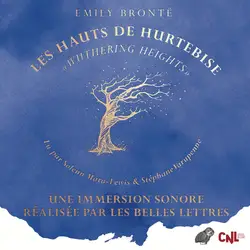
    Les Hauts de Hurtebise : Wuthering Heights

    Emily Brontë

  3. 4.1

    Les hauts de Hurle Vent

    Emily Brontë

  4. 4.5

    Hurlevent

    Emily Brontë

  5. 4.1

    Les Hauts de Hurle-vent

    Emily Brontë

  6. 4.1

    Brontë, Emily – Les Hauts de Hurlevent

    Emily Brontë

  7. 4.2

    Les Hauts de Hurlevent

    Emily Brontë

  8. 1 mars
    4.1
    #458

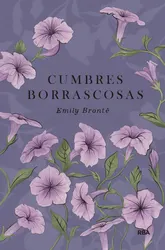
    Cumbres borrascosas

    Emily Brontë

  9. Nouveau

    The Complete Novels of the Brontë Sisters

    Anne Brontë, Charlotte Bronte, Emily Brontë

  10. Nouveau

    50 Masterpieces you have to read before you die vol: 1

    Louisa May Alcott, Jane Austen, Honoré de Balzac, Henri Barbusse, Anne Brontë, Charlotte Brontë, Emily Brontë, Edgar Rice Burroughs, Samuel Butler, Lewis Carroll, Willa Cather, Miguel de Cervantes, Kate Chopin, John Cleland, Wilkie Collins, Joseph Conrad, Charles Dickens, Fyodor Dostoevsky, Alexandre Dumas, George Eliot, Ralph Waldo Emerson, Gustave Flaubert, E. M. Forster, H. Rider Haggard, Thomas Hardy, Nathaniel Hawthorne, Robert Heinlein, Victor Hugo, Aldous Huxley, Henry James, D. H. Lawrence, H.P. Lovecraft, Herman Melville, John Milton, Robert Musil, Vladimir Nabokov, George Orwell, Edgar Allan Poe, Marcel Proust, William Shakespeare, Mary Shelley, Leo Tolstoy

  11. Nouveau

    100 Clásicos de la Literatura Universal

    Francis Scott Fitzgerald, Mary Shelley, L. Frank Baum, Louisa May Alcott, Dante Alighieri, Jane Austen, Ambrose Bierce, Emily Brontë, Edgar Rice Burroughs, Lewis Carroll, Wilkie Collins, René Descartes, Charles Dickens, Emily Dickinson, Alexandre Dumas, Gustave Flaubert