Tietoa kirjasta

What changes when women are given the same opportunity to develop their minds, independence, and judgment?

In A Vindication of the Rights of Woman, Mary Wollstonecraft challenges the social conventions that restricted women's education and independence in eighteenth-century society. With forceful reasoning and uncompromising clarity, she argues that women should be treated as rational human beings capable of education, virtue, responsibility, and intellectual development.

Wollstonecraft examines marriage, parenting, social expectations, morality, education, and the consequences of raising women primarily to seek approval rather than cultivate reason and character.

First published in 1792, the work became an important text in the history of arguments for women's education and equality. Its themes continue to be studied in philosophy, political thought, gender studies, and literary history.

Read one of Mary Wollstonecraft's most influential works and encounter the arguments that helped shape later debates about education and equality.
Aloita kirja saman tien hintaan 0 €

  • Kokeilujakson aikana käytössäsi on kaikki sovelluksen kirjat
  • Ei sitoumusta, voit perua milloin vain
Kokeile nyt ilmaiseksi
Yli 52 000 ihmistä on antanut Nextorylle viisi tähteä App Storessa ja Google Playssä.

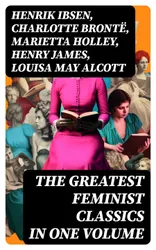
  1. The Greatest Feminist Classics in One Volume : Including 100+ Biographies & Memoirs of the Most Influential Women in History

    Henrik Ibsen, Charlotte Brontë, Marietta Holley, Henry James, Louisa May Alcott, John Stuart Mill, Zona Gale, Jane Austen, Thomas Hardy, Edith Wharton, Gene Stratton-Porter, Rebecca Harding Davis, Margaret Fuller, Elizabeth Cady Stanton, Elia Wilkinson Peattie, Virginia Woolf, Mary Wollstonecraft, Willa Cather, Nathaniel Hawthorne, Mary Johnston, Grant Allen, Theodore Dreiser, Kate Chopin, Sojourner Truth, Charlotte Perkins Gilman, Harriet Martineau, Fanny Burney, Mary Ware Dennett, Julia Ward Howe, Ada Cambridge, H.G. Wells, Sarah H. Bradford, D. H. Lawrence, Nikolai Leskov, Lucy Maud Montgomery, Leo Tolstoy, Margaret Deland, Elizabeth Gaskell, Margaret Oliphant, Margaret Mitchell, Elizabeth von Arnim, Elizabeth Burgoyne Corbett

  2. 5.0

    100 Clásicos de la Literatura

    Francis Scott Fitzgerald, Mary Shelley, Lyman Frank Baum, Louisa May Alcott, Dante Alighieri, Jane Austen, Ambrose Bierce, Emily Brontë, Edgar Rice Burroughs, Lewis Carroll, Wilkie Collins, René Descartes, Charles Dickens, Emily Dickinson, Alexandre Dumas, Gustave Flaubert, Benito Pérez Galdós, Johann Wolfgang von Goethe, Thomas Hardy, E T A Hoffmann, Washington Irving, Henry James, James Joyce, Franz Kafka, Gaston Leroux, Federico García Lorca, H.P. Lovecraft, Publio Virgilio Marón, Lucy Maud Montgomery, John William Polidori, Marco Polo, Antoine de Saint-Exupéry, Emilio Salgari, Walter Scott, Mark Twain, Jules Verne, H.G. Wells, Edith Wharton, Mary Wollstonecraft, Fernando de Rojas

  3. Uusi
    2.7

    A Vindication of the Rights of Woman

    Mary Wollstonecraft

  4. Uusi

    Una doble vindicación : Textos seleccionados

    Mary Wollstonecraft

  5. 4.0

    Mary (Nórdica Clásicos)

    Mary Wollstonecraft

  6. Maria : or, The Wrongs of Woman

    Mary Wollstonecraft

  7. 2.7

    A Vindication of the Rights of Woman

    Mary Wollstonecraft

  8. A Vindication of the Rights of Woman : The 1792 Argument That Women Deserve an Education, Not Just Admiration

    Mary Wollstonecraft

  9. 2.7

    A Vindication of the Rights of Woman

    Mary Wollstonecraft

  10. 2.0

    A Vindication of the Rights of Woman

    Mary Wollstonecraft

  11. 100 Obras Maestras Que Debes Leer Antes De Morir

    Francis Scott Fitzgerald, Mary Shelley, Lyman Frank Baum, Edith Nesbit, Dante Alighieri, Jane Austen, Ambrose Bierce, Emily Brontë, Edgar Rice Burroughs, Lewis Carroll, Wilkie Collins, René Descartes, Charles Dickens, Emily Dickinson, Alexandre Dumas, Gustave Flaubert, Benito Pérez Galdós, Johann Wolfgang von Goethe, Thomas Hardy, E T A Hoffmann, Washington Irving, Henry James, James Joyce, Franz Kafka, Gaston Leroux, Federico García Lorca, H.P. Lovecraft, Publio Virgilio Marón, Lucy Maud Montgomery, John William Polidori, Marco Polo, Antoine de Saint-Exupéry, Emilio Salgari, Walter Scott, Mark Twain, Jules Verne, H.G. Wells, Edith Wharton, Mary Wollstonecraft, Fernando de Rojas