Let's consider why Traumatic Incident Reduction (TIR) would be expected to be different with an autistic client. One of the hallmarks of autism is a lack of connection with the real world, so the world view of an autistic individual is limited and often very inaccurate. A second hallmark of autism is difficulty with intrapersonal and interpersonal relationships so that insight into how to make relationships better, or work at all, would be expected to be limited. So, within a TIR session where we expect our clients to come up with their own insights, that's really a tall order. Then the meltdowns I've talked about; as a Davis facilitator I understand these as prolonged and severe disorientations, analogous to a PTSD episode, in which the emotional reaction is really out of sync with true facts and conditions in the current situation. Added to all this are the phobias and the extreme aversions that many autistic individuals experience, which can limit full participation in life. One of the things that makes working with autistic clients challenging is that often we simply have to wait until they give us that little window of time when they are able and willing to proceed. If I were to use the guidelines in my TIR Workshop manual, I would have to conclude that there was not enough ego strength or resiliency in these individuals for them to be able to engage for a successful TIR session. You know what they say about fools who rush in where angels fear to tread... A less foolish person than I am, and especially someone new to TIR, would likely never have tried to use TIR with autistic clients. However, based on the wonderful results I have seen using TIR with many of my other clients who do not have autism, and some of the really significant problems that some of my autistic clients were presenting, I decided to try TIR with a few of them. In the remainder of this lecture, we'll consider two specific case studies. Veronica, a sixteen-year old who basically lived as a recluse in her mother's basement, and Joshua, a young boy obsessed with drum kits who was given to periods of extremely oppositional behavior. Cathy Dodge Smith uses Davis Methods in her practice (Davis Dyslexia Correction Program, Davis Autism Approach, and Davis Attention Mastery ). She is also a Certified TIR Facilitator. This article is from her presentation at the 2014 Symposium. Originally appeared in AMI/TIRA Newsletter, Volume XII, Number 1 (March 2015).
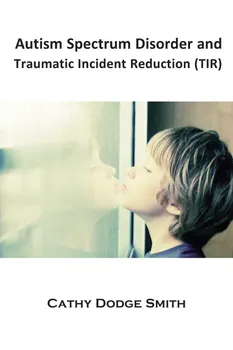
Autism Spectrum Disorder and Traumatic Incident Reduction (TIR) : An Introduction
Kirjoittanut Cathy Dodge Smith