4.0(2)

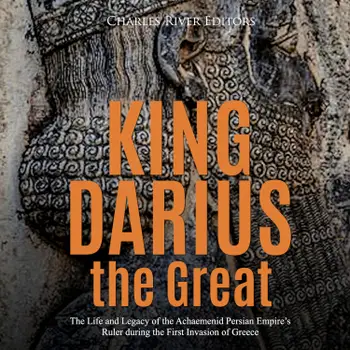
King Darius the Great: The Life and Legacy of the Achaemenid Persian Empire's Ruler during the First Invasion of Greece

It was not until the excavations of the 1930s that many of the relics, reliefs, and clay tablets that offer so much information about Persian life could be studied for the first time. Through archaeological remains, ancient texts, and work by a new generation of historians, a picture can today be built of this remarkable civilization and their capital city. Although the city had been destroyed, the legacy of the Persians survived, even as they mostly remain an enigma to the West and are not nearly as well understood as the Greeks, Romans, or Egyptians. In a sense, the Achaemenid Persian Empire holds some of the most enduring mysteries of ancient civilization.

When considering this empire’s rulers, the two most often referenced are Xerxes, the leader of the Persian invasion of Greece which caused the heroic sacrifice of the Spartans and their allies at Thermopylae, or Cyrus the Great, the man who created the Persian Empire. But the Persians had another critical ruler sandwiched between them, and Cyrus’s accomplishments and Xerxes’s defeats would not have been possible without him. That king was Xerxes’s own father, Darius I, best known as Darius the Great.

Darius I took the throne after the death of Cyrus’s son, Cambyses II, and though his reign would not have been possible without the construction of the empire and the administrative groundwork laid by Cyrus the Great before him, Darius proved himself just as worthy of the epithet. Reigning for over 35 years, Darius kept control of the massive Persian Empire despite numerous rebellions and uprisings, and he also managed to implement reforms and improvements that established the empire’s golden age. He followed the example of Cyrus before him in his foreign policy and mode of kingship as well, offering tolerance and patience to various cultures and religions, and even treating his enemies fairly in most cases.

Tietoa kirjasta

It was not until the excavations of the 1930s that many of the relics, reliefs, and clay tablets that offer so much information about Persian life could be studied for the first time. Through archaeological remains, ancient texts, and work by a new generation of historians, a picture can today be built of this remarkable civilization and their capital city. Although the city had been destroyed, the legacy of the Persians survived, even as they mostly remain an enigma to the West and are not nearly as well understood as the Greeks, Romans, or Egyptians. In a sense, the Achaemenid Persian Empire holds some of the most enduring mysteries of ancient civilization.

When considering this empire’s rulers, the two most often referenced are Xerxes, the leader of the Persian invasion of Greece which caused the heroic sacrifice of the Spartans and their allies at Thermopylae, or Cyrus the Great, the man who created the Persian Empire. But the Persians had another critical ruler sandwiched between them, and Cyrus’s accomplishments and Xerxes’s defeats would not have been possible without him. That king was Xerxes’s own father, Darius I, best known as Darius the Great.

Darius I took the throne after the death of Cyrus’s son, Cambyses II, and though his reign would not have been possible without the construction of the empire and the administrative groundwork laid by Cyrus the Great before him, Darius proved himself just as worthy of the epithet. Reigning for over 35 years, Darius kept control of the massive Persian Empire despite numerous rebellions and uprisings, and he also managed to implement reforms and improvements that established the empire’s golden age. He followed the example of Cyrus before him in his foreign policy and mode of kingship as well, offering tolerance and patience to various cultures and religions, and even treating his enemies fairly in most cases.
Aloita kirja saman tien hintaan 0 €

  • Kokeilujakson aikana käytössäsi on kaikki sovelluksen kirjat
  • Ei sitoumusta, voit perua milloin vain
Kokeile nyt ilmaiseksi
Yli 52 000 ihmistä on antanut Nextorylle viisi tähteä App Storessa ja Google Playssä.

  1. 3.3

    The Mossad: The History and Legacy of Israel’s National Intelligence Agency

    Charles River Editors

  2. 5.0

    NASA’s Space Race Programs: The History and Legacy of NASA Missions in the 1950s and 1960s

    Charles River Editors

  3. The Ancient Kingdoms of Africa: The History and Legacy of the African Continent’s Most Prominent Kingdoms in Antiquity

    Charles River Editors

  4. 5.0

    The Rise and Fall of the Third Reich: The History and Legacy of Nazi Germany under Adolf Hitler

    Charles River Editors

  5. The Counter-Reformation: The History of the Catholic Church’s Response to the Protestant Reformation

    Charles River Editors

  6. The Iranian Revolution and Iran Hostage Crisis: The History of the Events that Broke American Relations with Iran

    Charles River Editors

  7. Kublai Khan and Marco Polo: The History of a Unique Partnership at the Court of the Mongol Empire

    Charles River Editors

  8. 5.0

    The Chicago Outfit: The History and Legacy of the Organized Crime Syndicate Led by Al Capone

    Charles River Editors

  9. Ancient Egyptian Conspiracy Theories: The History of the Most Popular Conspiracy Theories about Egypt in Antiquity

    Charles River Editors

  10. 4.5

    Yuri Bezmenov: The Life and Legacy of the Influential KGB Informant Who Defected to the West

    Charles River Editors

  11. The North Side Gang: The History and Legacy of the Organized Crime Mob that Fought Al Capone for Control of Chicago

    Charles River Editors

  12. Little Turtle’s War and Tecumseh’s War: The History and Legacy of the Fighting between the United States and Native Americans for the Northwest Territory

    Charles River Editors