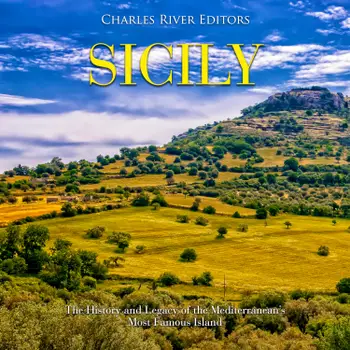
Sicily: The History and Legacy of the Mediterranean’s Most Famous Island

It is hard to find an island on the map more central than Sicily. Located at the crossroads between Europe and Africa, and between the Eastern and Western Mediterranean, Sicily has rarely been governed as an independent, unified state. Nonetheless, the island has always occupied a front-row seat to some of the most important events in history, and nowhere is this more obvious than during antiquity.

After the Punic Wars, Sicily would remain a Roman domain until the end of antiquity, and affairs on the island dramatically affected the Romans at home. The First Servile War (135-132 BCE) and Second Servile War (104-100 BCE) both took place in Sicily, and they were perhaps the largest (and temporarily successful) slave revolts in antiquity, demonstrating a great unease in the early stages of Roman imperialism. In 70 BCE, the Roman orator and statesman Cicero gave a speech against Verres, the corrupt governor of the island, and over 2,000 years later it still provides an invaluable glimpse into the way things were run in Sicily and the Roman Republic as a whole.

Over 1500 years later, the largest island of the Mediterranean remains a complicated place with a fraught relationship to the Italian mainland. Separated by only the narrow Strait of Messina, Sicily feels like a different country in many ways, and the differences between Sicilians and Italians are much vaster than the tiny geographical separating them might intimate. For example, the linguistic differences between the two are substantial, as Sicilian is practically its own language, rather than just a dialect. It differs from Italian most apparently insofar as the normal final “o” of masculine nouns is replaced by a “u,” but beyond that difference, there are lengthy, five syllable words that a standard Italian tongue tends to trip over. In fact, most Italians have difficulty understanding Sicilian if they can comprehend any of it at all.
Tietoa kirjasta

It is hard to find an island on the map more central than Sicily. Located at the crossroads between Europe and Africa, and between the Eastern and Western Mediterranean, Sicily has rarely been governed as an independent, unified state. Nonetheless, the island has always occupied a front-row seat to some of the most important events in history, and nowhere is this more obvious than during antiquity.

After the Punic Wars, Sicily would remain a Roman domain until the end of antiquity, and affairs on the island dramatically affected the Romans at home. The First Servile War (135-132 BCE) and Second Servile War (104-100 BCE) both took place in Sicily, and they were perhaps the largest (and temporarily successful) slave revolts in antiquity, demonstrating a great unease in the early stages of Roman imperialism. In 70 BCE, the Roman orator and statesman Cicero gave a speech against Verres, the corrupt governor of the island, and over 2,000 years later it still provides an invaluable glimpse into the way things were run in Sicily and the Roman Republic as a whole.

Over 1500 years later, the largest island of the Mediterranean remains a complicated place with a fraught relationship to the Italian mainland. Separated by only the narrow Strait of Messina, Sicily feels like a different country in many ways, and the differences between Sicilians and Italians are much vaster than the tiny geographical separating them might intimate. For example, the linguistic differences between the two are substantial, as Sicilian is practically its own language, rather than just a dialect. It differs from Italian most apparently insofar as the normal final “o” of masculine nouns is replaced by a “u,” but beyond that difference, there are lengthy, five syllable words that a standard Italian tongue tends to trip over. In fact, most Italians have difficulty understanding Sicilian if they can comprehend any of it at all.

Aloita kirja saman tien hintaan 0 €

  • Kokeilujakson aikana käytössäsi on kaikki sovelluksen kirjat
  • Ei sitoumusta, voit perua milloin vain
Kokeile nyt ilmaiseksi
Yli 52 000 ihmistä on antanut Nextorylle viisi tähteä App Storessa ja Google Playssä.

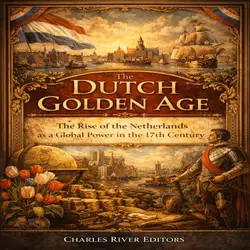
  1. The Dutch Golden Age: The Rise of the Netherlands as a Global Power in the 17th Century

    Charles River Editors

  2. 3.4

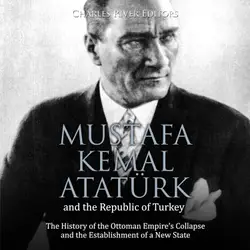
    Mustafa Kemal Atatürk and the Republic of Turkey: The History of the Ottoman Empire’s Collapse and the Establishment of a New State

    Charles River Editors

  3. The Ancient Kingdoms of Africa: The History and Legacy of the African Continent’s Most Prominent Kingdoms in Antiquity

    Charles River Editors

  4. 5.0

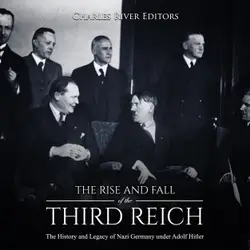
    The Rise and Fall of the Third Reich: The History and Legacy of Nazi Germany under Adolf Hitler

    Charles River Editors

  5. Uusi

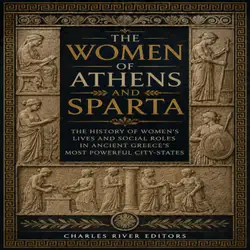
    The Women of Athens and Sparta: The History of Women’s Lives and Social Roles in Ancient Greece’s Most Powerful City-States

    Charles River Editors

  6. The Counter-Reformation: The History of the Catholic Church’s Response to the Protestant Reformation

    Charles River Editors

  7. The Iranian Revolution and Iran Hostage Crisis: The History of the Events that Broke American Relations with Iran

    Charles River Editors

  8. Kublai Khan and Marco Polo: The History of a Unique Partnership at the Court of the Mongol Empire

    Charles River Editors

  9. 5.0

    The Evolution of Modern Mathematics: The Lives of Influential Mathematicians Who Helped Bring Math into the Computer Age Kindle

    Charles River Editors

  10. 3.0

    Flat Earth and Hollow Earth Theories: A History of Strange Tales and Bizarre Beliefs about the Planet

    Charles River Editors

  11. Persia and Islam: The History of the Islamic Empires that have Ruled Persia Since the Middle Ages

    Charles River Editors

  12. 3.4

    Albert Speer and Germania: The History of Nazi Germany’s Lead Architect and His Plans for a Future German Capital

    Charles River Editors