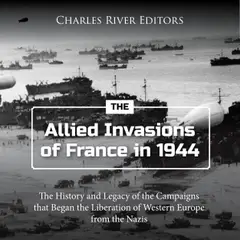
The Allied Invasions of France in 1944: The History and Legacy of the Campaigns that Began the Liberation of Western Europe from the Nazis

By the end of D-Day, the Allies had managed to successfully land 170,000 men, including over 75,000 on the British and Canadian beaches, 57,000 on the American beaches, and over 24,000 airborne troops. Thanks to Allied deception, the German army had failed to react to prevent the Allies from making the most of their landings. Just one division, the Hitlerjugend, would arrive the following day. Despite a fearsome and bloody day, the majority of the Allied forces had held their nerve, and most importantly, achieved their objectives. This ensured Operation Overlord was ultimately successful, and victory in Europe would be achieved within less than a year. Churchill was not overstating the achievements of the invasion when he described the plan “the greatest thing we have ever attempted”. The greatest armada the world had ever seen had landed 170,000 soldiers on the heavily defended beaches of Normandy in just 24 hours. More remarkable was the fact that the operation was a success on every major level. Deception, tactical surprise and overwhelming force had contributed to the establishment of an adequate beachhead. Confusion and dissent had stopped the Germans massing for any great counterattack. The Atlantic Wall which Hitler had placed so much faith in had been breached, and the race to Paris was on. The landings in Normandy and the campaign that followed were successful, but that very success brought its own problems.

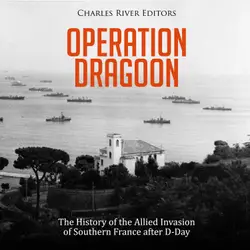
While D-Day is one of the most famous events of the war, it is widely overlooked that about two months after the landings in Normandy, there was a second Allied landing in France. On August 15, 1944, a combined US-French force landed in southern France on the beaches of the Côte d'Azur as part of Operation Dragoon. In just over four weeks of fighting, the Allied landing led to the liberation of most of southern France and to one of the most audacious and successful Allied operations of World War II.

Tietoa kirjasta

By the end of D-Day, the Allies had managed to successfully land 170,000 men, including over 75,000 on the British and Canadian beaches, 57,000 on the American beaches, and over 24,000 airborne troops. Thanks to Allied deception, the German army had failed to react to prevent the Allies from making the most of their landings. Just one division, the Hitlerjugend, would arrive the following day. Despite a fearsome and bloody day, the majority of the Allied forces had held their nerve, and most importantly, achieved their objectives. This ensured Operation Overlord was ultimately successful, and victory in Europe would be achieved within less than a year. Churchill was not overstating the achievements of the invasion when he described the plan “the greatest thing we have ever attempted”. The greatest armada the world had ever seen had landed 170,000 soldiers on the heavily defended beaches of Normandy in just 24 hours. More remarkable was the fact that the operation was a success on every major level. Deception, tactical surprise and overwhelming force had contributed to the establishment of an adequate beachhead. Confusion and dissent had stopped the Germans massing for any great counterattack. The Atlantic Wall which Hitler had placed so much faith in had been breached, and the race to Paris was on. The landings in Normandy and the campaign that followed were successful, but that very success brought its own problems.

While D-Day is one of the most famous events of the war, it is widely overlooked that about two months after the landings in Normandy, there was a second Allied landing in France. On August 15, 1944, a combined US-French force landed in southern France on the beaches of the Côte d'Azur as part of Operation Dragoon. In just over four weeks of fighting, the Allied landing led to the liberation of most of southern France and to one of the most audacious and successful Allied operations of World War II.

Aloita kirja saman tien hintaan 0 €

  • Kokeilujakson aikana käytössäsi on kaikki sovelluksen kirjat
  • Ei sitoumusta, voit perua milloin vain
Kokeile nyt ilmaiseksi
Yli 52 000 ihmistä on antanut Nextorylle viisi tähteä App Storessa ja Google Playssä.

  1. The Ancient Kingdoms of Africa: The History and Legacy of the African Continent’s Most Prominent Kingdoms in Antiquity

    Charles River Editors

  2. Reaching the Moon: The History of the NASA Programs that Led to the Successful Apollo Missions

    Charles River Editors

  3. 5.0

    NASA’s Space Race Programs: The History and Legacy of NASA Missions in the 1950s and 1960s

    Charles River Editors

  4. The Dutch Golden Age: The Rise of the Netherlands as a Global Power in the 17th Century

    Charles River Editors

  5. Kublai Khan and Marco Polo: The History of a Unique Partnership at the Court of the Mongol Empire

    Charles River Editors

  6. The Women of Athens and Sparta: The History of Women’s Lives and Social Roles in Ancient Greece’s Most Powerful City-States

    Charles River Editors

  7. The Iranian Revolution and Iran Hostage Crisis: The History of the Events that Broke American Relations with Iran

    Charles River Editors

  8. The Counter-Reformation: The History of the Catholic Church’s Response to the Protestant Reformation

    Charles River Editors

  9. 4.0

    The Division of the Roman Empire: The History of the Conflicts that Split the Western Roman Empire and Eastern Roman Empire in the 4th Century

    Charles River Editors

  10. Edgar Allan Poe and H.P. Lovecraft: The Lives and Legacies of America’s Most Famous Horror Writers

    Charles River Editors

  11. 3.7

    Apartheid in South Africa: The History and Legacy of the Notorious Segregationist Policies in the 20th Century

    Charles River Editors

  12. The Arsacid Dynasty of Armenia: The History of the Parthian Kings Who Ruled the Ancient Kingdom of Armenia

    Charles River Editors