Tietoa kirjasta

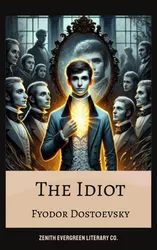
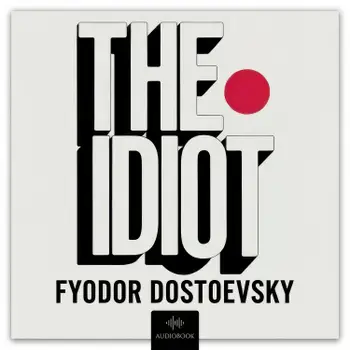
What happens when perfect goodness confronts a corrupt world? Fyodor Dostoevsky's The Idiot (1869) poses this devastating question through one of literature's most extraordinary characters: Prince Myshkin, a man so pure of heart that society can only regard him as a fool.

Returning to Russia after treatment for epilepsy in Switzerland, Myshkin enters St. Petersburg with the radical notion that human beings can be redeemed through love and compassion. His Christ-like innocence draws him into the lives of two remarkable women: Nastasya Filippovna, a beauty shattered by abuse and betrayal, and Aglaya Epanchin, torn between convention and fierce independence. What follows is a tragedy that ranks among Dostoevsky's greatest achievements.

Myshkin's very existence becomes a mirror reflecting the moral compromises, jealousies, and desperate hungers of those around him. His inability to navigate social ambition and desire makes him simultaneously the most innocent and most dangerous person in every room he enters.

Set against 1860s Russian high society—a world where old certainties are crumbling and new philosophies promise salvation or destruction—Dostoevsky weaves together faith and doubt, love and possession, sacrifice and self-destruction with psychological insight that feels startlingly modern.

This is a novel that asks whether goodness itself might be a form of madness, and whether compassion, forgiveness, and selfless love are compatible with survival in an unforgiving world.

For readers willing to confront these questions, The Idiot offers one of literature's most rewarding and heartbreaking experiences—a masterpiece that challenges our assumptions about virtue, suffering, and what it means to be human.

Aloita kirja saman tien hintaan 0 €

  • Kokeilujakson aikana käytössäsi on kaikki sovelluksen kirjat
  • Ei sitoumusta, voit perua milloin vain
Kokeile nyt ilmaiseksi
Yli 52 000 ihmistä on antanut Nextorylle viisi tähteä App Storessa ja Google Playssä.

  1. 4.1

    White Nights

    Fyodor Dostoevsky

  2. 4.5

    Crime and Punishment

    Fyodor Dostoevsky

  3. Uusi

    50 Masterpieces You Have to Read : Volume One - An Essential Library of World Literature

    Louisa May Alcott, Jane Austen, Honoré de Balzac, Henri Barbusse, Anne Brontë, Charlotte Brontë, Emily Brontë, Edgar Rice Burroughs, Samuel Butler, Lewis Carroll, Willa Cather, Miguel de Cervantes, Kate Chopin, John Cleland, Wilkie Collins, Joseph Conrad, Charles Dickens, Fyodor Dostoevsky, Alexandre Dumas, George Eliot, Ralph Waldo Emerson, Gustave Flaubert, E. M. Forster, H. Rider Haggard, Thomas Hardy, Nathaniel Hawthorne, Robert Heinlein, Victor Hugo, Aldous Huxley, Henry James, D. H. Lawrence, H.P. Lovecraft, Herman Melville, John Milton, Robert Musil, Vladimir Nabokov, George Orwell, Edgar Allan Poe, Marcel Proust, William Shakespeare, Mary Shelley, Leo Tolstoy

  4. 5.0

    The Gambler

    Fyodor Dostoevsky

  5. Demons

    Fyodor Dostoevsky

  6. 3.9

    White Nights

    Fyodor Dostoevsky

  7. 4.0

    White Nights :

    Fyodor Dostoevsky

  8. The House of the Dead : A Harrowing Journey Through Suffering, Redemption, and the Human Soul

    Fyodor Dostoevsky, Tim Zengerink

  9. The Idiot : A Psychological Masterpiece of Innocence and Tragedy by Fyodor Dostoevsky

    Fyodor Dostoevsky

  10. 4.0

    Existentialism: Philosophical and Literary Works : Notes from Underground. Fear and Trembling. Ecce Homo. The Metamorphosis and others

    Fyodor Dostoevsky, Soren Kierkegaard, Friedrich Nietzsche, Rainer Maria Rilke, Franz Kafka

  11. 4.2

    White Nights - Audiobook

    Fyodor Dostoevsky, Classic Audiobooks

  12. 4.0

    25+ The World's Greatest Short Stories. Vol. 1 : The Legend of Sleepy Hollow, The Gold Bug, Daisy Miller, The Yellow Wallpaper, The Call of Cthulhu and other

    Washington Irving, Edgar Allan Poe, Herman Melville, Bret Harte, Leo Tolstoy, Fyodor Dostoevsky, Rudyard Kipling, Charlotte Perkins Gilman, Anton Chekhov, David Herbert Lawrence, James Joyce, Ivan Turgenev, Nikolai Gogol, Mikhail Bulgakov, Ivan Bunin, Joseph Sheridan Le Fanu, O.Henry, Ambrose Gwinnett Bierce, Robert Louis Stevenson, Herbert George Wells, William Wymark Jacobs, Arthur Conan Doyle, Henry James, Howard Phillips Lovecraft, Alexander Pushkin, Gilbert Keith Chesterton