4.3(3)

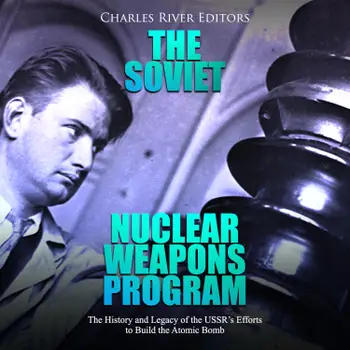
The Soviet Nuclear Weapons Program: The History and Legacy of the USSR's Efforts to Build the Atomic Bomb

Tens of millions died during World War II as the warring powers raced to create the best fighter planes, tanks, and guns, and eventually that race extended to bombs which carried enough power to destroy civilization itself. While the war raged in Europe and the Pacific, a dream team of Nobel Laureates was working on the Manhattan Project, a program kept so secret that Vice President Harry Truman didn’t know about it until he took the presidency after FDR’s death in April 1945.

With this success, word reached President Truman, who was then attending the Potsdam Conference, and while there, he presented the news to Soviet leader Joseph Stalin. Stalin feigned surprise; in an ironic twist of fate, espionage missions had revealed American nuclear research to the Soviets before it had even reached Vice President Truman. For their part, Stalin’s regime had been working on a nuclear weapons program since 1942, relying greatly upon successful Soviet espionage to help lead the way. With intelligence sources connected to the Manhattan Project, Stalin was able to keep abreast of the Allies’ progress toward creating an atomic bomb, so that by 1945, the Soviets already had a working blueprint of America’s first atomic bombs.

On August 29, 1949, the Soviets successfully tested an atomic bomb, and with that, the Soviet Union became the second nation after the U.S. to develop and possess nuclear weapons. The nuclear age itself was still in its infancy, but within a few short years the advent of nuclear war loomed over the world and the prospect of a malign dictatorship possessing nuclear superiority kept Western leaders awake at night.

The Soviet Nuclear Weapons Program: The History and Legacy of the USSR’s Efforts to Build the Atomic Bomb examines the Soviets’ race to reach the ultimate goal during and after World War II, and how they went about their objectives.

Tietoa kirjasta

Tens of millions died during World War II as the warring powers raced to create the best fighter planes, tanks, and guns, and eventually that race extended to bombs which carried enough power to destroy civilization itself. While the war raged in Europe and the Pacific, a dream team of Nobel Laureates was working on the Manhattan Project, a program kept so secret that Vice President Harry Truman didn’t know about it until he took the presidency after FDR’s death in April 1945.

With this success, word reached President Truman, who was then attending the Potsdam Conference, and while there, he presented the news to Soviet leader Joseph Stalin. Stalin feigned surprise; in an ironic twist of fate, espionage missions had revealed American nuclear research to the Soviets before it had even reached Vice President Truman. For their part, Stalin’s regime had been working on a nuclear weapons program since 1942, relying greatly upon successful Soviet espionage to help lead the way. With intelligence sources connected to the Manhattan Project, Stalin was able to keep abreast of the Allies’ progress toward creating an atomic bomb, so that by 1945, the Soviets already had a working blueprint of America’s first atomic bombs.

On August 29, 1949, the Soviets successfully tested an atomic bomb, and with that, the Soviet Union became the second nation after the U.S. to develop and possess nuclear weapons. The nuclear age itself was still in its infancy, but within a few short years the advent of nuclear war loomed over the world and the prospect of a malign dictatorship possessing nuclear superiority kept Western leaders awake at night.

The Soviet Nuclear Weapons Program: The History and Legacy of the USSR’s Efforts to Build the Atomic Bomb examines the Soviets’ race to reach the ultimate goal during and after World War II, and how they went about their objectives.

Aloita kirja saman tien hintaan 0 €

  • Kokeilujakson aikana käytössäsi on kaikki sovelluksen kirjat
  • Ei sitoumusta, voit perua milloin vain
Kokeile nyt ilmaiseksi
Yli 52 000 ihmistä on antanut Nextorylle viisi tähteä App Storessa ja Google Playssä.

  1. 3.3

    The Mossad: The History and Legacy of Israel’s National Intelligence Agency

    Charles River Editors

  2. 5.0

    NASA’s Space Race Programs: The History and Legacy of NASA Missions in the 1950s and 1960s

    Charles River Editors

  3. The Ancient Kingdoms of Africa: The History and Legacy of the African Continent’s Most Prominent Kingdoms in Antiquity

    Charles River Editors

  4. 5.0

    The Rise and Fall of the Third Reich: The History and Legacy of Nazi Germany under Adolf Hitler

    Charles River Editors

  5. The Counter-Reformation: The History of the Catholic Church’s Response to the Protestant Reformation

    Charles River Editors

  6. The Iranian Revolution and Iran Hostage Crisis: The History of the Events that Broke American Relations with Iran

    Charles River Editors

  7. Kublai Khan and Marco Polo: The History of a Unique Partnership at the Court of the Mongol Empire

    Charles River Editors

  8. 5.0

    The Chicago Outfit: The History and Legacy of the Organized Crime Syndicate Led by Al Capone

    Charles River Editors

  9. Ancient Egyptian Conspiracy Theories: The History of the Most Popular Conspiracy Theories about Egypt in Antiquity

    Charles River Editors

  10. 4.5

    Yuri Bezmenov: The Life and Legacy of the Influential KGB Informant Who Defected to the West

    Charles River Editors

  11. The North Side Gang: The History and Legacy of the Organized Crime Mob that Fought Al Capone for Control of Chicago

    Charles River Editors

  12. Little Turtle’s War and Tecumseh’s War: The History and Legacy of the Fighting between the United States and Native Americans for the Northwest Territory

    Charles River Editors