William Blake: Seen in My Visions: A Descriptive Catalogue of Pictures

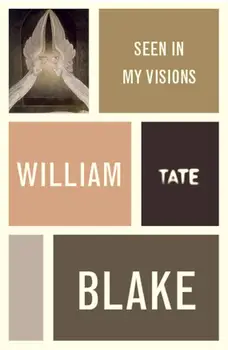
In 1809 the little-known artist William Blake held an exhibition of 16 paintings in a private house in Soho in the west end of London. Works inspired by Chaucer's "Canterbury Tales" and John Milton's "Paradise Lost" sat alongside biblical scenes and Arthurian legend. The exhibition was not a success; the only review in the press was extremely unfavourable and few of the public came. One of those who did was the poet Charles Lamb, who later described the pictures as 'hard, dry, yet with grace', and the catalogue that accompanied the show as 'mystical and full of vision'. It is this catalogue that Tate Publishing are once again making available. In it, the scale and range of Blake's ambition are made plain, along with his theories on painting, his unsparing critiques of other artists and some extraordinary insights into the working of his mind. The only detailed writing on art that remains to us by Blake, it throws light on all his subsequent artistic enterprises, including the illuminated books for which he is perhaps most famous. Part commentary and part manifesto, his catalogue is as radical as it is in places eccentric (he claims at one point to have been transported in a "vision" back to the classical world). Fully illustrated in colour with reproductions of surviving works originally in the exhibition, the book includes an illuminating essay by leading authority on British art Martin Myrone, Lead Curator of Pre-1800 Art at Tate Britain, making it an essential purchase for all of those wanting to know more.
Tietoa kirjasta

In 1809 the little-known artist William Blake held an exhibition of 16 paintings in a private house in Soho in the west end of London. Works inspired by Chaucer's "Canterbury Tales" and John Milton's "Paradise Lost" sat alongside biblical scenes and Arthurian legend. The exhibition was not a success; the only review in the press was extremely unfavourable and few of the public came. One of those who did was the poet Charles Lamb, who later described the pictures as 'hard, dry, yet with grace', and the catalogue that accompanied the show as 'mystical and full of vision'. It is this catalogue that Tate Publishing are once again making available. In it, the scale and range of Blake's ambition are made plain, along with his theories on painting, his unsparing critiques of other artists and some extraordinary insights into the working of his mind. The only detailed writing on art that remains to us by Blake, it throws light on all his subsequent artistic enterprises, including the illuminated books for which he is perhaps most famous. Part commentary and part manifesto, his catalogue is as radical as it is in places eccentric (he claims at one point to have been transported in a "vision" back to the classical world). Fully illustrated in colour with reproductions of surviving works originally in the exhibition, the book includes an illuminating essay by leading authority on British art Martin Myrone, Lead Curator of Pre-1800 Art at Tate Britain, making it an essential purchase for all of those wanting to know more.
Aloita kirja saman tien hintaan 0 €

  • Kokeilujakson aikana käytössäsi on kaikki sovelluksen kirjat
  • Ei sitoumusta, voit perua milloin vain
Kokeile nyt ilmaiseksi
Yli 52 000 ihmistä on antanut Nextorylle viisi tähteä App Storessa ja Google Playssä.

  1. #1

    William Blake Poems

    William Blake

  2. Mystique of the Darkness: 100+ Gothic Classics

    Charles Dickens, Friedrich Schiller, Oscar Wilde, Robert Louis Stevenson, Edgar Allan Poe, William Hope Hodgson, Joseph Sheridan Fanu, George MacDonald, Percy Bysshe Shelley, Bram Stoker, Charlotte Brontë, Emily Brontë, William Godwin, Henry James, Victor Hugo, Théophile Gautier, Arthur Conan Doyle, Joseph Conrad, Guy Boothby, Jane Austen, Mayne Reid, John Meade Falkner, Guy De Maupassant, George Eliot, Samuel Taylor Coleridge, Robert Hugh Benson, Horace Walpole, Frederick Marryat, Thomas love Peacock, Washington Irving, Nathaniel Hawthorne, Gaston Leroux, Grant Allen, Arthur Machen, Wilkie Collins, Thomas Peckett Prest, James Malcolm Rymer, Robert Browning, Walter Hubbell, Marie Corelli, Charles Brockden Brown, James Hogg, William Blake, Charlotte Perkins Gilman, John Keats, Richard Marsh, Clara Reeve, Charles Robert Maturin, John William Polidori, Lord Byron, W. W. Jacobs, E F Benson, M. R. James, E. T. Hoffmann, George W. Reynolds, William Thomas Beckford, Christina Rossetti, Tobias Smollett, Nikolai Gogol, Mary Shelley, Edward Bulwer-Lytton, Ann Radcliffe, Matthew Gregory Lewis, Eliza Parsons, Eleanor Sleath, Émile Erckmann, Alexandre Chatrian

  3. Songs of Innocence :

    William Blake

  4. Delphi Complete Works of William Blake (Illustrated)

    William Blake

  5. The Collected Works of William Blake : PergamonMedia

    William Blake

  6. 2.0

    Songs of Innocence and of Experience

    William Blake

  7. 4.7

    The Marriage Of Heaven And Hell

    William Blake

  8. 3.0

    The Book of Thel

    William Blake

  9. 4.7

    The Marriage of Heaven and Hell

    William Blake

  10. Laocoon

    William Blake

  11. 2.0

    Songs of Innocence and of Experience

    William Blake

  12. 101 Great American Poems : To My Dear and Loving Husband, The Planting of the Apple-Tree, Concord Hymn, The Arrow and the Song, Alone, Annabel Lee and others

    Anne Bradstreet, Phillis Wheatley, William Cullen Bryant, Ralph Waldo Emerson, Henry Wadsworth Longfellow, Edgar Allan Poe, Abraham Lincoln, Oliver Wendell Holmes, Herman Melville, Walt Whitman, Frances E. W. Harper, Emily Dickinson, Ella Wheeler Wilcox, Ernest Lawrence Thayer, Edwin Arlington Robinson, Stephen Crane, James Weldon Johnson, Paul Laurence Dunbar, Gertrude Stein, Vachel Lindsay, Claude Mckay, Countee Cullen, Amy Lowell, James Oppenheim, Elizabeth Barrett Browning, Emma Lazarus, Louisa May Alcott, Ellis Parker Butler, Hugh Henry Brackenridge, Matthew Arnold, William Butler Yeats, William Blake, Sara Teasdale, William Barnes