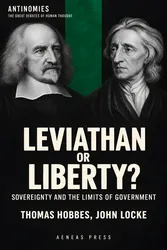
Must there be one power that cannot be resisted, or is every government a trust that the people may take back? Thomas Hobbes argued in Leviathan (1651) that without a sovereign men live in war, and that once the sovereign is made his subjects cannot judge him. John Locke set against this, in the Two Treatises (1690) and the Letter Concerning Toleration (1689), the consent of the governed, a law of nature that binds rulers, the right to resist a tyrant and a church that the magistrate may not command. The two never answered one another: Hobbes died ten years before Locke's books appeared. This volume sets them side by side as a debate in nine rounds, from what people are like without government to who is a heretic. Each speaks in his own words. Notes on where they collide, a chronology and a note on who answered whom let the reader weigh both cases.
Antinomies
Kirjasarjat • 7 kirjaa
Kirjailijaa:
Kieli:
englanti