3.0(1)

The House of the Dead

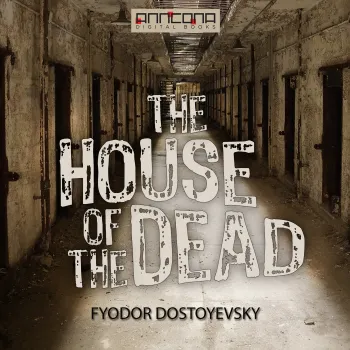
The House of the Dead is a novel published in 1861 by Russian author Fyodor Dostoyevsky, which portrays the life of convicts in a Siberian prison camp.

The narrator, Aleksandr Petrovich Goryanchikov, has been sentenced to penalty deportation to Siberia and ten years of hard labour. Life in prison is particularly hard for Aleksandr Petrovich, since he is a "gentleman" and suffers the malice of the other prisoners, nearly all of whom belong to the peasantry.

Gradually Goryanchikov overcomes his revulsion at his situation and his fellow convicts, undergoing a spiritual re-awakening that culminates with his release from the camp.

It is a work of great humanity; Dostoyevsky portrays the inmates of the prison with sympathy for their plight, and also expresses admiration for their energy, ingenuity and talent. He concludes that the existence of the prison, with its absurd practices and savage corporal punishments is a tragic fact, both for the prisoners and for Russia itself.

Dostoyevsky himself spent four years in exile in such a camp following his conviction for involvement in the Petrashevsky Circle. This experience allowed him to describe with great authenticity the conditions of prison life and the characters of the convicts.

Fyodor Mikhailovich Dostoyevsky was a Russian novelist, short story writer and essayist. Dostoyevsky's literary works explore human psychology in the context of the troubled political, social and spiritual atmosphere of 19th-century Russia.

Although he began writing in the mid-1840s, his most memorable works—including Crime and Punishment, The Idiot and The Brothers Karamazov—are from his later years. His output consists of eleven novels, three novellas, seventeen short novels and three essays. Many literary critics rate him as one of the greatest and most prominent psychologists in world literature.
À propos de ce livre

The House of the Dead is a novel published in 1861 by Russian author Fyodor Dostoyevsky, which portrays the life of convicts in a Siberian prison camp.

The narrator, Aleksandr Petrovich Goryanchikov, has been sentenced to penalty deportation to Siberia and ten years of hard labour. Life in prison is particularly hard for Aleksandr Petrovich, since he is a "gentleman" and suffers the malice of the other prisoners, nearly all of whom belong to the peasantry.

Gradually Goryanchikov overcomes his revulsion at his situation and his fellow convicts, undergoing a spiritual re-awakening that culminates with his release from the camp.

It is a work of great humanity; Dostoyevsky portrays the inmates of the prison with sympathy for their plight, and also expresses admiration for their energy, ingenuity and talent. He concludes that the existence of the prison, with its absurd practices and savage corporal punishments is a tragic fact, both for the prisoners and for Russia itself.

Dostoyevsky himself spent four years in exile in such a camp following his conviction for involvement in the Petrashevsky Circle. This experience allowed him to describe with great authenticity the conditions of prison life and the characters of the convicts.

Fyodor Mikhailovich Dostoyevsky was a Russian novelist, short story writer and essayist. Dostoyevsky's literary works explore human psychology in the context of the troubled political, social and spiritual atmosphere of 19th-century Russia.

Although he began writing in the mid-1840s, his most memorable works—including Crime and Punishment, The Idiot and The Brothers Karamazov—are from his later years. His output consists of eleven novels, three novellas, seventeen short novels and three essays. Many literary critics rate him as one of the greatest and most prominent psychologists in world literature.

Commencez ce livre dès aujourd'hui pour 0 €

  • Accédez à tous les livres de l'app pendant la période d'essai
  • Sans engagement, annulez à tout moment
Essayer gratuitement
Plus de 52 000 personnes ont noté Nextory 5 étoiles sur l'App Store et Google Play.

  1. Nouveau

    The Big Book of Christmas: 140+ authors and 400+ novels, novellas, stories, poems & carols

    Hans Christian Andersen, Charles Dickens, Louisa May Alcott, Lucy Maud Montgomery, Anne Brontë, Willa Cather, G.K. Chesterton, F. Marion Crawford, Fyodor Dostoyevsky, Arthur Conan Doyle, Mary E. Wilkins Freeman, The Brothers Grimm, Thomas Hardy, Nathaniel Hawthorne, O.Henry, E T A Hoffmann, Washington Irving, James Joyce, Rudyard Kipling, H.P. Lovecraft, John Milton, Beatrix Potter, Arthur Quiller-Couch, Walter Scott, Robert Louis Stevenson, Harriet Beecher Stowe, Leo Tolstoy, Anthony Trollope, Mark Twain, Oscar Wilde, Anton Chekhov, L. Frank Baum, William Blake, Samuel Taylor Coleridge, Emily Dickinson, Henry Wadsworth Longfellow, Clement C. Moore, William Shakespeare, Andrew Lang

  2. Nouveau
    3.0

    50 Masterpieces you have to read before you die vol: 2

    Lewis Carroll, Mark Twain, Jules Verne, Oscar Wilde, Arthur Conan Doyle, Louisa May Alcott, Jane Austen, G.K. Chesterton, Wilkie Collins, Charles Dickens, Fyodor Dostoyevsky, Alexandre Dumas, F. Scott Fitzgerald, E. M. Forster, Thomas Hardy, Hermann Hesse, James Joyce, Jack London, H.P. Lovecraft, Lucy Maud Montgomery, Edgar Allan Poe, Marcel Proust, William Shakespeare, Robert Louis Stevenson, H.G. Wells, Virginia Woolf, Rudyard Kipling, D. H. Lawrence, Thomas Mann, William Somerset Maugham, Herman Melville, George Sand, Mary Shelley, Walter Scott, Leo Tolstoy, Bram Stoker

  3. 10 Masterpieces You Have to Read Before You Die, Vol. 3

    Edgar Allan Poe, William Shakespeare, H.P. Lovecraft, Mary W. Shelley, Osamu Dazai, Jack London, Fyodor Dostoyevsky, Nathaniel Hawthorne, Frances Hodgson Burnett, Robert Louis Stevenson

  4. Crime and Punishment - Audiobook

    Fyodor Dostoyevsky, Classic Audiobooks

  5. 50 Masterpieces You Must Read Before You Die: Volume 2 : Your Guide to the World's Must-Read Classics

    Louisa May Alcott, Jane Austen, Joseph Conrad, D. H. Lawrence, George Eliot, Leo Tolstoy, James Joyce, Charles Dickens, Bram Stoker, Oscar Wilde, Honoré de Balzac, Edgar Rice Burroughs, Anne Brontë, Charlotte Brontë, Emily Brontë, Lewis Carroll, Willa Cather, Miguel de Cervantes, E. Cummings, Fyodor Dostoyevsky, Daniel Defoe, Arthur Conan Doyle, Alexandre Dumas, Gustave Flaubert, Henry James, Victor Hugo, MyBooks Classics

  6. 50 Masterpieces you have to read before you die vol: 1

    Louisa May Alcott, Jane Austen, Joseph Conrad, D. H. Lawrence, George Eliot, Leo Tolstoy, James Joyce, Charles Dickens, Bram Stoker, Oscar Wilde, Honoré de Balzac, Edgar Rice Burroughs, Anne Brontë, Charlotte Brontë, Emily Brontë, Lewis Carroll, Willa Cather, Miguel de Cervantes, E. Cummings, Fyodor Dostoyevsky, Daniel Defoe, Arthur Conan Doyle, Alexandre Dumas, Gustave Flaubert, Henry James, Victor Hugo

  7. 50 Masterpieces you have to read

    Louisa May Alcott, Jane Austen, Joseph Conrad, D. H. Lawrence, George Eliot, Leo Tolstoy, James Joyce, Charles Dickens, Bram Stoker, Oscar Wilde, Honoré de Balzac, Edgar Rice Burroughs, Anne Brontë, Charlotte Brontë, Emily Brontë, Lewis Carroll, Willa Cather, Miguel de Cervantes, E. Cummings, Fyodor Dostoyevsky, Daniel Defoe, Arthur Conan Doyle, Alexandre Dumas, Gustave Flaubert, Henry James, Victor Hugo

  8. 3.4

    The Idiot

    Fyodor Dostoyevsky

  9. 5.0

    The Possessed

    Fyodor Dostoyevsky

  10. 4.0

    The Possessed

    Fyodor Dostoyevsky

  11. 4.0

    Demons - The Possessed

    Fyodor Dostoyevsky

  12. Nouveau

    Fyodor Dostoyevsky: The Complete Novels

    Fyodor Dostoyevsky