À propos de ce livre

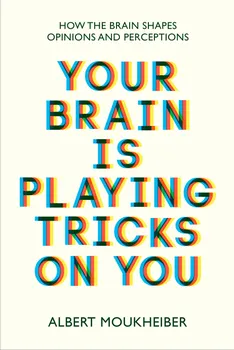
Why are we often convinced that we’re right even when we’re wrong?

Why are we jealous, or paranoid, even when we have absolutely no reason to be?

Why is it so easy for fake news to spread around the globe and fool us?

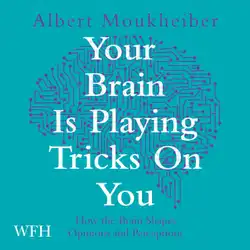
It’s because we don’t see the world as it is, rather we reconstruct it in our mind. Reality is way too complex and multiple to be apprehended by our capacities of attention, which are quite limited, as well as our brain abilities. That is why our perception of the world is subjective and various elements influence the way we acquire knowledge and form opinions. Our brain is recreating the world in its own way – most of the time for our own good: how hard would it be if, before making a choice, we had to know about all the options available in a given situation? It would take us forever to choose an item of clothing in a store, or a meal in a restaurant! Luckily, our brain can estimate: even if it makes us imperfect and subject to illusion, delusion and error, it allows us to reconstruct the world as we know it, and live in it.

However, these very useful mechanisms can sometimes mislead us and have a rather negative impact on our actions, beliefs and opinions: when our brain behaves that way, we say it is biased. Albert Moukheiber gives us tips and tricks to fight against these cognitive biases – the first one being not to trust ourselves too much and to always doubt our thinking processes, especially in this era where social networks spread information like an epidemic. In this book, filled with multiple examples from our daily lives and psychosocial experiments, Moukheiber explores the building blocks of our perception, cognition and behaviour, which are involved in acquiring knowledge or forming opinions.


Commencez ce livre dès aujourd'hui pour 0 €

  • Accédez à tous les livres de l'app pendant la période d'essai
  • Sans engagement, annulez à tout moment
Essayer gratuitement
Plus de 52 000 personnes ont noté Nextory 5 étoiles sur l'App Store et Google Play.

D'autres ont aimé

  1. 2.0

    Komm doch mal! : Über Einvernehmlichkeit, weibliche Lust-Scham und alles andere, was ich gerne früher gewusst hätte

    Joy Delima

  2. 4.5

    Von der Freundschaft

    Michel de Montaigne

  3. 4.5

    STFU : The Power of Keeping Your Mouth Shut in a World That Won’t Stop Talking

    Dan Lyons

  4. 3.3

    Die anderen denken bestimmt, dass ich voll komisch okay bin : Was dir sofort bei Unsicherheit und Ängsten hilft

    Lea Banasch

  5. 4.4

    Unlearn Patriarchy : Mit Beiträgen von Madeleine Alizadeh, Teresa Bücker, Kübra Gümüşay, Emilia Roig, Kristina Lunz u. v. a. | Feministische Impulse für Wege aus dem Patriarchat

    Ise Bosch, Kenza Ait Abbou, Emilia Roig, Margret Rasfeld, Tebogo Nimindé-Dundadengar, Lena Marbacher, Kübra Gümüşay, Linus Giese, Friederike Otto, Teresa Bücker, Olaolu Fajembola, Laura Gehlhaar, Madeleine Alizadeh (dariadaria), Kristina Lunz

  6. 4.3

    Möchten Sie mit mir darüber sprechen? : Psychotherapie-Stunden für zu Hause | Praxisnaher mental health Selbsthilfe-Ratgeber: Wegweiser durch die ersten Sitzungen. Inkl. Übungen zur Selbstreflexion

    Michaela Huber

  7. 4.0

    Hairy Queen : Warum Körperbehaarung politisch ist | Ein feministisches Manifest

    Franziska Setare Koohestani

  8. Les mieux notés
    4.9

    Hirngespinste : Mein Leben mit ADHS

    Lisa Vogel

  9. Kurz und gut: Die große Hörbuch Box der Aphorismen : Großes Denken in kleinster Form mit Epiktet, Marc Aurel, Laotse, Konfuzius, Gracián, Lichtenberg, Goethe, Pascal und Nietzsche

    Epiktet, Marc Aurel, Lao Tse, - Konfuzius, Balthasar Gracián, Johann Wolfgang Goethe, Friedrich Nietzsche

  10. Paperback Therapy : Therapist-approved tools and advice for mastering your mental health

    Tammi Miller

  11. Mes gènes, mon identité ? : Comprendre la génétique et ses enjeux

    Gert Matthijs, Joris Vermeesch

  12. 5.0

    Selbstliebe – Über Herkunft und Gerechtigkeit (ungekürzt)

    bell hooks

Livres similaires