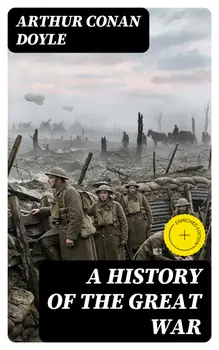
Arthur Conan Doyle's A History of the Great War is an expansive six-volume account of the First World War, combining military narrative, political overview, and vivid descriptions of campaigns from the Western Front and beyond. Written during and shortly after the conflict, it belongs to the tradition of public, patriotic war histories rather than detached academic historiography: its chronological structure, accessible prose, and emphasis on commanders, strategy, sacrifice, and national endurance make the vast conflict intelligible to a general readership. At the same time, its immediacy preserves the assumptions and emotional pressures of wartime Britain, offering valuable insight into how the war was understood while it was still being fought and remembered. Doyle brought to the project an unusual combination of literary fame, historical curiosity, and personal investment. Best known as the creator of Sherlock Holmes, he was also a physician, journalist, ardent imperial patriot, and active public advocate for Britain's war effort. The deaths of close family members, including his son Kingsley, deepened his commitment to documenting the conflict and its human cost. His access to military testimony and official perspectives strengthened the work, though his loyalties inevitably shape its judgments and silences. This history is recommended to readers interested in both the First World War and the formation of modern war memory. It should be read critically, alongside contemporary scholarship, yet its breadth, literary force, and eyewitness-era perspective make it an indispensable cultural document. It illuminates not only what happened, but how a distinguished Victorian writer sought to give meaning to catastrophe.
This enriched edition has been carefully crafted to add value to your reading experience.
- A comprehensive Introduction outlines these selected works' unifying features, themes, or stylistic evolutions.
- The Author Biography highlights personal milestones and literary influences that shape the entire body of writing.
- A Historical Context section situates the works in their broader era—social currents, cultural trends, and key events that underpin their creation.
- A concise Synopsis (Selection) offers an accessible overview of the included texts, helping readers navigate plotlines and main ideas without revealing critical twists.
- A unified Analysis examines recurring motifs and stylistic hallmarks across the collection, tying the stories together while spotlighting the different work's strengths.
- Reflection questions inspire deeper contemplation of the author's overarching message, inviting readers to draw connections among different texts and relate them to modern contexts.
- Lastly, our hand‐picked Memorable Quotes distill pivotal lines and turning points, serving as touchstones for the collection's central themes.