Om denne boken

A Modern Utopia (Unabridged) is H. G. Wells's ambitious fusion of speculative fiction, political philosophy, and social critique, first published in 1905. Framed as a philosophical journey to an alternate Earth, the book examines governance, economics, education, gender relations, and individual freedom within a rationally organized world-state. Its style is discursive rather than conventionally novelistic, combining dialogue, essay, travel narrative, and imaginative projection. Situated among Edwardian utopian writings, it revises earlier ideal commonwealths by insisting that a viable utopia must remain dynamic, plural, and intellectually self-correcting. Wells, trained in science under T. H. Huxley and deeply engaged with evolutionary thought, brought to this work his characteristic concern with social progress and human adaptability. His experiences of class mobility, journalism, Fabian socialism, and the upheavals of industrial modernity shaped his belief that civilization required deliberate planning without extinguishing individuality. A Modern Utopia reflects both his reformist optimism and his anxieties about disorder, inequality, and obsolete institutions. This book is recommended to readers interested in the intellectual history of utopian thought, early science fiction, and modern political imagination. Though some assumptions reveal its period, its central questions—how to reconcile liberty, efficiency, diversity, and justice—remain remarkably provocative.

This enriched edition has been carefully crafted to add value to your reading experience.

- A succinct Introduction situates the work's timeless appeal and themes.

- The Synopsis outlines the central plot, highlighting key developments without spoiling critical twists.

- A detailed Historical Context immerses you in the era's events and influences that shaped the writing.

- An Author Biography reveals milestones in the author's life, illuminating the personal insights behind the text.

- A thorough Analysis dissects symbols, motifs, and character arcs to unearth underlying meanings.

- Reflection questions prompt you to engage personally with the work's messages, connecting them to modern life.

- Hand‐picked Memorable Quotes shine a spotlight on moments of literary brilliance.

- Interactive footnotes clarify unusual references, historical allusions, and archaic phrases for an effortless, more informed read.

Kom i gang med denne boken i dag for 0 kr

  • Få full tilgang til alle bøkene i appen i prøveperioden
  • Ingen forpliktelser, si opp når du vil
Prøv gratis nå
Mer enn 52 000 personer har gitt Nextory 5 stjerner på App Store og Google Play.

  1. 3.0

    50 Masterpieces you have to read before you die vol: 1 (2020 Edition) : Included: Little Women, The Richest Man in Babylon Emma, The Call Of The Wild ....

    Louisa May Alcott, Dante Alighieri, Marcus Aurelius, Jane Austen, L. Frank Baum, Charlotte Brontë, Emily Brontë, Anne Brontë, Miguel de Cervantes, Agatha Christie, George S. Clason, Arthur Conan Doyle, Joseph Conrad, Charles Dickens, Fyodor Dostoyevsky, Alexandre Dumas, George Eliot, G.K. Chesterton, G.K. Chesterton, Zane Grey, Nathaniel Hawthorne, Napoleon Hill, Homer, Victor Hugo, Frances Hodgson Burnett, Washington Irving, Henry James, Franz Kafka, Rudyard Kipling, Jack London, Leo Tolstoy, H.P. Lovecraft, Lucy Maud Montgomery, Joseph Murphy, Robert Louis Stevenson, Edgar Allan Poe, Marcel Proust, Publius, Mary Shelley, Bram Stoker, Mark Twain, Sun Tzu, Lew Wallace, Wallace D. Wattles, H.G. Wells

  2. 3.7

    Tidsmaskinen

    H.G. Wells

  3. 2.0

    The Magic Shop

    H.G. Wells

  4. World's Greatest Short Stories

    Daniel Defoe, Benjamin Franklin, Washington Irving, Mateo Falcone, Charlotte Bronte, Mary Shelley, Nathaniel Hawthorne, Nikolai Gogol, Edgar Allan Poe, Fyodor Dostoyevsky, Charles Dickens, Herman Melville, Mark Twain, Guy De Maupassant, Oscar Wilde, Leo Tolstoy, H.G. Wells, Ambrose Bierce, Stephen Crane, Kate Chopin, Jack London, E. M. Forster

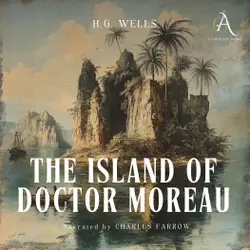
  5. The Island of Doctor Moreau - Audiobook

    H.G. Wells, Classic Audiobooks

  6. 3.8

    Klodenes kamp

    H.G. Wells

  7. 3.2
    #6

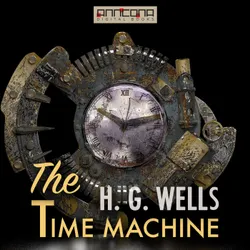
    The Time Machine

    H.G. Wells

  8. Ny

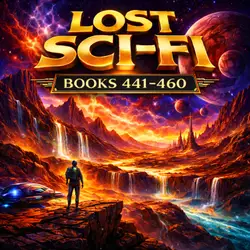
    Lost Sci-Fi Books 441 thru 460 : 20 Extraordinary Tales of Alien Worlds, Impossible Mysteries, and the Boundaries of Tomorrow

    Ben Bova, Arthur C. Clarke, H.G. Wells, H.P. Lovecraft, Nelson S. Bond, Damon Knight, Edgar Allan Poe, Walter Tevis, Stanton A. Coblentz, Frank M. Robinson, Hal Clement, A. Bertram Chandler, Arthur Jean Cox, David Mason, Russ Winterbotham, Bryce Walton, Tom Godwin, Robert Moore Williams, William F. Nolan, Lucius Daniel

  9. Ny

    50 Masterpieces You Have to Read : Volume Two - A Second Library of World Literature

    Joseph Sheridan Fanu, Madame de Fayette, Jerome K Jerome, James Joyce, Charles Kingsley, Rudyard Kipling, Pierre Choderlos Laclos, D. H. Lawrence, Matthew Gregory Lewis, Sinclair Lewis, Jack London, H.P. Lovecraft, Thomas Mann, W. Somerset Maugham, Guy De Maupassant, Herman Melville, Edgar Allan Poe, Marcel Proust, Ann Radcliffe, Samuel Richardson, George Sand, Walter Scott, Mary Shelley, Henryk Sienkiewicz, May Sinclair, Upton Sinclair, Stendhal, Laurence Sterne, Robert Louis Stevenson, Bram Stoker, Harriet Beecher Stowe, Jonathan Swift, Rabindranath Tagore, William Makepeace Thackeray, Leo Tolstoy, Anthony Trollope, Ivan Turgenev, Mark Twain, Jules Verne, Lew Wallace, H.G. Wells, Rebecca West, Edith Wharton, Oscar Wilde, Cao Xueqin, Émile Zola

  10. Ny

    The Book of Shadows Vol 1

    Sir Arthur Quiller-Couch, Robert W. Chambers, H.G. Wells, Beatrix Potter, Edith Nesbit, Barry Pain, E F Benson, D. H. Lawrence, Thomas Burke

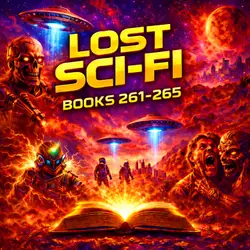
  11. Lost Sci-Fi Books 261 thru 265 : Five Classic Science Fiction Tales of Twisted Time, Killer Machines and Worlds in Peril

    Frank Herbert, H.G. Wells, Theodore Sturgeon, Alfred Bester, Ray Cummings

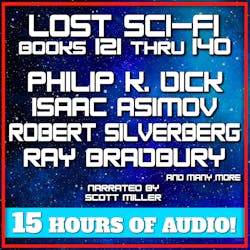
  12. Lost Sci-Fi Books 121 thru 140 : Twenty Vintage Sci-Fi Adventures Through Time, Space, Strange Worlds and Dangerous Futures

    Ray Bradbury, Philip K Dick, George O. Smith, Frank Belknap Long, Isaac Asimov, Robert Sheckley, H.G. Wells, Paul Ernst, Clifford D. Simak, Robert Silverberg, Arthur C. Clarke, Edward W. Ludwig, Jack Vance, Harry Harrison