Om denne boken

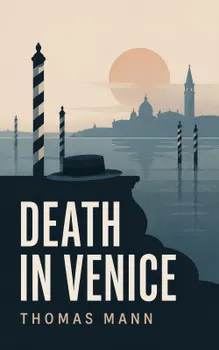
Thomas Mann's *Death in Venice* (1912) follows Gustav von Aschenbach, a celebrated, disciplined writer who travels to Venice seeking renewal and becomes enthralled by the beautiful adolescent Tadzio. Against the city's decaying splendor and concealed cholera epidemic, Mann examines artistic idealism, erotic obsession, mortality, and the instability of cultivated self-control. The novella's exquisitely controlled prose, symbolic imagery, ironic distance, and recurring opposition between Apollonian order and Dionysian impulse place it centrally within European literary modernism and the fin-de-siècle crisis of bourgeois culture. Born in Lübeck in 1875, Mann emerged from a prosperous mercantile family and made the conflicts between bourgeois respectability, artistic vocation, and forbidden desire central to his fiction. His engagement with Schopenhauer, Nietzsche, Goethe, and the cultural anxieties preceding the First World War helped shape this work's philosophical density. Aschenbach's collapse can be read both as a personal tragedy and as Mann's searching critique of artistic authority, repression, and the fantasy that aesthetic discipline can master human nature. Recommended for readers interested in psychological fiction, aesthetic theory, and the darker currents of modernism, *Death in Venice* rewards close, attentive reading. Its brevity belies its interpretive richness: every image of beauty, illness, water, and ritual contributes to a haunting meditation on the price of desire and the limits of artistic control.
Kom i gang med denne boken i dag for 0 kr

  • Få full tilgang til alle bøkene i appen i prøveperioden
  • Ingen forpliktelser, si opp når du vil
Prøv gratis nå
Mer enn 52 000 personer har gitt Nextory 5 stjerner på App Store og Google Play.

Mer av Thomas Mann

  1. Topp 100
    3.7

    Trolldomsfjellet

    Thomas Mann

  2. 3.8

    Døden i Venezia

    Thomas Mann

  3. 5.0

    Den bedratte

    Thomas Mann

  4. Ny

    Mario and the Magician and Other Late Stories

    Thomas Mann

  5. 4.0

    Tristan

    Thomas Mann

  6. 50 Masterpieces You Have to Read : Volume Two - A Second Library of World Literature

    Joseph Sheridan Fanu, Madame de Fayette, Jerome K Jerome, James Joyce, Charles Kingsley, Rudyard Kipling, Pierre Choderlos Laclos, D. H. Lawrence, Matthew Gregory Lewis, Sinclair Lewis, Jack London, H.P. Lovecraft, Thomas Mann, W. Somerset Maugham, Guy De Maupassant, Herman Melville, Edgar Allan Poe, Marcel Proust, Ann Radcliffe, Samuel Richardson, George Sand, Walter Scott, Mary Shelley, Henryk Sienkiewicz, May Sinclair, Upton Sinclair, Stendhal, Laurence Sterne, Robert Louis Stevenson, Bram Stoker, Harriet Beecher Stowe, Jonathan Swift, Rabindranath Tagore, William Makepeace Thackeray, Leo Tolstoy, Anthony Trollope, Ivan Turgenev, Mark Twain, Jules Verne, Lew Wallace, H.G. Wells, Rebecca West, Edith Wharton, Oscar Wilde, Cao Xueqin, Émile Zola

  7. 30. nov.

    Tonio Kröger

    Thomas Mann

  8. 30. okt.

    Lotte i Weimar

    Thomas Mann

  9. 30. mars

    Døden i Venezia

    Thomas Mann

  10. 16. mars
    5.0

    The Magic Mountain

    Thomas Mann

  11. Ny

    50 Masterpieces you have to read before you die vol: 2

    Joseph Sheridan Fanu, Madame de Fayette, Jerome K Jerome, James Joyce, Charles Kingsley, Rudyard Kipling, Pierre Choderlos Laclos, D. H. Lawrence, Matthew Gregory Lewis, Sinclair Lewis, Jack London, H.P. Lovecraft, Thomas Mann, W. Somerset Maugham, Guy De Maupassant, Herman Melville, Edgar Allan Poe, Marcel Proust, Ann Radcliffe, Samuel Richardson, George Sand, Walter Scott, Mary Shelley, Henryk Sienkiewicz, May Sinclair, Upton Sinclair, Stendhal, Laurence Sterne, Robert Louis Stevenson, Bram Stoker, Harriet Beecher Stowe, Jonathan Swift, Rabindranath Tagore, William Makepeace Thackeray, Leo Tolstoy, Anthony Troloppe, Ivan Turgenev, Mark Twain, Jules Verne, Lew Wallace, H.G. Wells, Rebecca West, Edith Wharton, Oscar Wilde, Cao Xueqin, Émile Zola

  12. Tonio Kröger

    Thomas Mann