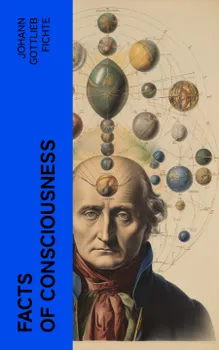
Facts of Consciousness (Annotated) : Enriched Edition. A Transcendental Idealist Treatise on Self-Awareness, Perception, Knowing, and the Active I

In Facts of Consciousness, Johann Gottlieb Fichte offers a rigorous late exposition of his Wissenschaftslehre, beginning not from abstract dogma but from the immediately given structures of conscious life. The work examines how self-awareness, knowing, willing, and the world's appearing are grounded in the activity of the I, while moving beyond mere psychology toward a transcendental account of experience. Dense, systematic, and aphoristically forceful, it belongs to the post-Kantian idealist effort to secure philosophy's first principles after the Critique of Pure Reason. Fichte, one of German Idealism's central figures, wrote from within a career marked by both intellectual audacity and controversy. His engagement with Kant, his disputes over atheism, and his continuing attempt to clarify the Wissenschaftslehre shaped this text's insistence that philosophy must disclose the living genesis of consciousness rather than merely classify its contents. This book is especially recommended to readers of Kant, Schelling, Hegel, and transcendental philosophy who wish to understand Fichte's mature project. Though demanding, it rewards careful study with a powerful vision of consciousness as active, self-grounding, and philosophically foundational.

This enriched edition has been carefully crafted to add value to your reading experience.

- A succinct Introduction situates the work's timeless appeal and themes.

- The Synopsis outlines the central plot, highlighting key developments without spoiling critical twists.

- A detailed Historical Context immerses you in the era's events and influences that shaped the writing.

- An Author Biography reveals milestones in the author's life, illuminating the personal insights behind the text.

- A thorough Analysis dissects symbols, motifs, and character arcs to unearth underlying meanings.

- Reflection questions prompt you to engage personally with the work's messages, connecting them to modern life.

- Hand‐picked Memorable Quotes shine a spotlight on moments of literary brilliance.

- Interactive footnotes clarify unusual references, historical allusions, and archaic phrases for an effortless, more informed read.

Om denne boken

In Facts of Consciousness, Johann Gottlieb Fichte offers a rigorous late exposition of his Wissenschaftslehre, beginning not from abstract dogma but from the immediately given structures of conscious life. The work examines how self-awareness, knowing, willing, and the world's appearing are grounded in the activity of the I, while moving beyond mere psychology toward a transcendental account of experience. Dense, systematic, and aphoristically forceful, it belongs to the post-Kantian idealist effort to secure philosophy's first principles after the Critique of Pure Reason. Fichte, one of German Idealism's central figures, wrote from within a career marked by both intellectual audacity and controversy. His engagement with Kant, his disputes over atheism, and his continuing attempt to clarify the Wissenschaftslehre shaped this text's insistence that philosophy must disclose the living genesis of consciousness rather than merely classify its contents. This book is especially recommended to readers of Kant, Schelling, Hegel, and transcendental philosophy who wish to understand Fichte's mature project. Though demanding, it rewards careful study with a powerful vision of consciousness as active, self-grounding, and philosophically foundational.

This enriched edition has been carefully crafted to add value to your reading experience.

- A succinct Introduction situates the work's timeless appeal and themes.

- The Synopsis outlines the central plot, highlighting key developments without spoiling critical twists.

- A detailed Historical Context immerses you in the era's events and influences that shaped the writing.

- An Author Biography reveals milestones in the author's life, illuminating the personal insights behind the text.

- A thorough Analysis dissects symbols, motifs, and character arcs to unearth underlying meanings.

- Reflection questions prompt you to engage personally with the work's messages, connecting them to modern life.

- Hand‐picked Memorable Quotes shine a spotlight on moments of literary brilliance.

- Interactive footnotes clarify unusual references, historical allusions, and archaic phrases for an effortless, more informed read.
Kom i gang med denne boken i dag for 0 kr

  • Få full tilgang til alle bøkene i appen i prøveperioden
  • Ingen forpliktelser, si opp når du vil
Prøv gratis nå
Mer enn 52 000 personer har gitt Nextory 5 stjerner på App Store og Google Play.

  1. 50 Meisterwerke der Philosophie : Metaphysik, Das Gastmahl, Bhagavadgita, Tractatus logico-philosophicus, Kritik der reinen Vernunft, Also sprach Zarathustra, Selbstbetrachtungen von Marcus Aurelius

    Ludwig Wittgenstein, Edmund Husserl, Karl Marx, Søren Kierkegaard, Friedrich Nietzsche, Ralph Waldo Emerson, John Stuart Mill, Georg Wilhelm Hegel, Friedrich Schelling, Johann Gottlieb Fichte, Immanuel Kant, John Locke, Montesquieu, Jean-Jacques Rousseau, David Hume, Gottfried Wilhelm Leibniz, Baruch Spinoza, - Konfuzius, Lao Tse, Platon, Xenophon, - Aristoteles, Marcus Tullius Cicero, Seneca, Epiktet, Marc Aurel, Plotin, Thomas von Aquin, Nicolaus von Cues, - Erasmus von Rotterdam, Niccolò Machiavelli, Tommaso Campanella, Martin Luther, Giordano Bruno, Samuel von Pufendorf, Abbé Castel Saint-Pierre, Michel de Montaigne, René Descartes, Francis Bacon, Blaise Pascal

  2. Grundwerke der politischen Philosophie : Der Staat, Der Gesellschaftsvertrag, Der Fürst, Utopia, Manifest der Kommunistischen Partei, Geschichte der Socialdemokratie, Parlamentarischer Kretenismus

    Platon, - Aristoteles, Marcus Tullius Cicero, Niccolò Machiavelli, Tommaso Campanella, Thomas Morus, Samuel von Pufendorf, Abbé Castel Saint-Pierre, Jean-Jacques Rousseau, Montesquieu, Immanuel Kant, Friedrich der Große, Johann Gottlieb Fichte, Karl Marx, Friedrich Engels, Wilhelm von Humboldt, Friedrich Christoph Dahlmann, Franz Mehring, Johann Most, John Henry Mackay, Rosa Luxemburg, Erich Mühsam

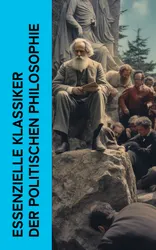
  3. Essenzielle Klassiker der politischen Philosophie : Der Staat, Der Gesellschaftsvertrag, Der Fürst, Utopia, Manifest der Kommunistischen Partei, Geschichte der Socialdemokratie

    Niccolò Machiavelli, Montesquieu, Friedrich der Große, Platon, - Aristoteles, Marcus Tullius Cicero, Tommaso Campanella, Thomas Morus, Samuel von Pufendorf, Abbé Castel Saint-Pierre, Jean-Jacques Rousseau, Immanuel Kant, Johann Gottlieb Fichte, Karl Marx, Friedrich Engels, Wilhelm von Humboldt, Friedrich Christoph Dahlmann, Franz Mehring, Johann Most, John Henry Mackay, Rosa Luxemburg, Erich Mühsam

  4. Die größten Philosophen des Deutschen Idealismus (Kommentiert) : Erweiterte Ausgabe. Die wichtigsten Werke von Kant, Hegel, Schelling, Jacobi, Fichte und Schleiermacher

    Immanuel Kant, Johann Gottlieb Fichte, Georg Wilhelm Hegel, Friedrich Schelling, Friedrich Schleiermacher

  5. Philosophie des Deutschen Idealismus (Kommentiert) : Erweiterte Ausgabe. Die Quelle der ewigen Wahrheiten, Kritik der reinen Vernunft, Wissenschaft der Logik, Grundlage der gesamten Wissenschaftslehre

    Georg Wilhelm Hegel, Johann Gottlieb Fichte, Immanuel Kant, Friedrich Schelling, Friedrich Schleiermacher

  6. Grundlage der gesamten Wissenschaftslehre (Alle 3 Bände) : Bereicherte Ausgabe. Der Grund der Selbsterkenntnis und Gotteserkenntnis (Eines der zentralen Werke im nachkantischen Idealismus)

    Johann Gottlieb Fichte

  7. The Vocation of the Scholar (Annotated) : Enriched Edition. Lectures on Knowledge, Freedom, Education, and the Moral Duty of Intellectuals in German Idealist Philosophy

    Johann Gottlieb Fichte

  8. The Vocation of Man (Annotated) : Enriched Edition. Doubt, Knowledge, and Faith in German Idealism, Moral Freedom, and Human Purpose

    Johann Gottlieb Fichte

  9. Grundlage der gesamten Wissenschaftslehre (Alle 3 Bände) : Der Grund der Selbsterkenntnis und Gotteserkenntnis (Eines der zentralen Werke im nachkantischen Idealismus)

    Johann Gottlieb Fichte

  10. The Vocation of the Scholar : Enriched edition.

    Johann Gottlieb Fichte

  11. Der geschlossene Handelsstaat

    Johann Gottlieb Fichte