Om denne boken

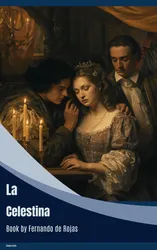
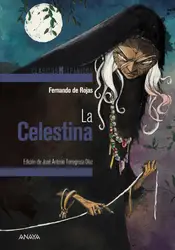
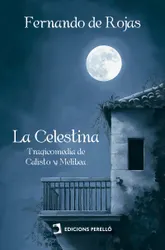
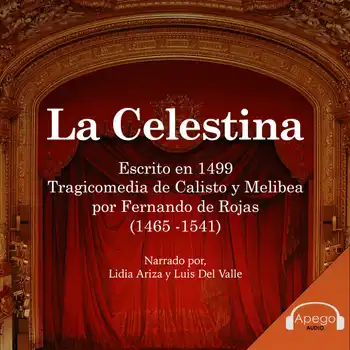
The Tragicomedy of Calisto and Melibea (Spanish: Tragicomedia de Calisto y Melibea), known in Spain as La Celestina is a work entirely in dialogue published in 1499. It is attributed to Fernando de Rojas, a descendant of converted Jews, who practiced law and, later in life, served as an alderman of Talavera de la Reina, an important commercial center near Toledo.

The book is considered to be one of the greatest works of all Spanish literature, and traditionally marks the end of medieval literature and the beginning of the literary renaissance in Spain. Although usually regarded as a novel, it is written as a continuous series of dialogues and can be taken as a play, having been staged as such and filmed.

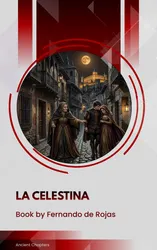
The story tells of a bachelor, Calisto, who uses the old procuress Celestina to start an affair with Melibea, an unmarried girl kept in seclusion by her parents. Though the two use the rhetoric of courtly love, sex — not marriage — is their aim. When he dies in an accident, she commits suicide. The name Celestina has become synonymous with procuress, especially an older woman used to further an illicit affair, and is a literary archetype of this character, the masculine counterpart being Pandarus.
Kom i gang med denne boken i dag for 0 kr

  • Få full tilgang til alle bøkene i appen i prøveperioden
  • Ingen forpliktelser, si opp når du vil
Prøv gratis nå
Mer enn 52 000 personer har gitt Nextory 5 stjerner på App Store og Google Play.

  1. Ny
    3.7

    La Celestina

    Fernando de Rojas

  2. 100 Obras Maestras Que Debes Leer Antes De Morir

    Francis Scott Fitzgerald, Mary Shelley, Lyman Frank Baum, Edith Nesbit, Dante Alighieri, Jane Austen, Ambrose Bierce, Emily Brontë, Edgar Rice Burroughs, Lewis Carroll, Wilkie Collins, René Descartes, Charles Dickens, Emily Dickinson, Alexandre Dumas, Gustave Flaubert, Benito Pérez Galdós, Johann Wolfgang von Goethe, Thomas Hardy, E T A Hoffmann, Washington Irving, Henry James, James Joyce, Franz Kafka, Gaston Leroux, Federico García Lorca, H.P. Lovecraft, Publio Virgilio Marón, Lucy Maud Montgomery, John William Polidori, Marco Polo, Antoine de Saint-Exupéry, Emilio Salgari, Walter Scott, Mark Twain, Jules Verne, H.G. Wells, Edith Wharton, Mary Wollstonecraft, Fernando de Rojas

  3. 100 Clásicos de la Literatura Universal

    Francis Scott Fitzgerald, Mary Shelley, Lyman Frank Baum, Louisa May Alcott, Dante Alighieri, Jane Austen, Ambrose Bierce, Emily Brontë, Edgar Rice Burroughs, Lewis Carroll, Wilkie Collins, René Descartes, Charles Dickens, Emily Dickinson, Alexandre Dumas, Gustave Flaubert, Benito Pérez Galdós, Johann Wolfgang von Goethe, Thomas Hardy, E T A Hoffmann, Washington Irving, Henry James, James Joyce, Franz Kafka, Gaston Leroux, Federico García Lorca, H.P. Lovecraft, Publio Virgilio Marón, Lucy Maud Montgomery, John William Polidori, Marco Polo, Antoine de Saint-Exupéry, Emilio Salgari, Walter Scott, Mark Twain, Jules Verne, Julio Verne, H.G. Wells, Edith Wharton, Mary Wollstonecraft, Stefan Zweig, Sun Tzu, Bram Stoker, - Aristoteles, George Bernard Shaw, Henryk Sienkiewicz, Concepción Arenal, Charlotte Brontë, Miguel de Cervantes, G.K. Chesterton, Daniel Defoe, Fyodor Mikhailovich Dostoyevsky, Arthur Conan Doyle, Sigmund Freud, H. Rider Haggard, Homero, Immanuel Kant, Rudyard Kipling, Molière, Friedrich Nietzsche, Fernando de Rojas, Sófocles, William Makepeace Thackeray, León Tolstói, Voltaire, Ramón María del Valle-Inclán, Oscar Wilde, Virginia Woolf

  4. 3.7

    La Celestina

    Fernando de Rojas

  5. La Celestina : Edición adaptada

    Fernando de Rojas

  6. 3.7

    La Celestina

    Fernando de Rojas

  7. 3.7

    La Celestina

    Fernando de Rojas

  8. 3.7

    La Celestina

    Fernando de Rojas

  9. La Celestina : El Clásico Inmortal del Amor, el Deseo y la Tragedia en la España Medieval

    Fernando de Rojas

  10. 3.7

    La Celestina

    Fernando de Rojas

  11. 3.7

    La Celestina : Edición enriquecida. Clásicos de la literatura

    Fernando de Rojas

  12. 3.7

    La Celestina : Amor prohibido y astucia en la España del Renacimiento

    Fernando de Rojas