Om denne boken

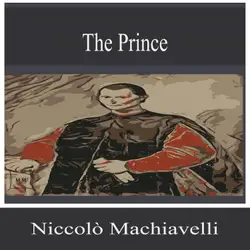
In "The Prince," Niccolò Machiavelli delves into the complex dynamics of power and leadership during the tumultuous Renaissance period. With a pragmatic and often starkly realistic approach, Machiavelli articulates strategies for rulers to maintain control and safeguard their states. His work blends political theory with anecdotal evidence, drawing on historical examples and classical philosophy to present a guide that eschews moral righteousness in favor of effectiveness and stability. The literary style is clear, concise, and often provocative, marking a departure from the idealistic views of governance prevalent in previous writings, thereby situating Machiavelli as a pivotal figure in the foundation of modern political thought. Machiavelli, a diplomat and political theorist from Florence, wrote "The Prince" following a period of political upheaval that left a profound impact on him. His background in the intricacies of Florentine politics, coupled with his experiences of exile and observation of the Italian city-states, led him to formulate a realistic narrative of power and its often ruthless pursuits. This contextual backdrop informs the unflinching advice he gives to rulers, seeking not to promote virtue, but to navigate the complexities of human nature and societal structures. Readers looking to grasp the intricacies of political strategy and the often uncomfortable truths of leadership will find "The Prince" essential. Machiavelli's insights remain extraordinary not only for their historical significance but for their enduring relevance in contemporary political discourse. This short yet profound treatise is recommended for anyone seeking to understand the darker yet essential facets of governance and the nature of power.

In this enriched edition, we have carefully created added value for your reading experience:

- A succinct Introduction situates the work's timeless appeal and themes.

- The Synopsis outlines the central plot, highlighting key developments without spoiling critical twists.

- A detailed Historical Context immerses you in the era's events and influences that shaped the writing.

- An Author Biography reveals milestones in the author's life, illuminating the personal insights behind the text.

- A thorough Analysis dissects symbols, motifs, and character arcs to unearth underlying meanings.

- Reflection questions prompt you to engage personally with the work's messages, connecting them to modern life.

- Hand‐picked Memorable Quotes shine a spotlight on moments of literary brilliance.

- Interactive footnotes clarify unusual references, historical allusions, and archaic phrases for an effortless, more informed read.

Kom i gang med denne boken i dag for 0 kr

  • Få full tilgang til alle bøkene i appen i prøveperioden
  • Ingen forpliktelser, si opp når du vil
Prøv gratis nå
Mer enn 52 000 personer har gitt Nextory 5 stjerner på App Store og Google Play.

  1. 4.2

    Fyrsten

    Niccolò Machiavelli

  2. 2.3

    The Prince

    Niccolò Machiavelli

  3. Fyrsten

    Niccolò Machiavelli

  4. 3.5

    Fursten

    Niccolò Machiavelli

  5. 3.9

    Niccolò Machiavelli: The Prince : A philosophical treatise on the gaining and keeping of power

    Niccolò Machiavelli

  6. 33 Human Science Masterpieces You Must Read Before You Die. Illustrated : The Art of Public Speaking, The Meditations, The Kama Sutra and other masterpieces

    Edwin A. Abbott, Aristotle, Dale Carnegie, Gilbert Chesterton, René Descartes, Epictetus, Marcus Aurelius Antoninus, Sigmund Freud, Hermann Hesse, David Hume, Lao Tzu, Confucius, Swami Abhedananda, Anonimous, David Herbert Lawrence, Niccolò Machiavelli, Benedictus de Spinoza, John Mill, Prentice Mulford, Thomas More, Friedrich Nietzsche, J. Allanson Picton, Plato, Sun Tzu, Vatsyayana, Voltaire, H.G. Wells, Frances Bacon

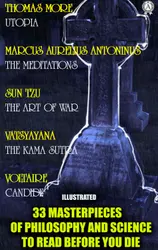
  7. 33 Masterpieces of Philosophy and Science to Read Before You Die (Illustrated) : Utopia, The Meditations, The Art of War, The Kama Sutra, Candide

    Thomas More, Marcus Aurelius Antoninus, Sun Tzu, Vatsyayana, Voltaire, Edwin A. Abbott, Aristotle, Dale Carnegie, Gilbert Keith Chesterton, René Descartes, Epictetus, Sigmund Freud, Hermann Hesse, David Hume, Lao Tzu, David Herbert Lawrence, Niccolò Machiavelli, John Mill, Prentice Mulford, Friedrich Nietzsche, Plato, Bertrand Russell, H.G. Wells, Frances Bacon

  8. 4.0

    The Prince

    Niccolò Machiavelli

  9. The Art of War

    Niccolò Machiavelli

  10. Ny

    Der Fürst : Das Buch vom Fürsten

    Niccolò Machiavelli

  11. Ny

    Harvard Classics : The Five-Foot Shelf of Books

    Aesop, Dante Alighieri, Hans Christian Andersen, Augustine of Hippo, Marcus Aurelius, Jane Austen, Francis Bacon, Honoré de Balzac, Francis Beaumont, Bjørnstjerne Bjørnson, Thomas Browne, Robert Browning, John Bunyan, EDMUND BURKE, Robert Burns, Lord Byron, Thomas Carlyle, Benvenuto Cellini, Miguel de Cervantes, Marcus Tullius Cicero, Richard Henry Jr., Charles Darwin, Alphonse Daudet, Thomas Dekker, Charles Dickens, Fyodor Dostoevsky, John Dryden, Charles W. Eliot, George Eliot, Ralph Waldo Emerson, Epictetus, John Fletcher, Theodor Fontane, Benjamin Franklin, Johann Wolfgang Goethe, Oliver Goldsmith, Jacob Grimm, Edward Everett Hale, Bret Harte, Nathaniel Hawthorne, Homer, Victor Hugo, Washington Irving, Henry James, Ben Jonson, Gottfried Keller, Thomas à Kempis, Alexander L. Kielland, Martin Luther, Niccolò Machiavelli, Alessandro Manzoni, Christopher Marlowe, Philip Massinger, Guy De Maupassant, John Stuart Mill, John Milton, Thomas More, William Morris, Alfred de Musset, William Allan Neilson, William Penn, Plato, Pliny the Younger, Plutarch, George Sand, Percy Bysshe Shelley, Richard Brinsley Sheridan, Adam Smith, Laurence Sterne, Theodor Storm, William Makepeace Thackeray, Leo Tolstoy, Ivan Turgenev, Mark Twain, Juan Valera, Virgil, Izaak Walton, John Webster, John Woolman

  12. Ny

    The Essential Ancient Wisdom Library : 10 Timeless Works of Stoicism, Philosophy, Strategy and the Art of Living

    Marcus Aurelius, Seneca, Epictetus, Laozi, Plato, Sun Tzu, Musashi Miyamoto, Niccolò Machiavelli, Friedrich Wilhelm Nietzsche, James Allen