Om denne boken

Marcus Aurelius was born in Rome in 121 AD and would become its Emperor from 161 to 180. Considered by Machiavelli as the last of the good Emperors, Marcus Aurelius would become one of the most important of the Stoic philosophers.

The "Meditations," which he wrote in Greek, are among the most noteworthy expressions of this system, and exhibit it favorably on its practical side. The work is a series of twelve books that he intended for his own guidance and self-improvement, which picture with faithfulness the mind and character of this noblest of the Emperors. Simple in style and sincere in tone, they record for all time the height reached by pagan aspiration in its effort to solve the problem of conduct.

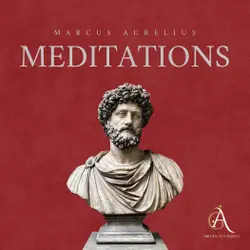
Kom i gang med denne boken i dag for 0 kr

  • Få full tilgang til alle bøkene i appen i prøveperioden
  • Ingen forpliktelser, si opp når du vil
Prøv gratis nå
Mer enn 52 000 personer har gitt Nextory 5 stjerner på App Store og Google Play.

Mer av Marcus Aurelius

  1. 3.0

    50 Masterpieces you have to read before you die vol: 1 (2020 Edition) : Included: Little Women, The Richest Man in Babylon Emma, The Call Of The Wild ....

    Louisa May Alcott, Dante Alighieri, Marcus Aurelius, Jane Austen, L. Frank Baum, Charlotte Brontë, Emily Brontë, Anne Brontë, Miguel de Cervantes, Agatha Christie, George S. Clason, Arthur Conan Doyle, Joseph Conrad, Charles Dickens, Fyodor Dostoyevsky, Alexandre Dumas, George Eliot, G.K. Chesterton, G.K. Chesterton, Zane Grey, Nathaniel Hawthorne, Napoleon Hill, Homer, Victor Hugo, Frances Hodgson Burnett, Washington Irving, Henry James, Franz Kafka, Rudyard Kipling, Jack London, Leo Tolstoy, H.P. Lovecraft, Lucy Maud Montgomery, Joseph Murphy, Robert Louis Stevenson, Edgar Allan Poe, Marcel Proust, Publius, Mary Shelley, Bram Stoker, Mark Twain, Sun Tzu, Lew Wallace, Wallace D. Wattles, H.G. Wells

  2. 4.0

    Meditations - Audiobook

    Marcus Aurelius

  3. 4.1

    The Meditations of Marcus Aurelius

    Marcus Aurelius

  4. Meditations - Marcus Aurelius : The Private Stoic Reflections of Marcus Aurelius (Annotated Edition)

    Marcus Aurelius

  5. 4.7

    The Emperor's Handbook : A New Translation of The Meditations

    Marcus Aurelius

  6. 4.3

    Meditations

    Marcus Aurelius

  7. The Essential Ancient Wisdom Library : 10 Classics of Philosophy, Strategy and Self-Mastery

    Marcus Aurelius, Seneca, Epictetus, Laozi, Plato, Sun Tzu, Miyamoto Musashi, Niccolò Machiavelli, Friedrich Nietzsche, James Allen

  8. Harvard Classics : The Five-Foot Shelf of Books

    Aesop, Dante Alighieri, Hans Christian Andersen, Augustine of Hippo, Marcus Aurelius, Jane Austen, Francis Bacon, Honoré de Balzac, Francis Beaumont, Bjørnstjerne Bjørnson, Thomas Browne, Robert Browning, John Bunyan, EDMUND BURKE, Robert Burns, Lord Byron, Thomas Carlyle, Benvenuto Cellini, Miguel de Cervantes, Marcus Tullius Cicero, Richard Henry Jr., Charles Darwin, Alphonse Daudet, Thomas Dekker, Charles Dickens, Fyodor Dostoevsky, John Dryden, Charles W. Eliot, George Eliot, Ralph Waldo Emerson, Epictetus, John Fletcher, Theodor Fontane, Benjamin Franklin, Johann Wolfgang Goethe, Oliver Goldsmith, Jacob Grimm, Edward Everett Hale, Bret Harte, Nathaniel Hawthorne, Homer, Victor Hugo, Washington Irving, Henry James, Ben Jonson, Gottfried Keller, Thomas à Kempis, Alexander L. Kielland, Martin Luther, Niccolò Machiavelli, Alessandro Manzoni, Christopher Marlowe, Philip Massinger, Guy De Maupassant, John Stuart Mill, John Milton, Thomas More, William Morris, Alfred de Musset, William Allan Neilson, William Penn, Plato, Pliny the Younger, Plutarch, George Sand, Percy Bysshe Shelley, Richard Brinsley Sheridan, Adam Smith, Laurence Sterne, Theodor Storm, William Makepeace Thackeray, Leo Tolstoy, Ivan Turgenev, Mark Twain, Juan Valera, Virgil, Izaak Walton, John Webster, John Woolman

  9. Meditations : A Modernized Edition of the Stoic Classic

    Marcus Aurelius

  10. The MEDITATIONS of Marcus Aurelius

    Marcus Aurelius

  11. Meditations :

    Marcus Aurelius

  12. 5.0

    Mediations : Key Insights

    Marcus Aurelius