Om denne boken

One of the most vital and pregnant books in our modern literature, "Sartor Resartus" is also, in structure and form, one of the most daringly original. It defies exact classification. It is not a philosophic treatise. It is not an autobiography. It is not a romance. Yet in a sense it is all these combined. Its underlying purpose is to expound in broad outline certain ideas which lay at the root of Carlyle's whole reading of life. But he does not elect to set these forth in regular methodic fashion, after the manner of one writing a systematic essay. He presents his philosophy in dramatic form and in a picturesque human setting. He invents a certain Herr Diogenes Teufelsdröckh, an erudite German professor of "Allerley-Wissenschaft," or Things in General, in the University of Weissnichtwo, of whose colossal work, "Die Kleider, Ihr Werden und Wirken" (On Clothes: Their Origin and Influence), he represents himself as being only the student and interpreter. With infinite humour he explains how this prodigious volume came into his hands; how he was struck with amazement by its encyclopædic learning, and the depth and suggestiveness of its thought; and how he determined that it was his special mission to introduce its ideas to the British public. But how was this to be done? As a mere bald abstract of the original would never do, the would-be apostle was for a time in despair. But at length the happy thought occurred to him of combining a condensed statement of the main principles of the new philosophy with some account of the philosopher's life and character. Thus the work took the form of a "Life and Opinions of Herr Teufelsdröckh," and as such it was offered to the world. Here, of course, we reach the explanation of its fantastic title—"Sartor Resartus," or the Tailor Patched: the tailor being the great German "Clothes-philosopher," and the patching being done by Carlyle as his English editor...


Kom i gang med denne boken i dag for 0 kr

  • Få full tilgang til alle bøkene i appen i prøveperioden
  • Ingen forpliktelser, si opp når du vil
Prøv gratis nå
Mer enn 52 000 personer har gitt Nextory 5 stjerner på App Store og Google Play.

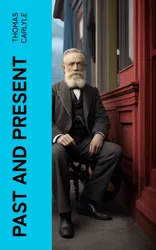
  1. Past and Present (Annotated) : Enriched Edition. Victorian Social Criticism, Medieval Monastic History, and the Moral Crisis of Industrial Britain

    Thomas Carlyle

  2. Essay on Burns : A Profound Exploration of Romanticism and Scottish Literature through Burns' Artistry

    Thomas Carlyle

  3. The Life of Friedrich Schiller : Comprehending an Examination of His Works

    Thomas Carlyle

  4. Sartor Resartus

    Thomas Carlyle

  5. 5.0

    On Heroes, Hero-Worship and the Heroic in History

    Thomas Carlyle

  6. Ny

    Harvard Classics : The Five-Foot Shelf of Books

    Aesop, Dante Alighieri, Hans Christian Andersen, Augustine of Hippo, Marcus Aurelius, Jane Austen, Francis Bacon, Honoré de Balzac, Francis Beaumont, Bjørnstjerne Bjørnson, Thomas Browne, Robert Browning, John Bunyan, EDMUND BURKE, Robert Burns, Lord Byron, Thomas Carlyle, Benvenuto Cellini, Miguel de Cervantes, Marcus Tullius Cicero, Richard Henry Jr., Charles Darwin, Alphonse Daudet, Thomas Dekker, Charles Dickens, Fyodor Dostoevsky, John Dryden, Charles W. Eliot, George Eliot, Ralph Waldo Emerson, Epictetus, John Fletcher, Theodor Fontane, Benjamin Franklin, Johann Wolfgang Goethe, Oliver Goldsmith, Jacob Grimm, Edward Everett Hale, Bret Harte, Nathaniel Hawthorne, Homer, Victor Hugo, Washington Irving, Henry James, Ben Jonson, Gottfried Keller, Thomas à Kempis, Alexander L. Kielland, Martin Luther, Niccolò Machiavelli, Alessandro Manzoni, Christopher Marlowe, Philip Massinger, Guy De Maupassant, John Stuart Mill, John Milton, Thomas More, William Morris, Alfred de Musset, William Allan Neilson, William Penn, Plato, Pliny the Younger, Plutarch, George Sand, Percy Bysshe Shelley, Richard Brinsley Sheridan, Adam Smith, Laurence Sterne, Theodor Storm, William Makepeace Thackeray, Leo Tolstoy, Ivan Turgenev, Mark Twain, Juan Valera, Virgil, Izaak Walton, John Webster, John Woolman

  7. 100 Klassiker der Geschichtsschreibung : Die Geschichte des Alten Ägypten, Der Alexanderzug, Römische Geschichte, Herbst des Mittelalters, Die russische Revolution, Der Kampf um Europa

    Edward Gibbon, Leopold von Ranke, J. B. Bury, Theodor Mommsen, Herodot, Thukydides, Xenophon, Arrian, Titus Livius, Tacitus, Gaius Iulius Caesar, Sueton, Polybios, Ammianus Marcellinus, Plutarch, Diogenes Laërtios, Eusebius, Prokop von Cäsarea, Anna Komnena, Agathias, Marc Bloch, L. W. King, George Rawlinson, Edward Bulwer-Lytton, Jacob Burckhardt, Joseph François Michaud, Johan Huizinga, Arthur Middleton Reeves, Niccolò Machiavelli, G.K. Chesterton, Voltaire, Friedrich Schiller, Ricarda Huch, Thomas Carlyle, Charles Downer Hazen, Egon Friedell, Walter Benjamin

  8. 100 Große Geschichtsbücher - Klassiker, die man kennen muss : Der Peloponnesische Krieg, Der Alexanderzug, Ab Urbe Condita, Napoleonische Kriege, Geschichte des Ersten und Zweiten Weltkriegs

    Tacitus, Thukydides, Plutarch, Theodor Mommsen, Edward Gibbon, Leopold von Ranke, Ricarda Huch, Helmuth von Moltke, Xenophon, Arrian, Titus Livius, Gaius Iulius Caesar, Sueton, Polybios, Ammianus Marcellinus, Diogenes Laërtios, Eusebius, Prokop von Cäsarea, Anna Komnena, Agathias, Marc Bloch, George Rawlinson, Edward Bulwer-Lytton, Jacob Burckhardt, Joseph François Michaud, Johan Huizinga, Niccolò Machiavelli, G.K. Chesterton, Voltaire, Friedrich Schiller, Thomas Carlyle, Charles Downer Hazen, Egon Friedell, Walter Benjamin

  9. The French Revolution

    Thomas Carlyle

  10. The Gift of Friendship : What the Wisest Minds Said About Our Deepest Bonds Across Two Thousand Years

    Alfred H. Hyatt, Henry David Thoreau, Thomas Carlyle, Henry Mackenzie, Oliver Goldsmith, Samuel Johnson, George Berkeley, Richard Steele, Joseph Addison, Francis Bacon, Michel de Montaigne, Anthusa, Aristotle

  11. Die größten Geschichtsbücher - Klassiker, die man kennen muss : Der Peloponnesische Krieg, Römische Geschichte, Aus Zwei Jahrtausenden Deutscher Geschichte, Die Französische Revolution

    Tacitus, Leopold von Ranke, Theodor Mommsen, Herodot, Thukydides, Titus Livius, Sueton, Jacob Burckhardt, Niccolò Machiavelli, Ricarda Huch, Thomas Carlyle, Egon Friedell, Felix Salten