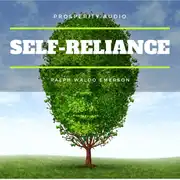
Self-Reliance

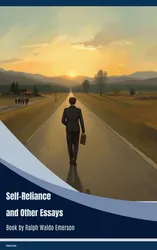
Follow the thoughts of essayist, poet and American Transcendentalism founder Ralph Waldo Emerson as he discovered his own belief system in the anthology "Self-Reliance ."

In "Self-Reliance," Emerson explained that standing on one's own two feet against society was essential to forming a strong union with God. Once this essay was published, it received both wild praise and hurtful backlash from different factions of America. However, Emerson pushed through the negative criticism, stood against the crowd, and found himself stronger in his faith than he ever had before. Emerson found that self-reliance, no matter the situation, would always help the individual persevere and become stronger. Because Emerson wrote for the common man, many of his essays and poems are relatively simple and straight-forward; he wanted audiences to understand his thoughts and identify with his beliefs. He also wanted to wake them up from the conventional modern life that he believed had often placated them. Emerson's writings were meant to help the reader transcend to a more thoughtful mindset. His essays discuss themes of philosophy, poetry, history, politics, ethics, and literary criticism, all of which helped break people from what he believed were their mediocre lives. He saw that humanity could become stronger as a whole if people would take the steps to make themselves and their minds stronger. The texts in "Self-Reliance" will not only inspire readers, but they will inspire self-examination and evaluation as well.

Om denne boken

Follow the thoughts of essayist, poet and American Transcendentalism founder Ralph Waldo Emerson as he discovered his own belief system in the anthology "Self-Reliance ."

In "Self-Reliance," Emerson explained that standing on one's own two feet against society was essential to forming a strong union with God. Once this essay was published, it received both wild praise and hurtful backlash from different factions of America. However, Emerson pushed through the negative criticism, stood against the crowd, and found himself stronger in his faith than he ever had before. Emerson found that self-reliance, no matter the situation, would always help the individual persevere and become stronger. Because Emerson wrote for the common man, many of his essays and poems are relatively simple and straight-forward; he wanted audiences to understand his thoughts and identify with his beliefs. He also wanted to wake them up from the conventional modern life that he believed had often placated them. Emerson's writings were meant to help the reader transcend to a more thoughtful mindset. His essays discuss themes of philosophy, poetry, history, politics, ethics, and literary criticism, all of which helped break people from what he believed were their mediocre lives. He saw that humanity could become stronger as a whole if people would take the steps to make themselves and their minds stronger. The texts in "Self-Reliance" will not only inspire readers, but they will inspire self-examination and evaluation as well.

Kom i gang med denne boken i dag for 0 kr

  • Få full tilgang til alle bøkene i appen i prøveperioden
  • Ingen forpliktelser, si opp når du vil
Prøv gratis nå
Mer enn 52 000 personer har gitt Nextory 5 stjerner på App Store og Google Play.

  1. Self Reliance by Ralph Waldo Emerson - Full English Audiobook : Philosophy Audiobook

    Ralph Waldo Emerson

  2. 101 Great American Poems : To My Dear and Loving Husband, The Planting of the Apple-Tree, Concord Hymn, The Arrow and the Song, Alone, Annabel Lee and others

    Anne Bradstreet, Phillis Wheatley, William Cullen Bryant, Ralph Waldo Emerson, Henry Wadsworth Longfellow, Edgar Allan Poe, Abraham Lincoln, Oliver Wendell Holmes Holmes, Herman Melville, Walt Whitman, Frances E. W. W Harper, Emily Dickinson, Ella Wheeler Wilcox, Ernest Lawrence Thayer, Edwin Arlington Robinson, Stephen Crane, James Weldon Johnson, Paul Laurence Dunbar, Gertrude Stein, Vachel Lindsay, Claude Mckay, Countee Cullen, Amy Lowell, James Oppenheim, Elizabeth Barrett Browning, Emma Lazarus, Louisa May Alcott, Ellis Parker Butler, Hugh Henry Brackenridge, Matthew Arnold, William Butler Yeats, William Blake, Sara Teasdale, William Barnes

  3. 5.0
    #9

    7 short stories that INFJ will love

    Marcus Aurelius, Virginia Woolf, H.P. Lovecraft, Kate Chopin, Nathaniel Hawthorne, Plato, Ralph Waldo Emerson, August Nemo

  4. Sky is the Limit: The Art of of Upgrading Your Life : 50 Classic Self Help Books Including.: Think and Grow Rich, The Way to Wealth, As A Man Thinketh, The Art of War, Acres of Diamonds and many more

    Dale Carnegie, Benjamin Franklin, Charles F. Haanel, Florence Scovel Shinn, Wallace D. Wattles, James Allen, Lao Tzu, Khalil Gibran, Orison Swett Marden, Abner Bayley, P.T. Barnum, Marcus Aurelius, Henry Thomas Hamblin, Joseph Murphy, William Crosbie Hunter, Ralph Waldo Emerson, Henry H. Brown, Russell H. Conwell, William Atkinson, B.F. Austin, H.A. Lewis, L.W. Rogers, Douglas Fairbanks, Sun Tzu, Samuel Smiles

  5. 2.0

    Perfect Love, Emotional Romance: A Heartwarming Collection of 100 Classic Poems and Letters for the Lovers (Valentine's Day 2019 Edition)

    William Shakespeare, Christina Rossetti, Walt Whitman, Golden Deer Classics, Lord Byron, John Donne, Kahlil Gibran, Robert Browning, Emily Dickinson, Percy Bysshe Shelley, Alfred Tennyson, Edgar Allan Poe, John Keats, Andrew Marvell, Rabindranath Tagore, Elizabeth B. Browning, Ella W. Wilcox, Sara Teasdale, George Etherege, Michael Drayton, Samuel T. Coleridge, Robert Burns, Sir Thomas Wyatt, Patience Worth, Christopher John Brennan, Oscar Wilde, C., unknown, William Morris, John Clare, Thomas Moore, Robert Louis Stevenson, Anne Bradstreet, John B. O'Reilly, Ralph Waldo Emerson, Leigh Hunt, Dante G. Rossetti, Sir Walter Scott, John Wilmot, Robert Herrick, Ludwig van Bethoveen, Emma Darwin, Charles Darwin, Virginia Woolf, Vita Sackville-West, Honoré de Balzac, Napoleon Bonaparte, Voltaire, Henry VIII, Leo Tolstoy, Gustave Flaubert, Nathaniel Hawthorne, Jack London, Johann Von Goethe, James Joyce, Abigail Adams, Sullivan Ballou, Harriet Beecher Stowe, Pietro Bembo, Charlotte Brontë, Lewis Carroll, Catherine Of Aragon, Mark Twain, John Constable, Oliver Cromwell, Ninon De L'Enclos, Alfred de Musset, Zelda Fitzgerald, Mary Wollstonecraft, Heloise, Count Gabriel De Mirbeau, Lyman Hodge, King Henry IV, Franz Liszt, Katherine Mansfield, Wolfgang Amadeus Mozart, Thomas Otway, Ovid, Robert Schumann, Vincent van Gogh, Tsarina Alexandra, Laura Lyttleton

  6. #42

    Harvard Classics Volume 42 : English Poetry 3: Tennyson To Whitman

    Lord, Golden Deer Classics, Richard Monckton Milnes, William Makepeace Thackeray, Charles Kingsley, J. Wilson, Robert Browning, Emily Brontë, Robert Stephen Hawker, Coventry Patmore, William (Johnson) Cory, Sydney Dobell, William Allingham, George MacDonald, Earl of, Arthur Hugh Clough, Matthew Arnold, George Meredith, Alexander Smith, Charles Dickens, Thomas Edward Brown, James Thomson V.), Dante Gabriel Rossetti, Christina Georgina Rossetti, William Morris, John Boyle O'Reilly, Arthur William O'Shaughnessy, Robert Williams Buchanan, Algernon Charles Swinburne, William Ernest Henley, Robert Louis Stevenson, William Cullen Bryant, Edgar Allan Poe, Ralph Waldo Emerson, Henry Wadsworth Longfellow, John Greenleaf Whittier, Oliver Wendell Holmes, James Russell Lowell, Sidney Lanier, Bret Harte, Walt Whitman

  7. Friendship

    Ralph Waldo Emerson

  8. Selbstständigkeit – Self-Reliance. Ein Klassiker der richtigen Lebensführung. : Hörbuchzeit: Klassiker der Weltliteratur

    Hörbuchzeit, Ralph Waldo Emerson

  9. Persönlichkeit – Character. Ein Klassiker der richtigen Lebensführung. : Hörbuchzeit: Klassiker der Weltliteratur

    Hörbuchzeit, Ralph Waldo Emerson

  10. Manieren – Manners. Ein Klassiker der richtigen Lebensführung. : Hörbuchzeit: Klassiker der Weltliteratur

    Hörbuchzeit, Ralph Waldo Emerson

  11. Ensayos

    Ralph Waldo Emerson

  12. Natur. Ein Grundlagenwerk der Philosophie. : Hörbuchzeit: Klassiker der Weltliteratur

    Hörbuchzeit, Ralph Waldo Emerson