Om denne boken

In "The Age of Louis XIV," Voltaire presents a meticulous exploration of the political, cultural, and social milieu of France during the reign of Louis XIV, highlighting the monarch's role in shaping a new era of absolutism. Through a blend of systematic analysis and engaging narrative, Voltaire employs a critical yet admiring tone, combining historical fact with poignant anecdote to illustrate the grandeur and turmoil of the period. His keen insights reflect not only his rationalist principles but also the burgeoning Enlightenment, positioning this work as both a history and a social critique that resonates with the themes of power and the human experience. Voltaire, a leading philosopher of the Enlightenment, was deeply influenced by the absolutist state and its effects on society. His early experiences with censorship and his disdain for dogma fuelled his desire to advocate for reason and progress. Living in an era marked by political strife and the clash between tradition and innovation, Voltaire's perspective in "The Age of Louis XIV" reveals his intent to challenge prevailing notions of authority while celebrating human achievement. This seminal work is recommended for readers interested in understanding the complexities of political power and culture from a historical perspective. Voltaire's sharp wit and analytical prowess make this book an essential read for anyone seeking to grasp not only the intricacies of the 17th century but also the enduring impact of its legacy on modern thought.

Kom i gang med denne boken i dag for 0 kr

  • Få full tilgang til alle bøkene i appen i prøveperioden
  • Ingen forpliktelser, si opp når du vil
Prøv gratis nå
Mer enn 52 000 personer har gitt Nextory 5 stjerner på App Store og Google Play.

  1. 4.3

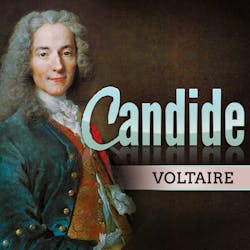
    Candide

    Voltaire

  2. 4.1

    Candide

    Voltaire

  3. 4.1

    Candide

    Voltaire

  4. 4.0

    Candide - Audiobook

    Voltaire, Classic Audiobooks

  5. French Literature Classics - Ultimate Collection : Enriched edition. Exploring the Depths of French Literary Classics

    Stendhal, Jules Verne, Gustave Flaubert, Émile Zola, Victor Hugo, Guy De Maupassant, Jean-Jacques Rousseau, François Rabelais, George Sand, Marcel Proust, Gaston Leroux, Charles Baudelaire, Molière, Pierre Corneille, Jean Racine, Voltaire, Pierre Choderlos Laclos, Alexandre Dumas pere, Alexandre Dumas fils

  6. The Collected Works of Voltaire : Satire, Reason, and the Enlightenment Struggle for Tolerance, Civil Liberty, and Intellectual Independence

    Voltaire

  7. 3500 citations ultimes

    Marc Aurèle, Jane Austen, Beaumarchais, Napoléon Bonaparte, Bouddha, Winston Churchill, Cicéron, Confucius, Nicolas de Chamfort, Charles de Gaulle, Antoine de Saint-Exupéry, Léonard de Vinci, Denis Diderot, Fiodor Dostoïevski, Albert Einstein, Ralph Waldo Emerson, Anne Frank, Mahatma Gandhi, Emmanuel Kant, Søren Kierkegaard, Martin Luther King, Georg Christoph Lichtenberg, Abraham Lincoln, Montesquieu, Friedrich Nietzsche, Platon, Marcel Proust, Arthur Schopenhauer, William Shakespeare, – Socrate, Baruch Spinoza, Henry David Thoreau, Lao Tseu, Voltaire, Oscar Wilde

  8. Candide - Voltaire

    Voltaire

  9. 3.0

    Candide : The Classic Tale

    Voltaire

  10. 33 Human Science Masterpieces You Must Read Before You Die. Illustrated : The Art of Public Speaking, The Meditations, The Kama Sutra and other masterpieces

    Edwin A. Abbott, Aristotle, Dale Carnegie, Gilbert Chesterton, René Descartes, Epictetus, Marcus Aurelius Antoninus, Sigmund Freud, Hermann Hesse, David Hume, Lao Tzu, Confucius, Swami Abhedananda, Anonimous, David Herbert Lawrence, Niccolò Machiavelli, Benedictus de Spinoza, John Mill, Prentice Mulford, Thomas More, Friedrich Nietzsche, J. Allanson Picton, Plato, Sun Tzu, Vatsyayana, Voltaire, H.G. Wells, Frances Bacon

  11. 33 Masterpieces of Philosophy and Science to Read Before You Die (Illustrated) : Utopia, The Meditations, The Art of War, The Kama Sutra, Candide

    Thomas More, Marcus Aurelius Antoninus, Sun Tzu, Vatsyayana, Voltaire, Edwin A. Abbott, Aristotle, Dale Carnegie, Gilbert Keith Chesterton, René Descartes, Epictetus, Sigmund Freud, Hermann Hesse, David Hume, Lao Tzu, David Herbert Lawrence, Niccolò Machiavelli, John Mill, Prentice Mulford, Friedrich Nietzsche, Plato, Bertrand Russell, H.G. Wells, Frances Bacon