4.0(4)

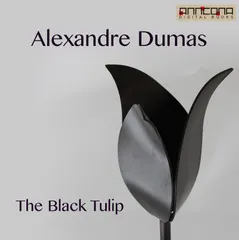
The Black Tulip

The Black Tulip, written by Alexandre Dumas père and published in 1850, is a historical novel placed in the time of Tulipmania in the Netherlands.

The story begins with a historical event, the 1672 lynching of the Dutch Grand Pensionary (roughly equivalent to a modern Prime Minister) Johan de Witt and his brother Cornelis, by a wild mob of their own countrymen, considered by many as one of the most painful episodes in Dutch history, described by Dumas with a dramatic intensity.

The main plot line, involving fictional characters, takes place in the following eighteen months; only gradually does the reader understand its connection with the killing of the de Witt brothers.

The city of Haarlem, Netherlands, has set a prize of 100,000 guilders to the person who can grow a black tulip, sparking competition between the country's best gardeners to win the money, honour and fame. Only the city's oldest citizens remember the Tulip Mania thirty years prior, and the citizens throw themselves into the competition. The young and bourgeois Cornelius van Baerle has almost succeeded but is suddenly thrown into the Loevestein prison. . .

Alexandre Dumas (1802-1870), also known as Alexandre Dumas, père, was a French writer, best known for his historical novels of high adventure. Translated into nearly 100 languages, these have made him one of the most widely read French authors in the world. Many of his novels, including The Count of Monte Cristo, The Three Musketeers, Twenty Years After, and The Vicomte de Bragelonne: Ten Years Later were originally published as serials. His novels have been adapted since the early twentieth century for nearly 200 films.

Om denne boken

The Black Tulip, written by Alexandre Dumas père and published in 1850, is a historical novel placed in the time of Tulipmania in the Netherlands.

The story begins with a historical event, the 1672 lynching of the Dutch Grand Pensionary (roughly equivalent to a modern Prime Minister) Johan de Witt and his brother Cornelis, by a wild mob of their own countrymen, considered by many as one of the most painful episodes in Dutch history, described by Dumas with a dramatic intensity.

The main plot line, involving fictional characters, takes place in the following eighteen months; only gradually does the reader understand its connection with the killing of the de Witt brothers.

The city of Haarlem, Netherlands, has set a prize of 100,000 guilders to the person who can grow a black tulip, sparking competition between the country's best gardeners to win the money, honour and fame. Only the city's oldest citizens remember the Tulip Mania thirty years prior, and the citizens throw themselves into the competition. The young and bourgeois Cornelius van Baerle has almost succeeded but is suddenly thrown into the Loevestein prison. . .

Alexandre Dumas (1802-1870), also known as Alexandre Dumas, père, was a French writer, best known for his historical novels of high adventure. Translated into nearly 100 languages, these have made him one of the most widely read French authors in the world. Many of his novels, including The Count of Monte Cristo, The Three Musketeers, Twenty Years After, and The Vicomte de Bragelonne: Ten Years Later were originally published as serials. His novels have been adapted since the early twentieth century for nearly 200 films.

Kom i gang med denne boken i dag for 0 kr

  • Få full tilgang til alle bøkene i appen i prøveperioden
  • Ingen forpliktelser, si opp når du vil
Prøv gratis nå
Mer enn 52 000 personer har gitt Nextory 5 stjerner på App Store og Google Play.

  1. Høyest rangert
    4.6

    Greven av Monte Cristo

    Alexandre Dumas

  2. 3.0

    50 Masterpieces you have to read before you die vol: 1 (2020 Edition) : Included: Little Women, The Richest Man in Babylon Emma, The Call Of The Wild ....

    Louisa May Alcott, Dante Alighieri, Marcus Aurelius, Jane Austen, L. Frank Baum, Charlotte Brontë, Emily Brontë, Anne Brontë, Miguel de Cervantes, Agatha Christie, George S. Clason, Arthur Conan Doyle, Joseph Conrad, Charles Dickens, Fyodor Dostoyevsky, Alexandre Dumas, George Eliot, G.K. Chesterton, G.K. Chesterton, Zane Grey, Nathaniel Hawthorne, Napoleon Hill, Homer, Victor Hugo, Frances Hodgson Burnett, Washington Irving, Henry James, Franz Kafka, Rudyard Kipling, Jack London, Leo Tolstoy, H.P. Lovecraft, Lucy Maud Montgomery, Joseph Murphy, Robert Louis Stevenson, Edgar Allan Poe, Marcel Proust, Publius, Mary Shelley, Bram Stoker, Mark Twain, Sun Tzu, Lew Wallace, Wallace D. Wattles, H.G. Wells

  3. 4.5

    Greven av Monte Christo

    Alexandre Dumas

  4. 4.5

    The Count of Monte Cristo

    Alexandre Dumas

  5. 4.4

    Den sorte tulipan

    Alexandre Dumas

  6. 4.6

    The Count of Monte Cristo

    Alexandre Dumas

  7. The Count of Monte Cristo

    Alexandre Dumas

  8. 24. sep.

    Musketerenes ætling

    Alexandre Dumas

  9. Ny

    100 Clásicos de la Literatura Universal

    Francis Scott Fitzgerald, Mary Shelley, Lyman Frank Baum, Louisa May Alcott, Dante Alighieri, Jane Austen, Ambrose Bierce, Emily Brontë, Edgar Rice Burroughs, Lewis Carroll, Wilkie Collins, René Descartes, Charles Dickens, Emily Dickinson, Alexandre Dumas, Gustave Flaubert, Benito Pérez Galdós, Johann Wolfgang von Goethe, Thomas Hardy, E T A Hoffmann, Washington Irving, Henry James, James Joyce, Franz Kafka, Gaston Leroux, Federico García Lorca, H.P. Lovecraft, Publio Virgilio Marón, Lucy Maud Montgomery, John William Polidori, Marco Polo, Antoine de Saint-Exupéry, Emilio Salgari, Walter Scott, Mark Twain, Jules Verne, Julio Verne, H.G. Wells, Edith Wharton, Mary Wollstonecraft, Stefan Zweig, Sun Tzu, Bram Stoker, - Aristoteles, George Bernard Shaw, Henryk Sienkiewicz, Concepción Arenal, Charlotte Brontë, Miguel de Cervantes, G.K. Chesterton, Daniel Defoe, Fyodor Mikhailovich Dostoyevsky, Arthur Conan Doyle, Sigmund Freud, H. Rider Haggard, Homero, Immanuel Kant, Rudyard Kipling, Molière, Friedrich Nietzsche, Fernando de Rojas, Sófocles, William Makepeace Thackeray, León Tolstói, Voltaire, Ramón María del Valle-Inclán, Oscar Wilde, Virginia Woolf

  10. 50 Masterpieces you have to read before you die vol 1

    Louisa May Alcott, Jane Austen, Joseph Conrad, Edwin Abbott, George Eliot, Leo Tolstoy, James Joyce, Charles Dickens, Bram Stoker, Oscar Wilde, Honoré de Balzac, Edgar Rice Burroughs, Anne Brontë, Charlotte Brontë, Emily Brontë, Lewis Carroll, Willa Cather, Miguel de Cervantes, E. Cummings, Fyodor Dostoyevsky, Daniel Defoe, Arthur Conan Doyle, Alexandre Dumas, Gustave Flaubert, Henry James, Victor Hugo

  11. 50 Masterpieces you have to read before you die vol: 2

    Louisa May Alcott, Jane Austen, Joseph Conrad, D. H. Lawrence, George Eliot, Leo Tolstoy, James Joyce, Charles Dickens, Bram Stoker, Oscar Wilde, Honoré de Balzac, Edgar Rice Burroughs, Anne Brontë, Charlotte Brontë, Emily Brontë, Lewis Carroll, Willa Cather, Miguel de Cervantes, E. Cummings, Fyodor Dostoyevsky, Daniel Defoe, Arthur Conan Doyle, Alexandre Dumas, Gustave Flaubert, Henry James, Victor Hugo

  12. The Count of Monte Cristo

    Alexandre Dumas