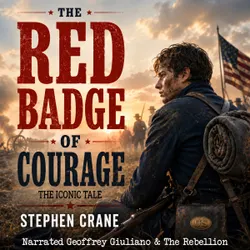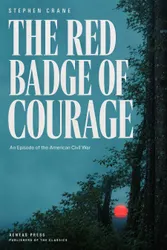
The Red Badge of Courage follows Henry Fleming through the terror and confusion of an unnamed Civil War battle, tracing less a campaign than a consciousness under pressure. Crane's compressed, impressionistic prose—vivid with color, sound, and fractured perception—renders war as psychological ordeal rather than patriotic pageant. Published in 1895, the novel stands at the threshold of American naturalism and modern war fiction, challenging romantic military convention through irony and radical interiority. Stephen Crane, born in 1871, wrote the novel before experiencing battle, relying on veterans' accounts, historical records, journalism, and an acute grasp of fear and self-invention. A reporter, poet, and restless observer of social extremes, Crane had already shown his unsentimental eye in Maggie: A Girl of the Streets. His fascination with how individuals construct courage amid hostile environments shaped Henry's unstable movement from imagined heroism to chastened self-knowledge. This book is essential for readers interested in the Civil War, literary realism, or modern psychological narrative. It rewards close attention to symbolism, rhythm, and point of view while remaining immediate as a story of youth confronting violence. Students, scholars, and general readers alike will find in it a compact, unsettling masterpiece about courage as performance, illusion, and hard-won recognition.
This enriched edition has been carefully crafted to add value to your reading experience.
- A succinct Introduction situates the work's timeless appeal and themes.
- The Synopsis outlines the central plot, highlighting key developments without spoiling critical twists.
- A detailed Historical Context immerses you in the era's events and influences that shaped the writing.
- An Author Biography reveals milestones in the author's life, illuminating the personal insights behind the text.
- A thorough Analysis dissects symbols, motifs, and character arcs to unearth underlying meanings.
- Reflection questions prompt you to engage personally with the work's messages, connecting them to modern life.
- Hand‐picked Memorable Quotes shine a spotlight on moments of literary brilliance.
- Interactive footnotes clarify unusual references, historical allusions, and archaic phrases for an effortless, more informed read.