
Tietoa kirjasta

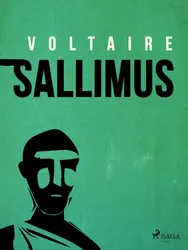
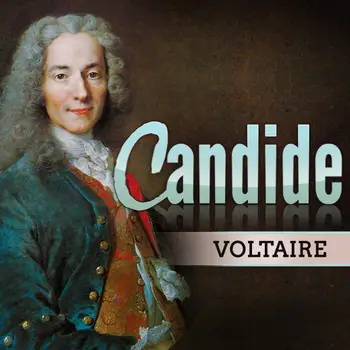
Candide is a French satire first published in 1759 by Voltaire, a philosopher of the Age of Enlightenment. It begins with a young man, Candide, who is living a sheltered life in an Edenic paradise and being indoctrinated with Leibnizian optimism by his mentor, Professor Pangloss. The work describes the abrupt cessation of this lifestyle, followed by Candide's slow and painful disillusionment as he witnesses and experiences great hardships in the world. Voltaire concludes Candide with, if not rejecting Leibnizian optimism outright, advocating a deeply practical precept, "we must cultivate our garden", in lieu of the Leibnizian mantra of Pangloss, "all is for the best" in the "best of all possible worlds".

Candide is characterized by its tone as well as by its erratic, fantastical, and fast-moving plot. A picaresque novel with a story similar to that of a more serious coming-of-age narrative (Bildungsroman), it parodies many adventure and romance clichés, the struggles of which are caricatured in a tone that is bitter and matter-of-fact. Still, the events discussed are often based on historical happenings, such as the Seven Years' War and the 1755 Lisbon earthquake. As philosophers of Voltaire's day contended with the problem of evil, so does Candide in this short theological novel, albeit more directly and humorously. Voltaire ridicules religion, theologians, governments, armies, philosophies, and philosophers. Through Candide, he assaults Leibniz and his optimism.

Candide has enjoyed both great success and great scandal. Immediately after its secretive publication, the book was widely banned to the public because it contained religious blasphemy, political sedition, and intellectual hostility hidden under a thin veil of naïveté. Today, Candide is recognized as Voltaire's magnum opus and is often listed as part of the Western canon. It is among the most frequently taught works of French literature.

Aloita kirja saman tien hintaan 0 €

  • Kokeilujakson aikana käytössäsi on kaikki sovelluksen kirjat
  • Ei sitoumusta, voit perua milloin vain
Kokeile nyt ilmaiseksi
Yli 52 000 ihmistä on antanut Nextorylle viisi tähteä App Storessa ja Google Playssä.

  1. Vi måste välja sida

    Voltaire

  2. The Collected Works of Voltaire : Satire, Reason, and the Enlightenment Struggle for Tolerance, Civil Liberty, and Intellectual Independence

    Voltaire

  3. Kaarle XII : Narvasta Poltavaan ja Osmanien valtakunnan maanpakoon – Suuren Pohjan sodan historiaa, valtaa ja sotilaallisen nerouden rajoja

    Voltaire

  4. 4.5

    Sallimus

    Voltaire

  5. 400 Quotations from the Great Philosophers of the 17th Century

    Montesquieu, Blaise Pascal, Baruch Spinoza, Voltaire

  6. Candide - Voltaire

    Voltaire

  7. 33 Human Science Masterpieces You Must Read Before You Die. Illustrated : The Art of Public Speaking, The Meditations, The Kama Sutra and other masterpieces

    Edwin A. Abbott, Aristotle, Dale Carnegie, Gilbert Chesterton, René Descartes, Epictetus, Marcus Aurelius Antoninus, Sigmund Freud, Hermann Hesse, David Hume, Lao Tzu, Confucius, Swami Abhedananda, Anonimous, David Herbert Lawrence, Niccolò Machiavelli, Benedictus de Spinoza, John Mill, Prentice Mulford, Thomas More, Friedrich Nietzsche, J. Allanson Picton, Plato, Sun Tzu, Vatsyayana, Voltaire, H.G. Wells, Frances Bacon

  8. 33 Masterpieces of Philosophy and Science to Read Before You Die (Illustrated) : Utopia, The Meditations, The Art of War, The Kama Sutra, Candide

    Thomas More, Marcus Aurelius Antoninus, Sun Tzu, Vatsyayana, Voltaire, Edwin A. Abbott, Aristotle, Dale Carnegie, Gilbert Keith Chesterton, René Descartes, Epictetus, Sigmund Freud, Hermann Hesse, David Hume, Lao Tzu, David Herbert Lawrence, Niccolò Machiavelli, John Mill, Prentice Mulford, Friedrich Nietzsche, Plato, Bertrand Russell, H.G. Wells, Frances Bacon

  9. The Complete Harvard Classics Collection (Golden Deer Classics) : [51 Volumes + The Harvard Classic Shelf Of Fiction]

    Charles W. Eliot, Golden Deer Classics, John Milton, Plato, Benjamin Franklin, Adam Smith, Charles Darwin, Miguel de Cervantes, Virgil, Anonymous, Grimm Brothers, Hans Christian Andersen, Oliver Goldsmith, Dante Alighieri, Pierre Corneille, Jean Racine, Molière, Michel de Montaigne, Voltaire, Niccolò Machiavelli, Confucius, William Shakespeare

  10. 5.0

    Socrates

    Voltaire

  11. 3.8

    Candide ou l'optimisme

    Voltaire