Tietoa kirjasta

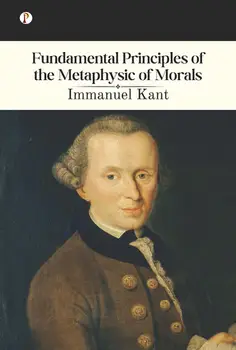
The revolutionary claim that the nature of the principle that a person chooses to act upon determines the rightness of a course of action is made by Kant in this seminal work, which was published in 1785. Kant stands in blatant contrast to the teleological moral theories and moral sense theories that were prevalent at the time of his writing. The categorical imperative, or the idea that one must only behave in accordance with the precept that he or she would like to become a universal rule, plays a crucial part in the book.
Aloita kirja saman tien hintaan 0 €

  • Kokeilujakson aikana käytössäsi on kaikki sovelluksen kirjat
  • Ei sitoumusta, voit perua milloin vain
Kokeile nyt ilmaiseksi
Yli 52 000 ihmistä on antanut Nextorylle viisi tähteä App Storessa ja Google Playssä.

Samankaltaisia kirjoja

  1. 3.4

    Ikuiseen rauhaan

    Immanuel Kant

  2. Puhtaan järjen kritiikki

    Immanuel Kant

  3. 31. maalisk.

    Moraalin metafysiikan perustus

    Immanuel Kant

  4. 12 Masterpieces You Have to Read Before You Die. Philosophy

    Niccolo Machiavelli, Tommaso Campanella, Francis Bacon, Thomas More, John Stuart Mill, Immanuel Kant, Kahlil Gibran, Leo Tolstoy, G.K. Chesterton, Henry David Thoreau

  5. 4.0

    3500 Final Quotes

    Marcus Aurelius, Jane Austen, Beaumarchais, Napoleon Bonaparte, Buddha, Winston Churchill, Cicero, Confucius, Nicolas de Chamfort, Charles de Gaulle, Antoine de Saint-Exupéry, Denis Diderot, Fyodor Dostoevsky, Albert Einstein, Ralph Waldo Emerson, Anne Frank, Mahatma Gandhi, Immanuel Kant, Søren Kierkegaard, Martin Luther King, Georg Christoph Lichtenberg, Abraham Lincoln, Montesquieu, Friedrich Nietzsche, Plato, Marcel Proust, Arthur Schopenhauer, William Shakespeare, Socrates, Baruch Spinoza, Henry David Thoreau, Leonardo da Vinci, Voltaire, Oscar Wilde, Laozi

  6. 3.0

    2000 Final Quotations

    Marcus Aurelius, Jane Austen, Buddha, Anton Chekhov, Cicero, Emil Cioran, Confucius, Albert Einstein, Anne Frank, Mahatma Gandhi, Johann Wolfgang Goethe, Carl Jung, Immanuel Kant, Friedrich Nietzsche, Marcel Proust, Arthur Schopenhauer, William Shakespeare, Baruch Spinoza, Leonardo da Vinci, Laozi

  7. Critique of Pure Reason

    Immanuel Kant

  8. 3.5

    400 Quotes of Modern Philosophy: Nietzsche, Kant, Kierkegaard & Schopenhauer

    Immanuel Kant, Søren Kierkegaard, Friedrich Nietzsche, Arthur Schopenhauer

  9. 3.8

    Kant's Foundations of Ethics

    Immanuel Kant

  10. Arvostelukyvyn kritiikki

    Immanuel Kant

  11. The Ethics of Immanuel Kant : Duty, Autonomy, and the Categorical Imperative in Enlightenment Moral Philosophy

    Immanuel Kant

  12. Uusi

    Duty or Happiness? : The foundation of morals, in eight rounds

    John Stuart Mill, Immanuel Kant