



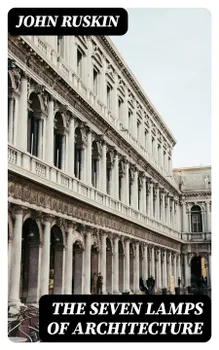
In "The Seven Lamps of Architecture," John Ruskin embarks on a profound exploration of the moral and spiritual dimensions of architecture. Written during the Victorian era, this seminal work is structured around seven guiding principles—sacrilege, truth, power, beauty, life, memory, and obedience—that Ruskin argues are essential for the creation of genuine architectural masterpieces. His eloquent prose combines vivid descriptions, philosophical reflections, and an acute analysis of the relationship between nature and human craftsmanship, positioning architecture not merely as an art form but as a reflection of society's values and aspirations. Ruskin's critique of industrialization challenges contemporary trends, advocating for an architecture founded on historical integrity and artistic sincerity. John Ruskin (1819-1900) was a prominent art critic, social thinker, and philosopher whose extensive writings have left an indelible mark on architecture and art. His deep engagement with the natural world, combined with a passionate belief in the moral responsibilities of artists, greatly influenced his writings. Ruskin's experiences in both the art world and social reform movements galvanized his commitment to advocating for a return to craftsmanship and authenticity in a rapidly changing society, particularly in the wake of the Industrial Revolution. "The Seven Lamps of Architecture" is an essential read for anyone invested in the fields of architecture, art history, and philosophy. Ruskin's insightful principles challenge modern assumptions and encourage readers to appreciate the ethical implications of design and construction. This text not only illuminates the artistic process but also urges a deeper consideration of how our built environment shapes and reflects our cultural identity.
The King of the Golden River :

The Stones of Venice : Study of Venetian Architecture

The Stones of Venice (Vol. 1-3) : Enriched edition. Study of Venetian Architecture

The Stones of Venice : Enriched edition. Study of Venetian Architecture

Praeterita: souvenirs de jeunesse : Édition enrichie.

The Queen of the Air: Being a Study of the Greek Myths of Cloud and Storm

Frondes Agrestes: Readings in 'Modern Painters'

Love's Meinie: Three Lectures on Greek and English Birds

Hortus Inclusus : Messages from the Wood to the Garden, Sent in Happy Days / to the Sister Ladies of the Thwaite, Coniston

The Poetry of Architecture : Enriched edition. Or, the Architecture of the Nations of Europe Considered in its Association with Natural Scenery and National Character

The Pleasures of England : Lectures given in Oxford

Unto This Last, and Other Essays on Political Economy
The Seven Lamps of Architecture

The King of the Golden River :

The Stones of Venice : Study of Venetian Architecture

The Stones of Venice (Vol. 1-3) : Enriched edition. Study of Venetian Architecture

The Stones of Venice : Enriched edition. Study of Venetian Architecture

Praeterita: souvenirs de jeunesse : Édition enrichie.

The Queen of the Air: Being a Study of the Greek Myths of Cloud and Storm

Frondes Agrestes: Readings in 'Modern Painters'

Love's Meinie: Three Lectures on Greek and English Birds

Hortus Inclusus : Messages from the Wood to the Garden, Sent in Happy Days / to the Sister Ladies of the Thwaite, Coniston

The Poetry of Architecture : Enriched edition. Or, the Architecture of the Nations of Europe Considered in its Association with Natural Scenery and National Character

The Pleasures of England : Lectures given in Oxford

Unto This Last, and Other Essays on Political Economy
Tietoa kirjasta
In "The Seven Lamps of Architecture," John Ruskin embarks on a profound exploration of the moral and spiritual dimensions of architecture. Written during the Victorian era, this seminal work is structured around seven guiding principles—sacrilege, truth, power, beauty, life, memory, and obedience—that Ruskin argues are essential for the creation of genuine architectural masterpieces. His eloquent prose combines vivid descriptions, philosophical reflections, and an acute analysis of the relationship between nature and human craftsmanship, positioning architecture not merely as an art form but as a reflection of society's values and aspirations. Ruskin's critique of industrialization challenges contemporary trends, advocating for an architecture founded on historical integrity and artistic sincerity. John Ruskin (1819-1900) was a prominent art critic, social thinker, and philosopher whose extensive writings have left an indelible mark on architecture and art. His deep engagement with the natural world, combined with a passionate belief in the moral responsibilities of artists, greatly influenced his writings. Ruskin's experiences in both the art world and social reform movements galvanized his commitment to advocating for a return to craftsmanship and authenticity in a rapidly changing society, particularly in the wake of the Industrial Revolution. "The Seven Lamps of Architecture" is an essential read for anyone invested in the fields of architecture, art history, and philosophy. Ruskin's insightful principles challenge modern assumptions and encourage readers to appreciate the ethical implications of design and construction. This text not only illuminates the artistic process but also urges a deeper consideration of how our built environment shapes and reflects our cultural identity.
Kirjailija:
Kieli:
englanti
