Om denne boken

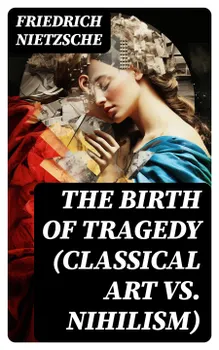
In "The Birth of Tragedy," Friedrich Nietzsche explores the profound interplay between the Apollonian and Dionysian elements of art, positing that the synthesis of these opposing forces gives rise to the true genius of Greek tragedy. With its rich stylistic tapestry, the work oscillates between philosophical discourse and poetic reflection, inviting readers to contemplate the aesthetic experience as a conduit for existential meaning. Nietzsche critiques the decline of art and culture in his contemporary society, linking it to a broader philosophical nihilism that he perceives as threatening the very foundations of Western civilization. Friedrich Nietzsche, a pivotal figure in 19th-century philosophy, grapples with the implications of art and culture against the backdrop of burgeoning nihilism and the crisis of European thought. His experiences in the shadow of Romanticism, combined with a deep engagement with ancient Greek culture, motivated him to articulate a vision that champions tragedy as an essential cultural expression. This work serves as both a celebration and a lamentation, offering glimpses into Nietzsche's complex relationship with art, beauty, and the human condition. This seminal text is essential for readers interested in philosophy, literature, and the evolution of Western thought. Nietzsche's provocative insights challenge us to rethink the role of art in confronting life's inherent pain and chaos, making "The Birth of Tragedy" a timeless exploration of the depths of human experience.

In this enriched edition, we have carefully created added value for your reading experience:

- A succinct Introduction situates the work's timeless appeal and themes.

- The Synopsis outlines the central plot, highlighting key developments without spoiling critical twists.

- A detailed Historical Context immerses you in the era's events and influences that shaped the writing.

- An Author Biography reveals milestones in the author's life, illuminating the personal insights behind the text.

- A thorough Analysis dissects symbols, motifs, and character arcs to unearth underlying meanings.

- Reflection questions prompt you to engage personally with the work's messages, connecting them to modern life.

- Hand‐picked Memorable Quotes shine a spotlight on moments of literary brilliance.

- Interactive footnotes clarify unusual references, historical allusions, and archaic phrases for an effortless, more informed read.

Kom i gang med denne boken i dag for 0 kr

  • Få full tilgang til alle bøkene i appen i prøveperioden
  • Ingen forpliktelser, si opp når du vil
Prøv gratis nå
Mer enn 52 000 personer har gitt Nextory 5 stjerner på App Store og Google Play.

  1. 20. okt.

    Slik talte Zarathustra

    Friedrich Nietzsche

  2. Dark Psychology and Manipulation : A Timeless Collection of works about unraveling the Psychology of Persuasion, Influence and Mind Control

    Friedrich Nietzsche, Niccolò Macchiavelli, Gustave Le Bon

  3. 4.5

    Thus Spoke Zarathustra

    Friedrich Nietzsche

  4. Homer and Classical Philology

    Friedrich Nietzsche

  5. 4.0

    Thus Spoke Zarathustra

    Friedrich Nietzsche

  6. The Complete Warrior’s Mindset Collection : History’s Greatest Military Minds on Power, Discipline, and Mental Toughness

    Sun Tzu, Miyamoto Musashi, Marcus Aurelius, Seneca, Napoleon Bonaparte, Frederick the Great, Julius Caesar, Søren Kierkegaard, Friedrich Nietzsche, Tim Zengerink

  7. 4.0

    Existentialism: Philosophical and Literary Works : Notes from Underground. Fear and Trembling. Ecce Homo. The Metamorphosis and others

    Fyodor Dostoevsky, Soren Kierkegaard, Friedrich Nietzsche, Rainer Maria Rilke, Franz Kafka

  8. Friedrich Nietzsche Collection: Beyond Good and Evil, Thus Spoke Zarathustra, and The Antichrist :

    Friedrich Nietzsche

  9. 4.0

    Således talte Zarathustra

    Friedrich Nietzsche

  10. 3500 citations ultimes

    Marc Aurèle, Jane Austen, Beaumarchais, Napoléon Bonaparte, Bouddha, Winston Churchill, Cicéron, Confucius, Nicolas de Chamfort, Charles de Gaulle, Antoine de Saint-Exupéry, Léonard de Vinci, Denis Diderot, Fiodor Dostoïevski, Albert Einstein, Ralph Waldo Emerson, Anne Frank, Mahatma Gandhi, Emmanuel Kant, Søren Kierkegaard, Martin Luther King, Georg Christoph Lichtenberg, Abraham Lincoln, Montesquieu, Friedrich Nietzsche, Platon, Marcel Proust, Arthur Schopenhauer, William Shakespeare, – Socrate, Baruch Spinoza, Henry David Thoreau, Lao Tseu, Voltaire, Oscar Wilde

  11. 4.0

    3500 Final Quotes

    Marcus Aurelius, Jane Austen, Beaumarchais, Napoleon Bonaparte, Buddha, Winston Churchill, Cicero, Confucius, Nicolas de Chamfort, Charles de Gaulle, Antoine de Saint-Exupéry, Denis Diderot, Fyodor Dostoevsky, Albert Einstein, Ralph Waldo Emerson, Anne Frank, Mahatma Gandhi, Immanuel Kant, Søren Kierkegaard, Martin Luther King, Georg Christoph Lichtenberg, Abraham Lincoln, Montesquieu, Friedrich Nietzsche, Plato, Marcel Proust, Arthur Schopenhauer, William Shakespeare, Socrates, Baruch Spinoza, Henry David Thoreau, Leonardo da Vinci, Voltaire, Oscar Wilde, Laozi

  12. 3.0

    Ecce Homo

    Friedrich Nietzsche