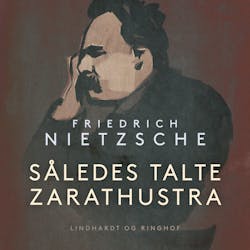
Om denne boken

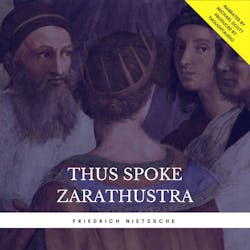
In "Thus Spoke Zarathustra," Friedrich Nietzsche presents a philosophical allegory that journeys through the life and teachings of the prophet Zarathustra as he redefines morality, spirituality, and the essence of humanity. Written in a poetic and lyrical style reminiscent of biblical scripture, the text combines aphoristic narratives with profound philosophical insights, breaking free from traditional structures to explore themes such as the √úbermensch, eternal recurrence, and the will to power. As a pivotal work in existentialism and modern philosophy, it challenges the prevailing moral paradigms of the 19th century, propelling readers into a contemplative space where individuality, creation, and transcendence are paramount. Friedrich Nietzsche, a German philosopher and cultural critic, embodied the spirit of his time, grappling with the disillusionment of traditional values following the Enlightenment and the rise of nihilism. His experiences with mental health, personal trauma, and a tumultuous academic career fueled his quest for meaning and truth. Nietzsche's encounters with various philosophical traditions, coupled with his passion for language, are vividly manifested in this magnum opus, revealing his profound understanding of the human condition and existential inquiry. I highly recommend "Thus Spoke Zarathustra" to any reader seeking to navigate the complexities of existence, ethics, and individuality. Nietzsche's thought-provoking prose offers a rich tapestry of ideas that invite deep reflection and discussion. This unabridged edition presents the work in its entirety, ensuring that readers fully appreciate its nuanced arguments and the poetically charged style that solidifies Nietzsche's legacy as one of the most influential thinkers in Western philosophy.

Kom i gang med denne boken i dag for 0 kr

  • Få full tilgang til alle bøkene i appen i prøveperioden
  • Ingen forpliktelser, si opp når du vil
Prøv gratis nå
Mer enn 52 000 personer har gitt Nextory 5 stjerner på App Store og Google Play.

  1. Dark Psychology and Manipulation : A Timeless Collection of works about unraveling the Psychology of Persuasion, Influence and Mind Control

    Friedrich Nietzsche, Niccolò Macchiavelli, Gustave Le Bon

  2. 20. okt.

    Slik talte Zarathustra

    Friedrich Nietzsche

  3. 4.5

    Thus Spoke Zarathustra

    Friedrich Nietzsche

  4. Homer and Classical Philology

    Friedrich Nietzsche

  5. 4.0

    Thus Spoke Zarathustra

    Friedrich Nietzsche

  6. Thus Spoke Zarathustra : A Book for Everyone and No One

    Friedrich Nietzsche

  7. 4.0

    Ecce Homo : How to Become Who You Are

    Friedrich Nietzsche, Tim Zengerink

  8. The Complete Warrior’s Mindset Collection : History’s Greatest Military Minds on Power, Discipline, and Mental Toughness

    Sun Tzu, Miyamoto Musashi, Marcus Aurelius, Seneca, Napoleon Bonaparte, Frederick the Great, Julius Caesar, Søren Kierkegaard, Friedrich Nietzsche, Tim Zengerink

  9. Friedrich Nietzsche Collection: Beyond Good and Evil, Thus Spoke Zarathustra, and The Antichrist :

    Friedrich Nietzsche

  10. 4.0

    Således talte Zarathustra

    Friedrich Nietzsche

  11. 3500 citations ultimes

    Marc Aurèle, Jane Austen, Beaumarchais, Napoléon Bonaparte, Bouddha, Winston Churchill, Cicéron, Confucius, Nicolas de Chamfort, Charles de Gaulle, Antoine de Saint-Exupéry, Léonard de Vinci, Denis Diderot, Fiodor Dostoïevski, Albert Einstein, Ralph Waldo Emerson, Anne Frank, Mahatma Gandhi, Emmanuel Kant, Søren Kierkegaard, Martin Luther King, Georg Christoph Lichtenberg, Abraham Lincoln, Montesquieu, Friedrich Nietzsche, Platon, Marcel Proust, Arthur Schopenhauer, William Shakespeare, – Socrate, Baruch Spinoza, Henry David Thoreau, Lao Tseu, Voltaire, Oscar Wilde

  12. 4.0

    3500 Final Quotes

    Marcus Aurelius, Jane Austen, Beaumarchais, Napoleon Bonaparte, Buddha, Winston Churchill, Cicero, Confucius, Nicolas de Chamfort, Charles de Gaulle, Antoine de Saint-Exupéry, Denis Diderot, Fyodor Dostoevsky, Albert Einstein, Ralph Waldo Emerson, Anne Frank, Mahatma Gandhi, Immanuel Kant, Søren Kierkegaard, Martin Luther King, Georg Christoph Lichtenberg, Abraham Lincoln, Montesquieu, Friedrich Nietzsche, Plato, Marcel Proust, Arthur Schopenhauer, William Shakespeare, Socrates, Baruch Spinoza, Henry David Thoreau, Leonardo da Vinci, Voltaire, Oscar Wilde, Laozi