3.0(1)

Poor Folk

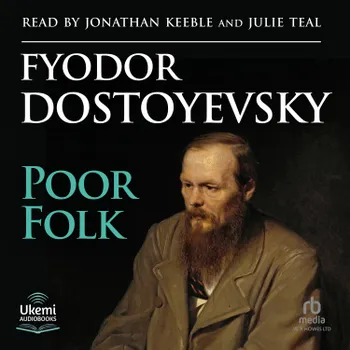
Poor Folk, Fyodor Dostoyevsky’s first novel, is almost forgotten now, living as it does under the long shadow of Crime and Punishment, Anna Karenina, The Brothers Karamazov and much more. Yet when it was published in 1846, it brought him instant fame.

It is an epistolary novel, presenting the relationship between neighbours, who happen to be distant cousins. An older man and a much younger woman, they are both living in straightened circumstances in rented accommodation and, though their letters, reveal their thoughts, their hopes, their anxieties and their daily struggles at the lower end of social and economic life of mid-19th century St Petersburg.

Yet it was exactly this situation that was a revelation to the readers of the time who were more accustomed to encountering tailored emotions in a less challenged class. For the first time, ordinary life, challenging life and the effect on the individual was presented to readers, many of which could identify with the protagonists: Makar Devushkin, an impoverished clerk, and Varvara Dobroselova who hopes to work as a governess, but earns money as a seamstress. Yet this was no ordinary portrait of emotion enmeshed in common hardships, but a writer in full command of his medium.

After he left the manuscript with the publisher Nikolay Nekrasov he told himself, ‘They will poke fun at my Poor Folk.’ In fact, Nekrasov read it at one sitting at burst into Dostoyevsky’s room at 4am to shower him with kisses. ‘A new Gogol has been born,’ he declared. It sold widely, and was dubbed ‘Russia’s first social novel’. Poor Folk is fascinating as the first important step in the career of one of the greatest novelists of all time.

"Both Jonathan Keeble and Julie Teal do a splendid job of narrating this production of Dostoyevsky's first novel. " - AUDIOFILE MAGAZINE

Tietoa kirjasta

Poor Folk, Fyodor Dostoyevsky’s first novel, is almost forgotten now, living as it does under the long shadow of Crime and Punishment, Anna Karenina, The Brothers Karamazov and much more. Yet when it was published in 1846, it brought him instant fame.

It is an epistolary novel, presenting the relationship between neighbours, who happen to be distant cousins. An older man and a much younger woman, they are both living in straightened circumstances in rented accommodation and, though their letters, reveal their thoughts, their hopes, their anxieties and their daily struggles at the lower end of social and economic life of mid-19th century St Petersburg.

Yet it was exactly this situation that was a revelation to the readers of the time who were more accustomed to encountering tailored emotions in a less challenged class. For the first time, ordinary life, challenging life and the effect on the individual was presented to readers, many of which could identify with the protagonists: Makar Devushkin, an impoverished clerk, and Varvara Dobroselova who hopes to work as a governess, but earns money as a seamstress. Yet this was no ordinary portrait of emotion enmeshed in common hardships, but a writer in full command of his medium.

After he left the manuscript with the publisher Nikolay Nekrasov he told himself, ‘They will poke fun at my Poor Folk.’ In fact, Nekrasov read it at one sitting at burst into Dostoyevsky’s room at 4am to shower him with kisses. ‘A new Gogol has been born,’ he declared. It sold widely, and was dubbed ‘Russia’s first social novel’. Poor Folk is fascinating as the first important step in the career of one of the greatest novelists of all time.

"Both Jonathan Keeble and Julie Teal do a splendid job of narrating this production of Dostoyevsky's first novel. " - AUDIOFILE MAGAZINE

Aloita kirja saman tien hintaan 0 €

  • Kokeilujakson aikana käytössäsi on kaikki sovelluksen kirjat
  • Ei sitoumusta, voit perua milloin vain
Kokeile nyt ilmaiseksi
Yli 52 000 ihmistä on antanut Nextorylle viisi tähteä App Storessa ja Google Playssä.

  1. Fyodor Dostoyevsky: The Short Stories Collection

    Fyodor Dostoyevsky

  2. 3.5

    Uncle's Dream

    Fyodor Dostoyevsky

  3. 3.0

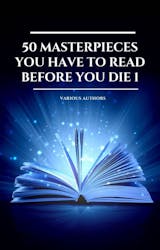
    50 Masterpieces you have to read before you die vol: 1 (2020 Edition) : Included: Little Women, The Richest Man in Babylon Emma, The Call Of The Wild ....

    Louisa May Alcott, Dante Alighieri, Marcus Aurelius, Jane Austen, L. Frank Baum, Charlotte Brontë, Emily Brontë, Anne Brontë, Miguel de Cervantes, Agatha Christie, George S. Clason, Arthur Conan Doyle, Joseph Conrad, Charles Dickens, Fyodor Dostoyevsky, Alexandre Dumas, George Eliot, G.K. Chesterton, G.K. Chesterton, Zane Grey, Nathaniel Hawthorne, Napoleon Hill, Homer, Victor Hugo, Frances Hodgson Burnett, Washington Irving, Henry James, Franz Kafka, Rudyard Kipling, Jack London, Leo Tolstoy, H.P. Lovecraft, Lucy Maud Montgomery, Joseph Murphy, Robert Louis Stevenson, Edgar Allan Poe, Marcel Proust, Publius, Mary Shelley, Bram Stoker, Mark Twain, Sun Tzu, Lew Wallace, Wallace D. Wattles, H.G. Wells

  4. Netochka Nezvanova

    Fyodor Dostoyevsky

  5. 4.0

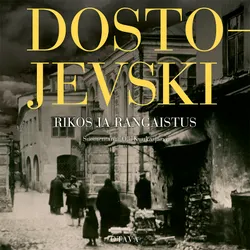
    Rikos ja rangaistus : Rikastettu painos. Kuusiosainen romaani ynnä epilogi

    Fyodor Dostoyevsky

  6. 4.0

    Crime and Punishment

    Fyodor Dostoyevsky

  7. The Essential Classics: Volume 6 : Boyhood, Childhood, Youth, Demons, Dombey and Son, Shirley, and The Tenant of Wildfell Hall

    Leo Tolstoy, Fyodor Dostoyevsky, Charles Dickens, Charlotte Brontë, Anne Brontë

  8. The Essential Classics: Volume 2 : Arsène Lupin, Gentleman Burglar; Animal Farm; Crime and Punishment; Narrative of the Life of Frederick Douglass; & Wuthering Heights

    George Orwell, Fyodor Dostoyevsky, Maurice Leblanc, Emily Brontë, Frederick Douglass

  9. The Essential Classics Collection : 1984; Great Expectations; The Brothers Karamazov; Pride and Prejudice; & The War of the Worlds

    George Orwell, Fyodor Dostoyevsky, Charles Dickens, Jane Austen, H.G. Wells

  10. World's Greatest Short Stories

    Daniel Defoe, Benjamin Franklin, Washington Irving, Mateo Falcone, Charlotte Bronte, Mary Shelley, Nathaniel Hawthorne, Nikolai Gogol, Edgar Allan Poe, Fyodor Dostoyevsky, Charles Dickens, Herman Melville, Mark Twain, Guy De Maupassant, Oscar Wilde, Leo Tolstoy, H.G. Wells, Ambrose Bierce, Stephen Crane, Kate Chopin, Jack London, E. M. Forster

  11. The Fyodor Dostoyevsky Collection. Signature Classics : Notes from the Underground, The Dream of a Ridiculous Man, White Nights and others

    Fyodor Dostoyevsky

  12. 50 Masterpieces you have to read before you die vol: 2

    Louisa, Jane Austen, Joseph Conrad, D. H. Lawrence, George Eliot, Leo Tolstoy, James Joyce, Charles Dickens, Bram Stoker, Oscar Wilde, Honoré de Balzac, Edgar Rice Burroughs, Anne Brontë, Charlotte Brontë, Emily Brontë, Lewis Carroll, Willa Cather, Miguel de Cervantes, E. E. Cummings, Fyodor Dostoyevsky, Daniel Defoe, Arthur Conan Doyle, Alexandre Dumas, Gustave Flaubert, Henry James, Victor Hugo, Bookish